


Last Friday at dinner, a friend asked about hantavirus.
She had seen alarming headlines about cases connected to a cruise ship and asked, “Should we be worried?” She had already searched the web. A few news articles. Some government websites. Medical papers published more than a year ago. A lot of information. Very little clarity about what is actually happening right now.
During that same dinner, I asked Truveta. One minute later, I could see documented hantavirus diagnoses across health systems in the United States, including cases as recent as April.
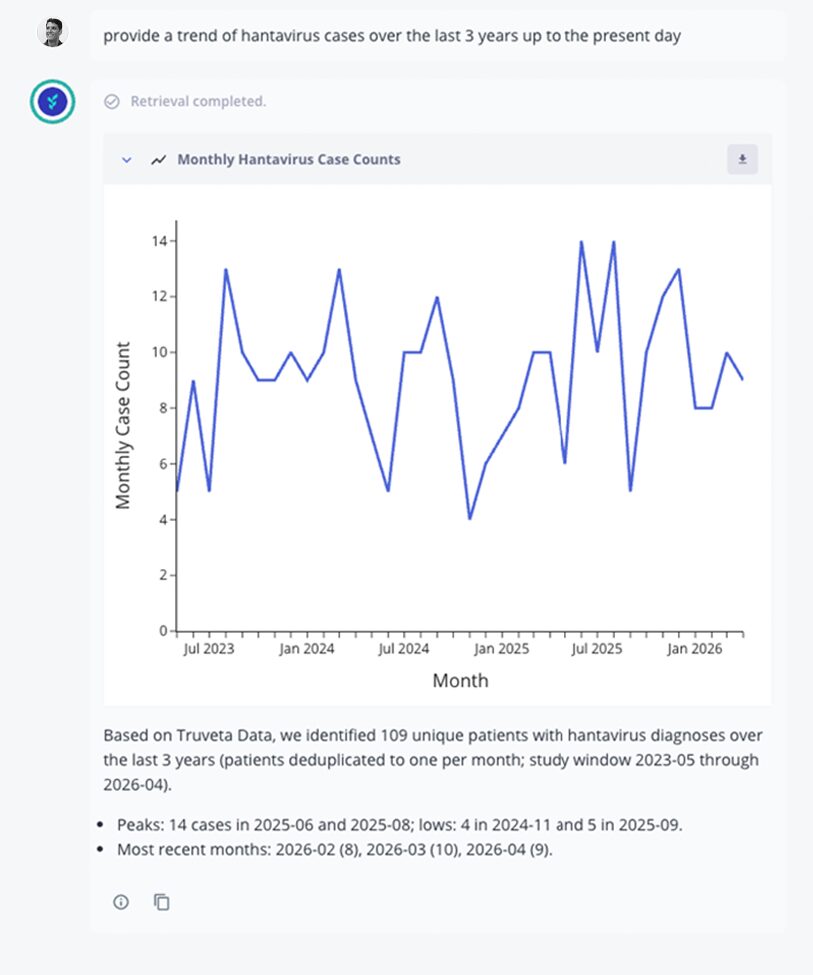
Seeing real patients in recent data changed the conversation. I then asked Truveta Research to take a closer look, verifying Truveta Intelligence. Within days, they validated the findings and examined hospitalizations after diagnosis.
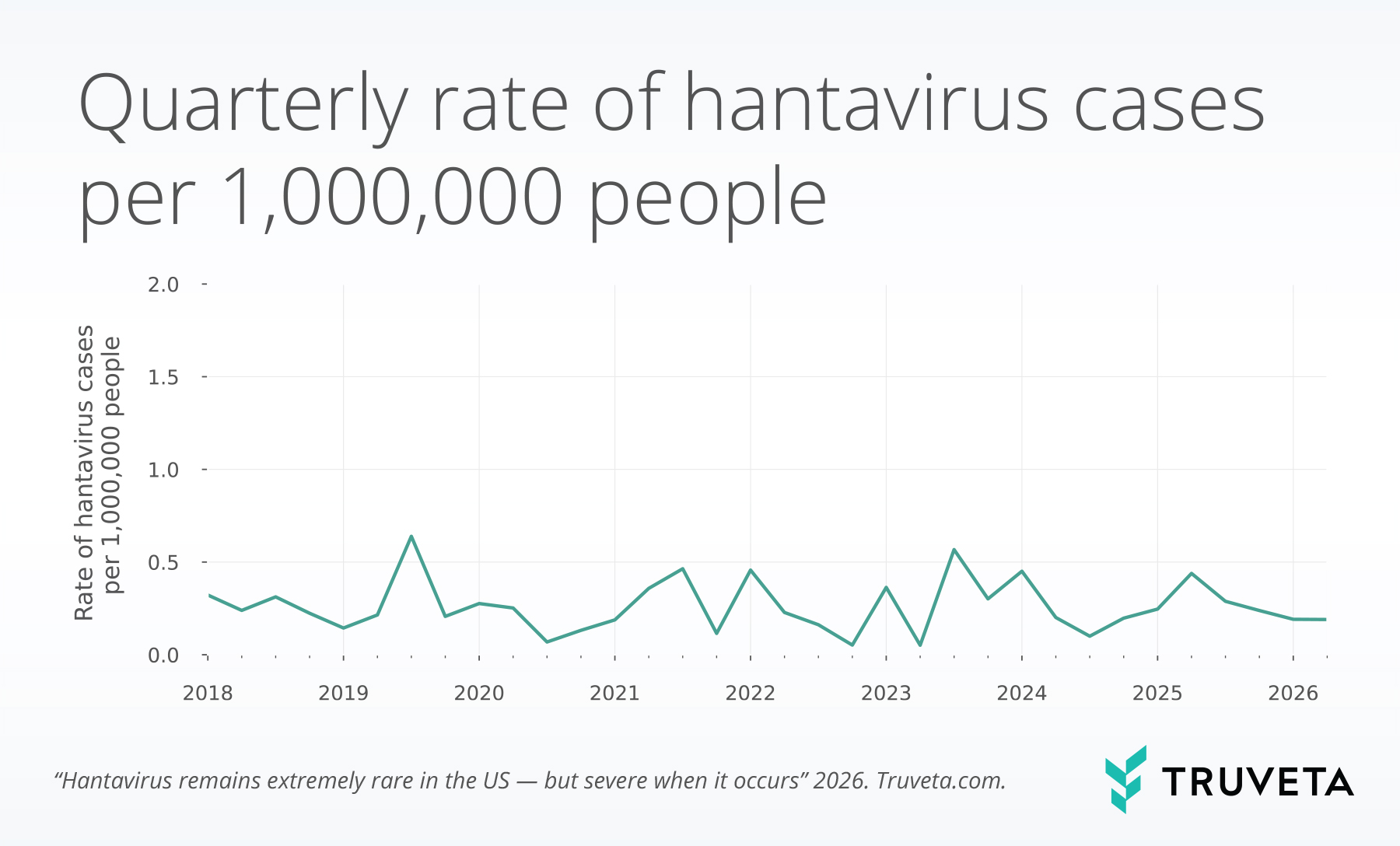
But the part that stayed with me was not the hantavirus data itself. It was the speed. During COVID, one of the clearest lessons was how slowly healthcare systems learned. What struck me last Friday was how different the experience felt. A question came up naturally in conversation. Initial answers came back in minutes. Researchers validated the findings within days.
For decades, health research has largely been retrospective. By the time studies were published, the world had often already changed. Healthcare should be able to learn from care as it happens. Last Friday at dinner, that future felt real to me.
— Terry