


Therapeutic area
Metabolic diseases and endocrinology
How can we help?
39M+
patients with metabolic disease
13.5M+
type 2 diabetes
745K+
type 1 diabetes
13.4M+
obesity
7M+
hypothyroidism
300K+
Metabolic dysfunction-associated steatotic liver disease (MASLD) and steatohepatitis
(MASH)
917K+
polyendocrine metabolic ovarian syndrome (PMOS)
Study metabolic disease with comprehensive clinical context
Go beyond diagnoses and billing codes with clinically rich data that captures:
Disease severity and progression
- Laboratory markers of disease including: HbA1c, glucose trends, renal and liver function
- Weight and BMI
- Liver stiffness and fibrosis staging
Therapies and treatment response
- GLP-1s, SGLT2s, insulin and emerging therapies for metabolic disease
- Treatment persistence, switching, and utilization patterns
- Surgical interventions
- CGM and insulin pump use
Social, behavioral, and familial risk factors
- Social determinants of health (SDOH)
- Behavioral and lifestyle factors
- Family history
- Genetic testing and inherited metabolic disorders

Disease severity and progression

Therapies and treatment response

Social, behavioral, and familial risk factors
Disease characterization

Therapies and treatment response
Social, behavior, and familial risk factors
Understand metabolic disease through rich clinical context
Truveta brings extraordinary clinical depth to metabolic disease research, capturing regulatory-grade, validated variables from clinical notes—including disease severity, treatment rationale, pathology findings, fibrosis staging, and reasons for treatment discontinuation.
Integrated with structured EHR data, laboratory results, imaging, medications, and claims, these research-ready variables enable precise study of treatment response, disease progression, and rare metabolic conditions.
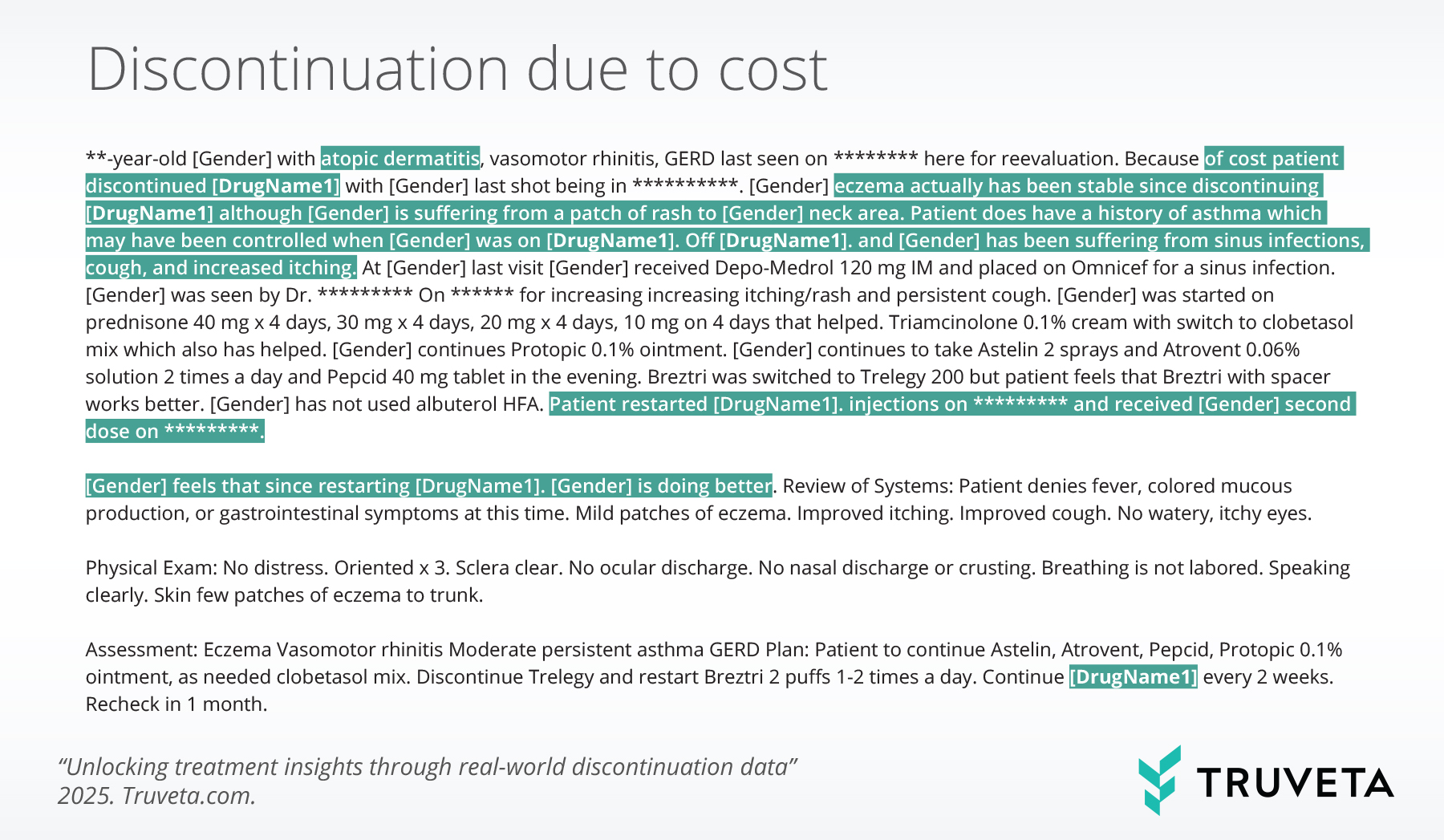
See the entire metabolic disease journey with multimodal data
Connect biomarkers, medications, imaging, and clinical context across the patient journey. Enable deeper analysis of disease progression, treatment response, and outcomes using longitudinal data from:
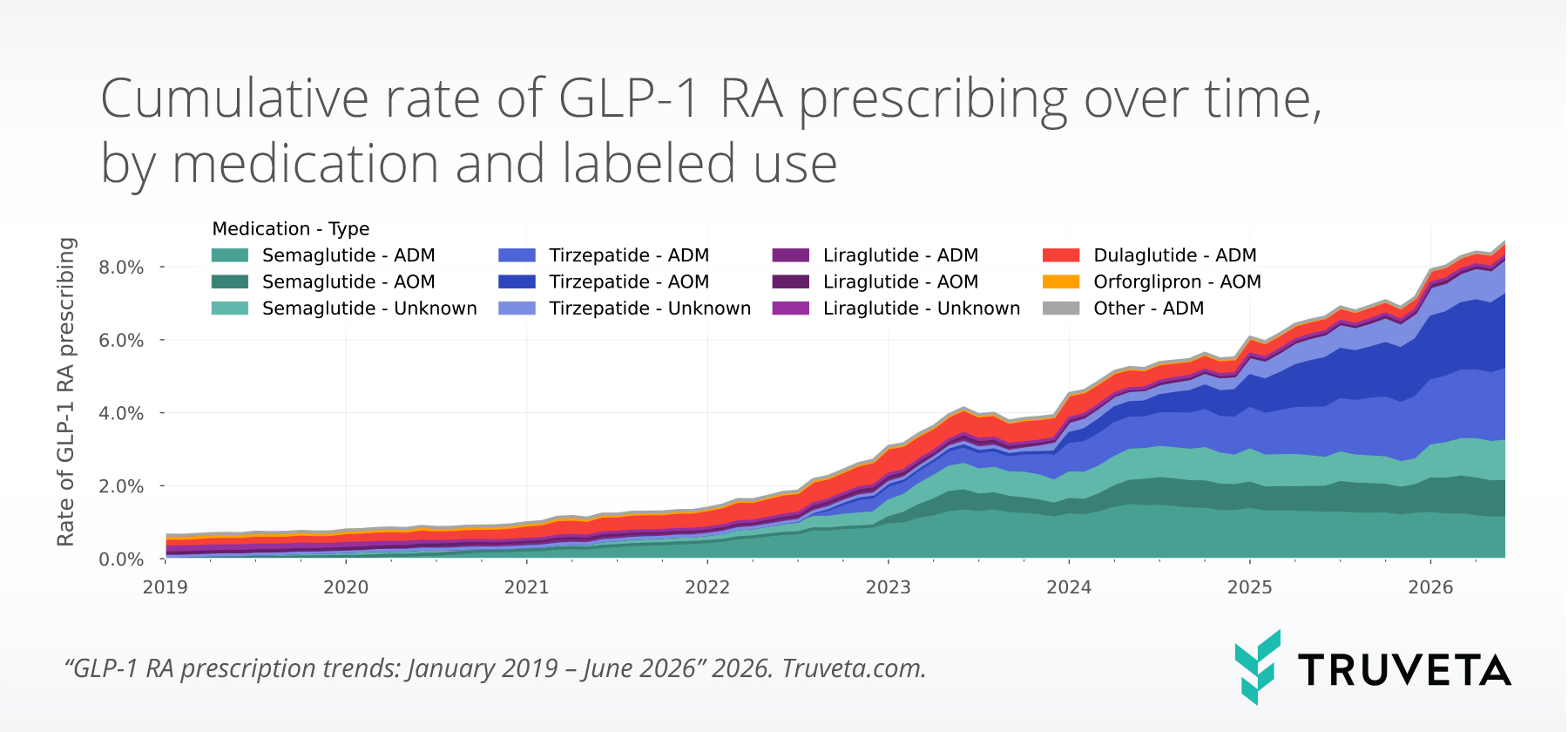
Longitudinal prescribing data enables researchers to study therapy adoption, persistence, and real-world treatment patterns across the evolving metabolic disease landscape.
From foundational research to regulatory and clinical impact
AI training
Clinical trials
Accelerate trial timelines and identify eligible patients faster with precise metabolic phenotypes
Therapy adoption
Optimize commercial performance by tracking utilization, persistence, switching, and prescribing trends in real time
Safety
Save on costly post-marketing studies and detect metabolic complications and treatment-related risks earlier
Outcomes research
Develop novel research and evaluate clinical and economic outcomes using more granular clinical data