


Authors: Karen Gilbert Farrar, PhD ⊕Truveta, Inc, Bellevue, WA, Duy Hoang, PhD ⊕Truveta, Inc, Bellevue, WA, Nina B Masters, PhD, MPH ⊕Truveta, Inc, Bellevue, WA, Brianna M Cartwright, MS ⊕Truveta, Inc, Bellevue, WA
- Adolescents with a sleep disorder diagnosis were 78% more likely to receive a first-time mental health diagnosis within one year compared with similar adolescents without a sleep disorder.
- Adolescents with a sleep disorder have an increased risk of first-time mental health diagnoses across all conditions studied, including anxiety, depression, ADHD, bipolar disorder, and OCD.
This report is an extension of our poster presented at ISPOR 2026, titled Sleep disorder diagnosis in adolescence and subsequent mental health diagnoses – a retrospective cohort study.
Sleep plays a critical role in adolescent development, influencing emotional regulation, cognition, and overall health (1–3). Prior studies have consistently found that poorer sleep, whether measured as insufficient sleep duration, poor sleep quality, or irregular sleep patterns, is associated with higher levels of mental health symptoms (4–6). Adolescents with greater sleep disturbance tend to have more internalizing symptoms, such as anxiety and depression, as well as externalizing symptoms, including behavioral challenges (5–9). Longitudinal research has found that worsening sleep over time predicts increases in mental health symptoms, while improvements in sleep are linked to better outcomes (5, 10, 11). Notably, some studies suggest that sleep problems during adolescence may precede and predict the development of mental health conditions later in adolescence and early adulthood (5, 7, 10, 11), underscoring the importance of understanding these associations in clinical populations.
Despite this robust evidence base, most studies rely on self‑reported sleep symptoms and survey‑based measures of mental health (5, 7, 9). These approaches capture important subjective experiences but may not reflect the patterns seen in clinical care, where diagnoses reflect conditions that are identified, evaluated, and managed by clinicians.
Understanding whether these relationships are observed among patients with clinically diagnosed sleep and mental health conditions is important for translating research into practice. Diagnoses present in EHRs represent a population of adolescents who have engaged with the healthcare system and may be candidates for intervention, yielding actionable insight for clinicians and health systems. Consequently, evidence drawn from EHR data is directly relevant for clinical care and health system planning.
Using Truveta Data we examined whether adolescents with a first-time sleep disorder diagnosis have a higher likelihood of receiving a first-time mental health diagnosis within one year, compared with adolescents without a sleep disorder diagnosis.
Methods
We conducted a retrospective cohort study using a subset of Truveta Data, which includes de-identified EHR data from health systems across the United States.
Study population, cohorts, and outcome
We identified adolescents aged 12–17 years between January 2018 and March 2026 who had at least one year of healthcare utilization both before and after a first-time sleep disorder diagnosis date and no prior or treatment, including antidepressants, anti-anxiety, antipsychotic, stimulant, and mood stabilizing medications.
Sleep disorders included insomnia, sleep apnea, nocturnal enuresis, hypersomnia, parasomnia, and related conditions. Mental health conditions included anxiety, depression, ADHD, bipolar disorder, and OCD.
The comparator cohort included adolescents without any sleep disorder diagnosis who met the same longitudinal care requirements and exclusion criteria. The primary outcome was a first-time mental health diagnosis within one year after the first sleep disorder diagnosis.
Creating comparable groups
Because adolescents with sleep disorders may differ from those without, we used a two-step approach to make the groups as similar as possible.
First, we matched each adolescent with a sleep disorder to up to five adolescents without a sleep disorder who were the same age and sex and had a healthcare visit at a similar time, ensuring we compared patients at similar stages of care.
Next, we applied propensity score weighting to balance the groups by accounting for differences in race and ethnicity, healthcare use (including outpatient and emergency department visits before and after the index date), and underlying health conditions (including asthma, autism, and weight status).
Statistical analysis
We then examined whether adolescents with a sleep disorder were more likely to receive a first-time mental health diagnosis within one year compared with similar adolescents without a sleep disorder.
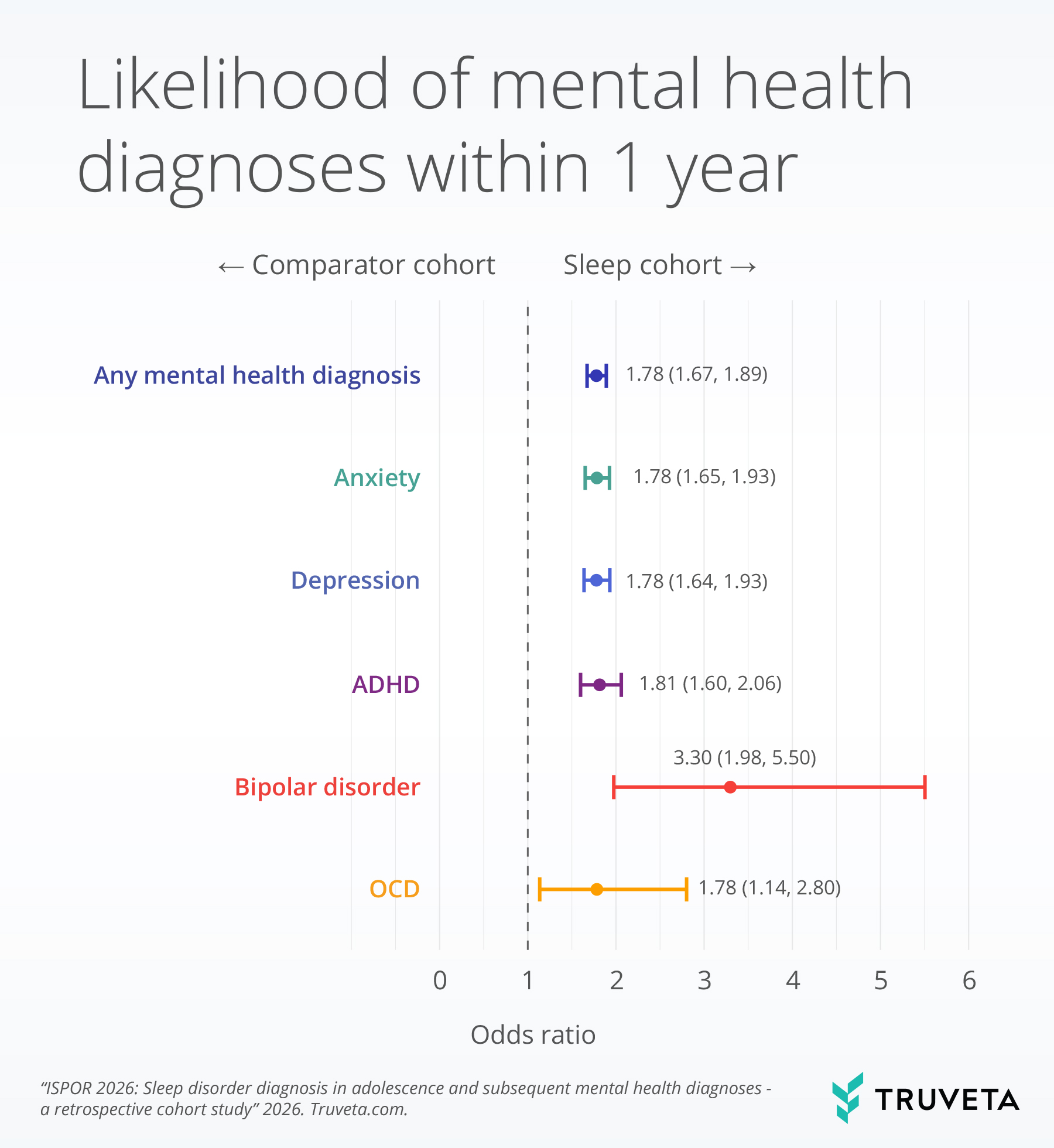
We used a weighted logistic regression model, a statistical approach that estimates the likelihood of an outcome. This allowed us to compare how likely adolescents with and without sleep disorders were to receive a mental health diagnosis within one year. Using the same approach, we also examined specific mental health conditions, anxiety, depression, ADHD, bipolar disorder, and OCD. The outputs of these analyses are odds ratios, where values greater than 1 indicated increased likelihood of a mental health diagnosis within one year.
Results
Study population
After matching and applying propensity score weighting, we identified 13,365 adolescents with a first-time sleep disorder diagnosis and 13,718 adolescents without a sleep disorder diagnosis.
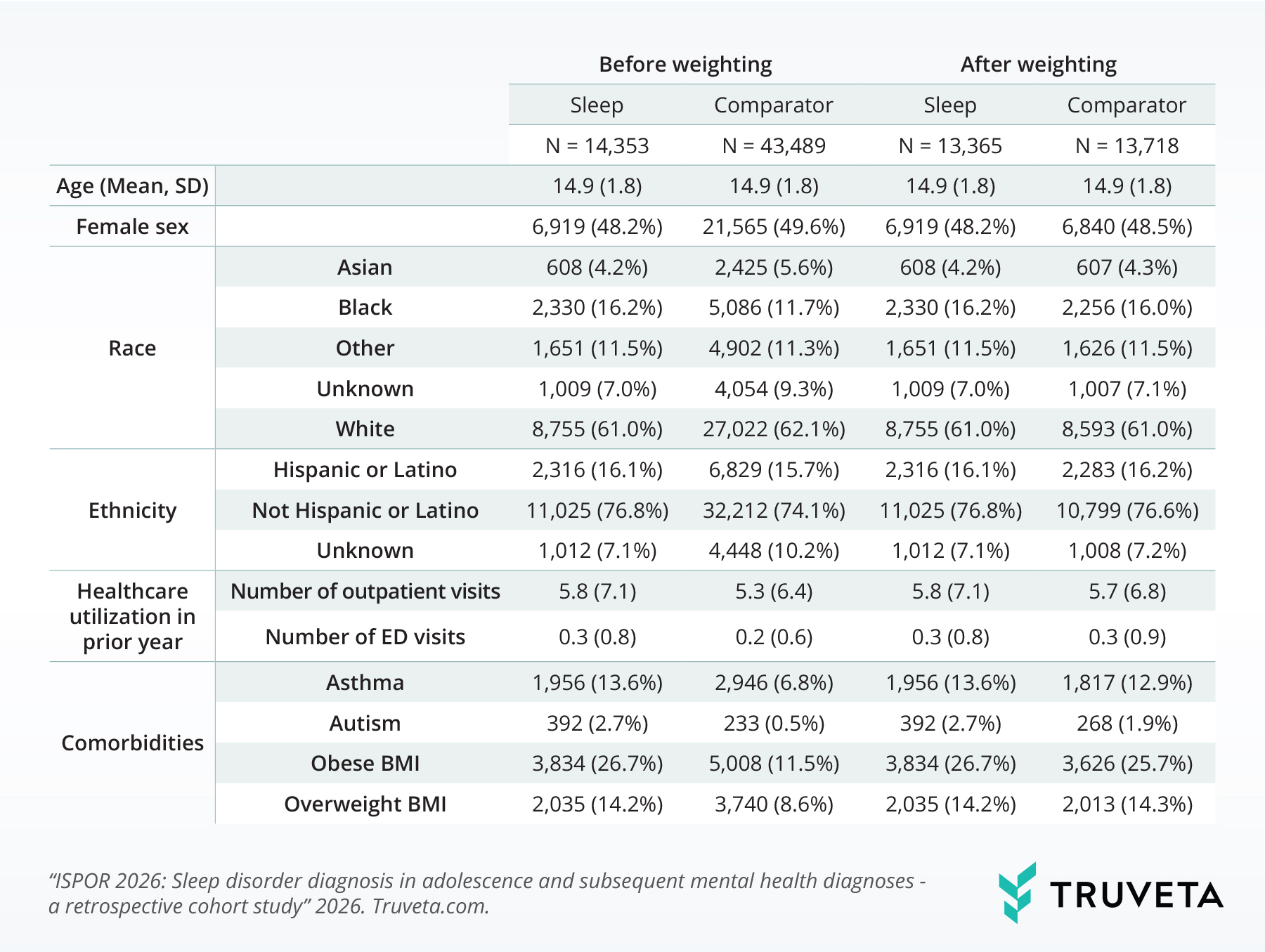
Baseline characteristics between the two groups were well balanced after weighting, with all standardized mean differences below 0.1, indicating strong comparability across demographics, healthcare utilization, and clinical history.
Patterns of sleep disorders
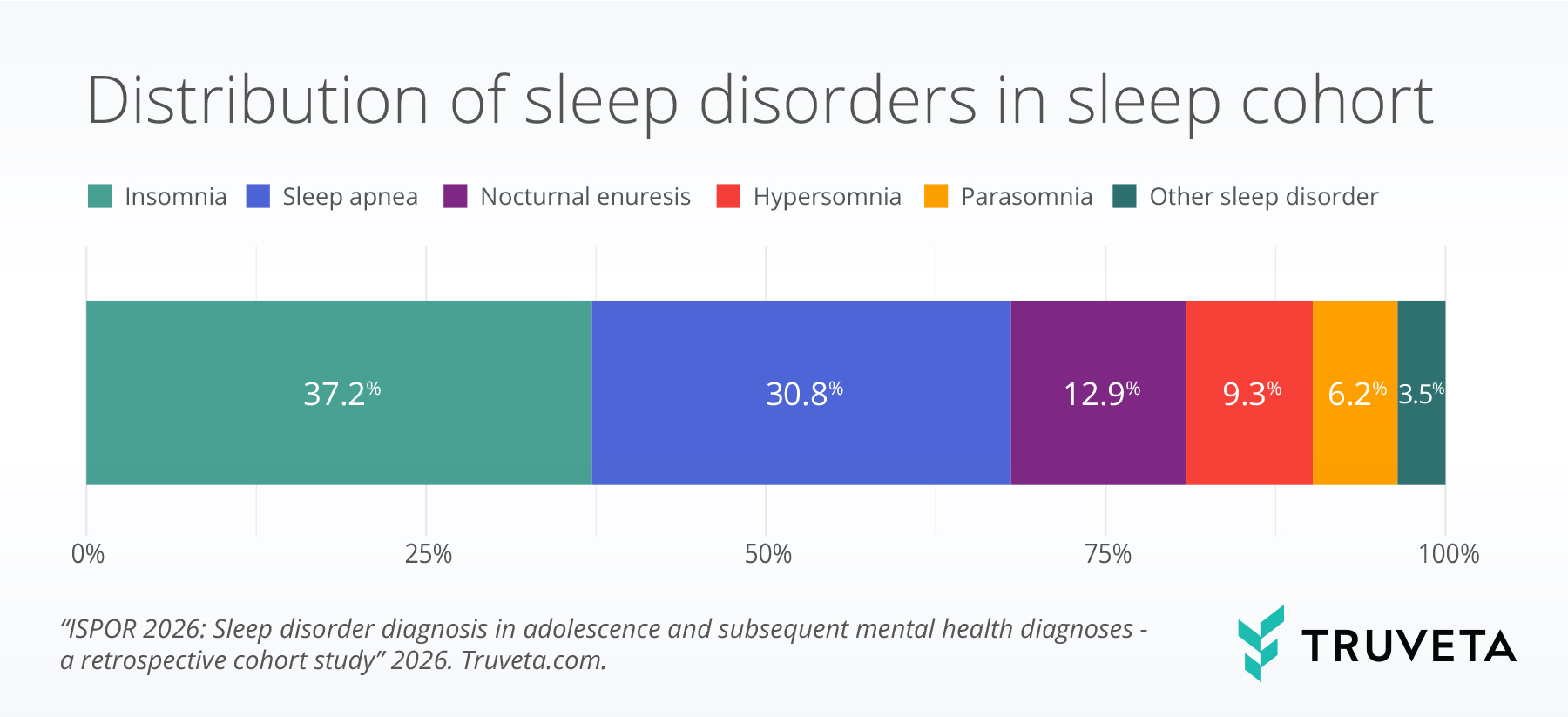
Among adolescents with a sleep disorder diagnosis, the most common conditions were: insomnia, sleep apnea, nocturnal enuresis, and less commonly, hypersomnia, parasomnia, and other sleep disorders.
Likelihood of mental health diagnoses within one year
Adolescents with a sleep disorder were significantly more likely to receive a first-time mental health diagnosis within one year of the diagnosis compared with matched adolescents without a sleep disorder. Across all outcomes, the likelihood of diagnosis was higher in the sleep cohort. Specifically, the odds of any mental health diagnosis was 78% higher in those with a sleep disorder than those without. Odds of mental health diagnoses were higher for all mental health conditions studied. The largest differences were observed for bipolar disorder and ADHD, with odds 230% and 81% higher, respectively, in the sleep disorder cohort.
Discussion
In this large, real-world study of adolescents, we found that a first-time sleep disorder diagnosis was associated with a 78% higher likelihood of receiving a mental health diagnosis within the following year. This increased likelihood was consistent across multiple conditions, including anxiety, depression, ADHD, bipolar disorder, and OCD, suggesting that sleep disorders may serve as an early clinical marker of broader mental health vulnerability.
These findings align with prior research demonstrating bidirectional relationships between sleep and mental health. Longitudinal and meta-analytic evidence shows that adolescents with sleep disturbances have a higher likelihood of developing mood and psychotic disorders, with one large meta-analysis reporting nearly twofold increased odds of onset in adolescence and early adulthood, particularly for clinically diagnosed sleep disorders (5, 6, 8). Data from prospective cohort studies further suggest a directional component, with decreases in sleep quality predicting subsequent increases in internalizing and externalizing symptoms over time (5, 7). Together, this evidence suggests that sleep disturbances may both contribute to and signal emerging mental health risk, making them an important point of early clinical detection.
From a clinical and public health perspective, these results underscore the importance of early identification and management of sleep disorders in adolescents. Screening for mental health conditions following a sleep disorder diagnosis may offer an opportunity for earlier intervention, potentially improving long-term outcomes during a critical developmental window (5).
This study has several limitations. First, we required adolescents to have consistent healthcare utilization before and after the index date, which may exclude individuals with sleep or mental health conditions who are not engaged in regular care. Second, our analysis relies on clinically recorded diagnoses in the electronic health record. As a result, we may not capture adolescents with mental health symptoms who did not meet diagnostic criteria, were not evaluated, or did not disclose symptoms to a provider. Finally, while we observed a strong association between sleep disorders and subsequent mental health diagnoses, this study does not establish causality. Sleep disorders may be an early indicator of emerging mental health conditions rather than a direct cause.
Overall, our results suggest that sleep disorders in adolescence are strongly associated with subsequent mental health diagnoses. Recognizing and addressing sleep disorders may offer an opportunity for earlier identification of adolescents at increased risk and support more proactive, coordinated care. Adolescence represents a critical window for integrated mental health screening following sleep disorder diagnosis.
These findings are consistent with data accessed on April 17, 2025.
Citations
- P. G. Anastasiades, L. De Vivo, M. Bellesi, M. W. Jones, Adolescent sleep and the foundations of prefrontal cortical development and dysfunction. Progress in Neurobiology 218, 102338 (2022).
- W. Lapidaire, A. S. Urrila, E. Artiges, R. Miranda, H. Vulser, P. Bezivin-Frere, H. Lemaitre, J. Penttilä, T. Banaschewski, A. L. Bokde, Irregular sleep habits, regional grey matter volumes, and psychological functioning in adolescents. PLoS One 16, e0243720 (2021).
- V. Bacaro, K. Miletic, E. Crocetti, A meta-analysis of longitudinal studies on the interplay between sleep, mental health, and positive well-being in adolescents. International Journal of Clinical and Health Psychology 24, 100424 (2024).
- R. Reddy, C. A. Palmer, C. Jackson, S. G. Farris, C. A. Alfano, Impact of sleep restriction versus idealized sleep on emotional experience, reactivity and regulation in healthy adolescents. Journal of Sleep Research 26, 516–525 (2017).
- R. Cooper, M. A. Di Biase, B. Bei, J. Quach, V. Cropley, Associations of changes in sleep and emotional and behavioral problems from late childhood to early adolescence. JAMA psychiatry 80, 585–596 (2023).
- K. Kostev, N. Kaur, C. Vetter, M. Konrad, Sleep disorders are associated with subsequent depression and anxiety disorders in children and adolescents in Germany-a retrospective cohort study. Journal of Psychiatric Research 187, 299–303 (2025).
- F. Orchard, A. M. Gregory, M. Gradisar, S. Reynolds, Self‐reported sleep patterns and quality amongst adolescents: cross‐sectional and prospective associations with anxiety and depression. Child Psychology Psychiatry 61, 1126–1137 (2020).
- J. Scott, H. Kallestad, O. Vedaa, B. Sivertsen, B. Etain, Sleep disturbances and first onset of major mental disorders in adolescence and early adulthood: A systematic review and meta-analysis. Sleep Medicine Reviews 57, 101429 (2021).
- J. Zhang, D. Paksarian, F. Lamers, I. B. Hickie, J. He, K. R. Merikangas, Sleep patterns and mental health correlates in US adolescents. The Journal of pediatrics 182, 137–143 (2017).
- D. J. Biddle, D. F. Hermens, T. Lallukka, M. Aji, N. Glozier, Insomnia symptoms and short sleep duration predict trajectory of mental health symptoms. Sleep medicine 54, 53–61 (2019).
- A. Scott, T. Webb, M. Martyn-St James, G. Rowse, S. Weich, Does improving sleep lead to better mental health? A meta-analysis of randomised controlled trials. Sleep 44, A300–A300 (2021).