


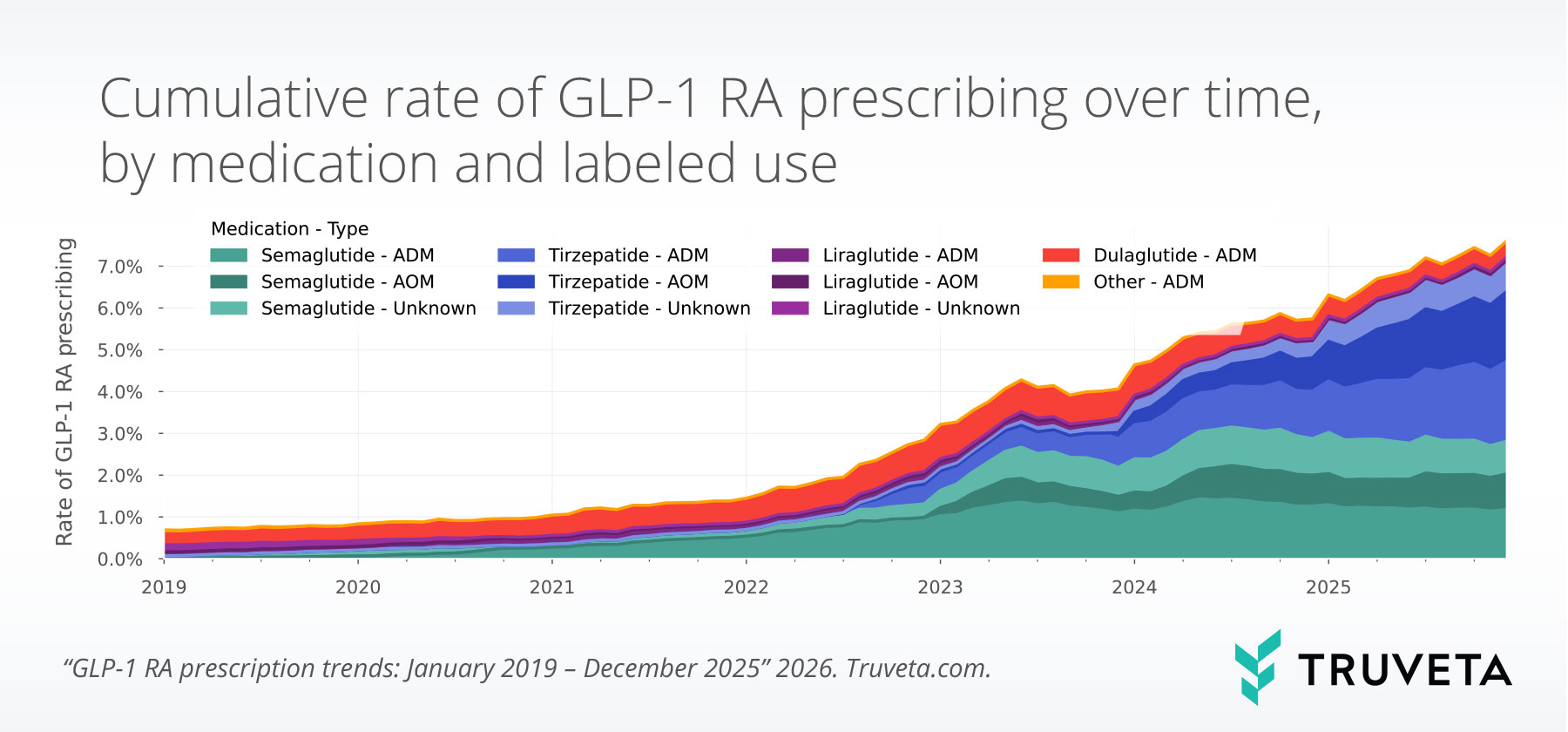
- As of December 2025, GLP-1 RA prescriptions account for more than 7% of all prescriptions.
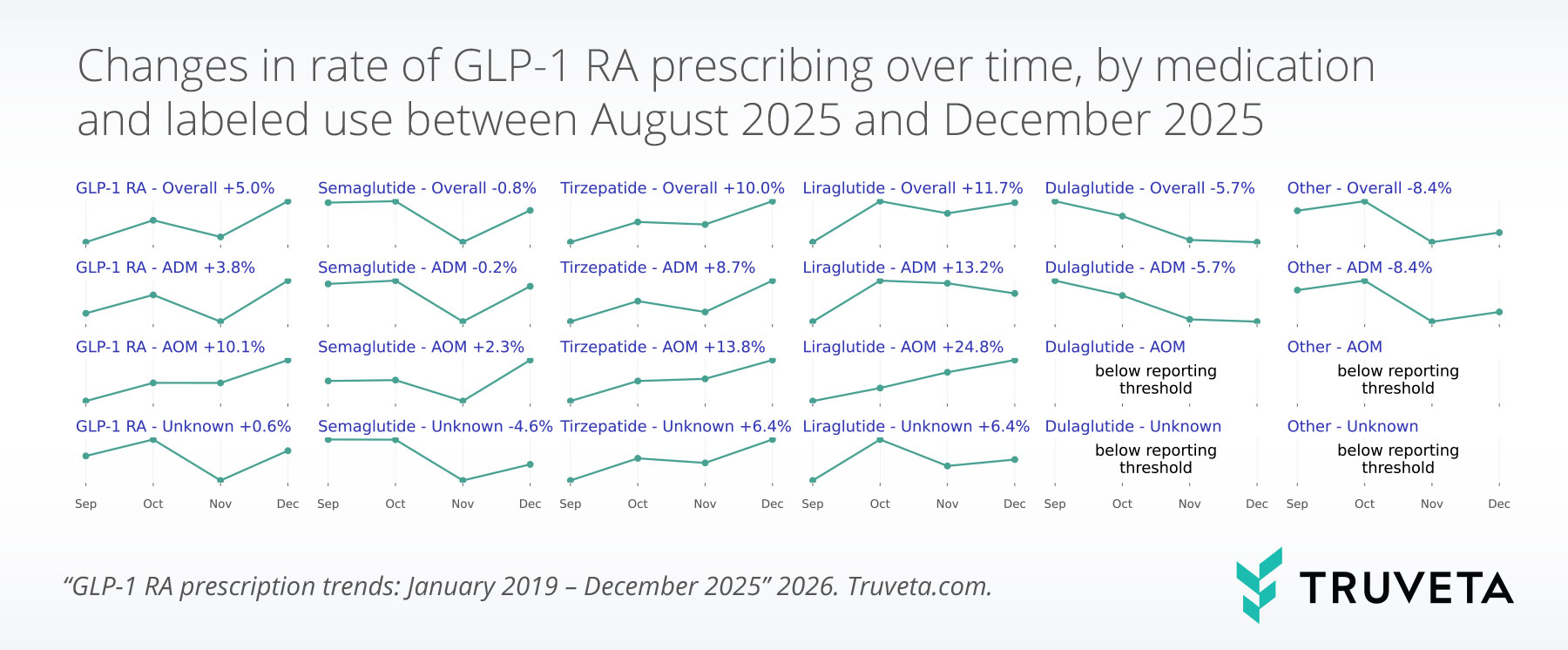
- Tirzepatide continues to be the most prescribed anti-diabetic (ADM) and anti-obesity (AOM) medication (sold as Mounjaro and Zepbound, respectively) and showed the largest increase in total prescribing from September to December 2025.
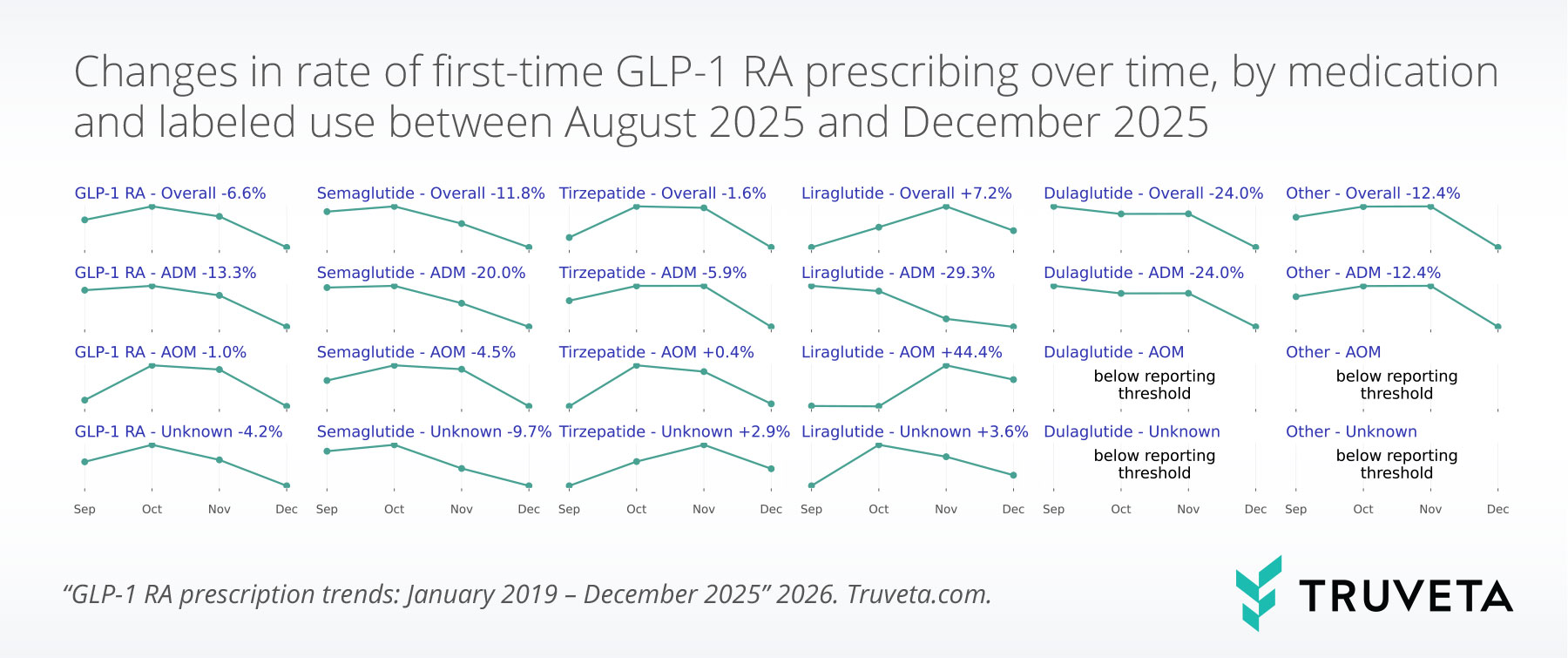
- Overall prescribing rates (GLP-1 RA prescriptions per total prescriptions) increased slightly from September to December 2025 (+5.0%); however, first-time prescribing rates declined over the same period (-6.6%). These trends are consistent with first-time prescribing rates seen around the holidays in previous years.
Limited recent data exist on prescribing patterns and patient characteristics for GLP-1 RA medications, whether used as anti-diabetic medication (ADM) for patients with type 2 diabetes (T2D) and/or used as an anti-obesity medication (AOM) for patients with overweight or obesity. Interest in these medications has recently accelerated, largely for their weight-loss effects, although access to and use of GLP-1 RA medications may be impacted by high cost, limited insurance coverage for patients without T2D and medication shortages.
To offer insight into the latest trends about these medications, Truveta Research has created the GLP-1 RA monitoring report, which will be updated periodically with fresh, timely data. Truveta Data provides the most representative, complete, and timely patient journey data, including full patient medical records, notes, and images, for more than 120 million patients across the US. Truveta Data is also linked with closed claims for more than 200 million patients. Because Truveta Data is updated daily, we can show the latest trends in these medications.
This blog provides a snapshot of the key findings in the most recent report; including prescribing and dispensing medication (indicates whether the patient picked up the medication) trends. For the full analysis—inclusive of demographics, comorbidities, and social drivers of health data for the population, methodology, additional findings, limitations, and citations—you can view the complete report on MedRxiv or directly within Truveta Studio.
Key findings: Prescribing trends
Using a subset of Truveta Data, Truveta Research identified people who were prescribed a GLP-1 RA between January 01, 2019 and December 31, 2025. We describe prescribing volumes and patient characteristics over time, by medication, and by FDA-labeled use (e.g., ADM, AOM, or unknown).
Overall prescribing trends
The study found that 2,185,238 patients were prescribed a GLP-1 RA between January 2019 and December 2025, with 11,194,909 total prescriptions during this period.
Overall prescribing rates (GLP-1 RA prescriptions per total prescriptions) in December 2025 increased slightly relative to September 2025 (+5.0%) and now account for more than 7% of all prescriptions.
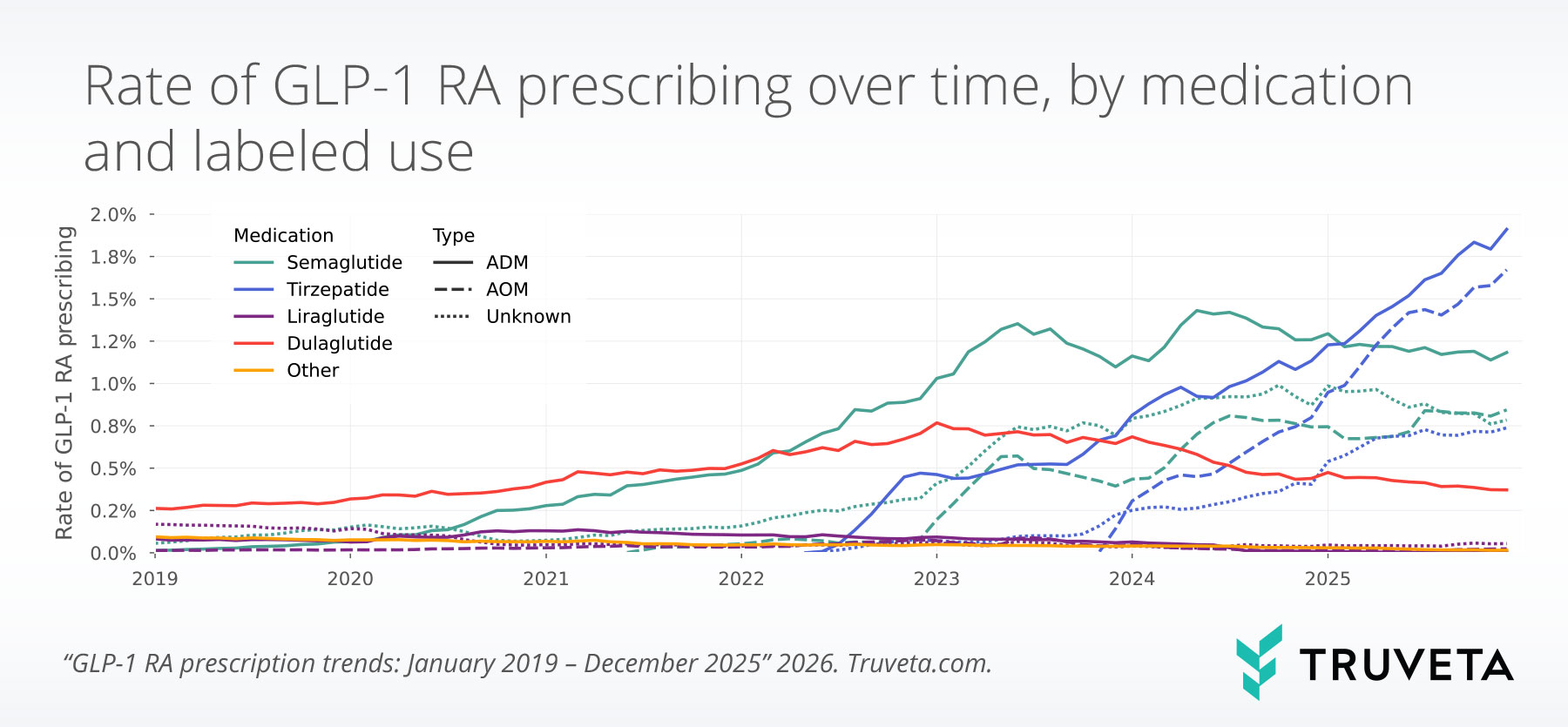
Month-over-month ADM prescribing increased in October, decreased in November, and increased again in December 2025. ADM prescribing in December 2025 was about the same as September 2025 (+3.8%).
AOM prescribing increased in December 2025 compared to September 2025 (+10.1%).
Tirzepatide remained the leading AOM and ADM by prescription volume and showed the largest increase in total prescribing from September to December 2025.
Trends in first-time prescribing
First-time prescribing rates (first-time GLP-1 RA prescriptions per total prescriptions) in December 2025 decreased, relative to September 2025 (-6.6%).
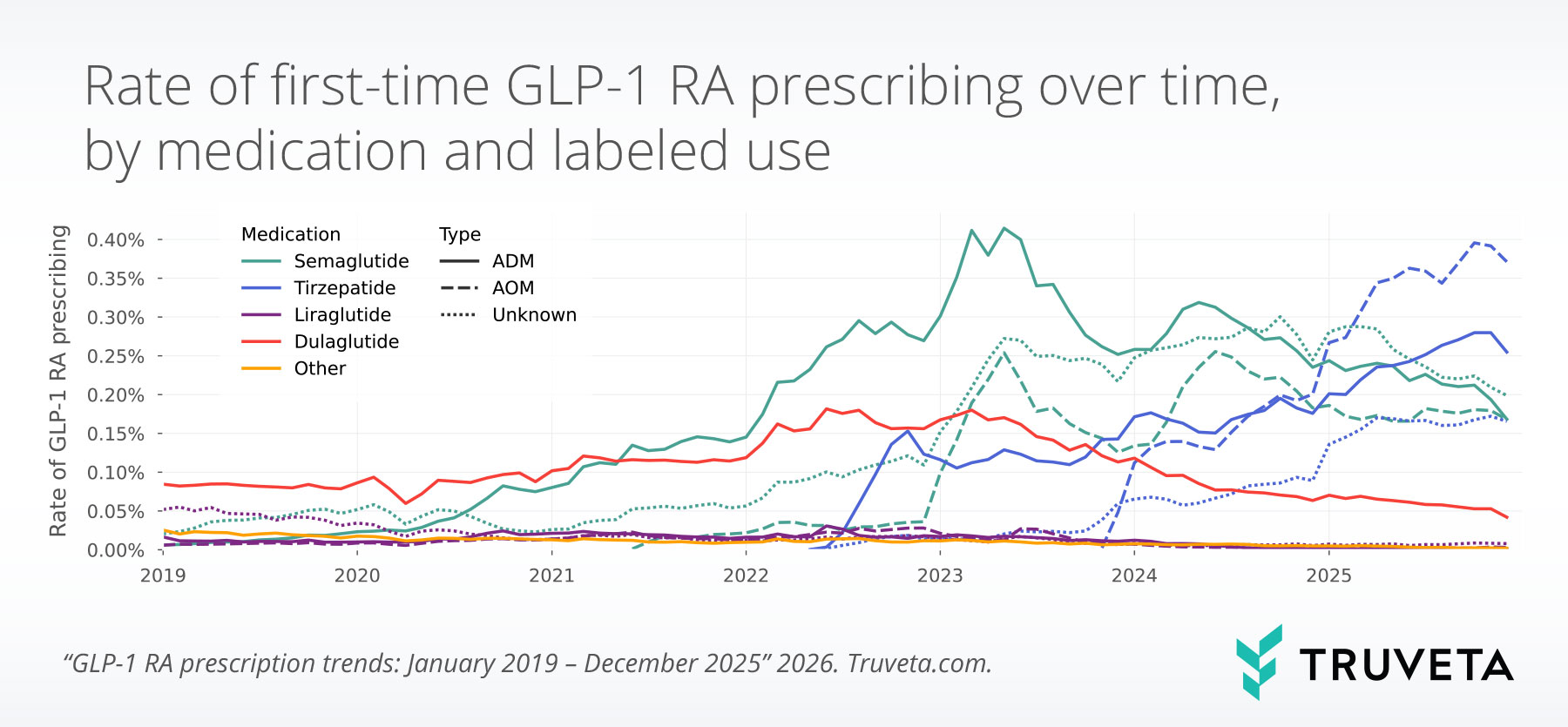
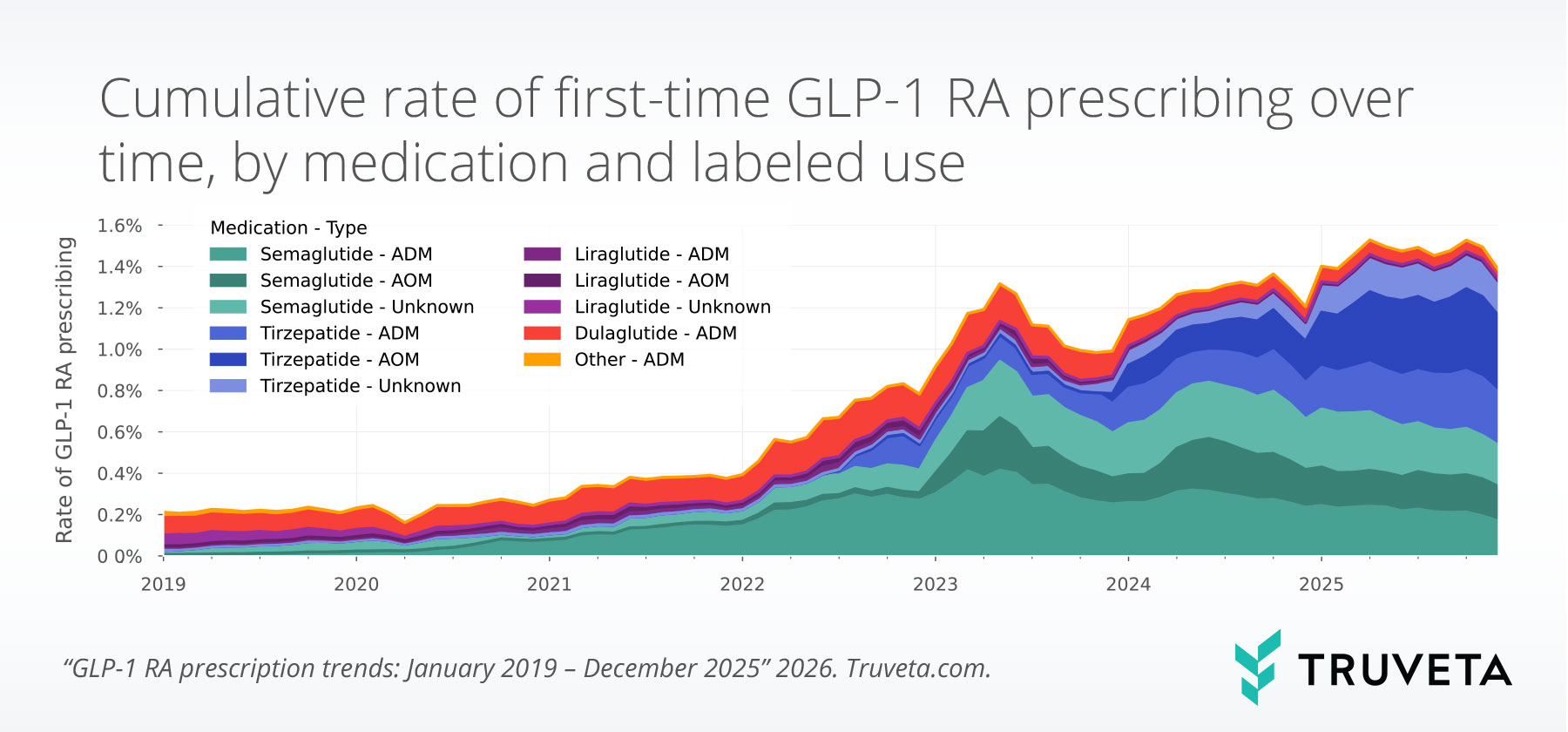
First-time prescribing of ADMs decreased in December 2025, relative to September 2025 (-13.3%).
First-time prescribing of AOMs was about the same in December 2025, relative to September 2025 (-1.0%).
Dispense trends
Dispense refers to prescription fills, indicating that the patient picked up the medication from their pharmacy and provides the closest proxy for use.
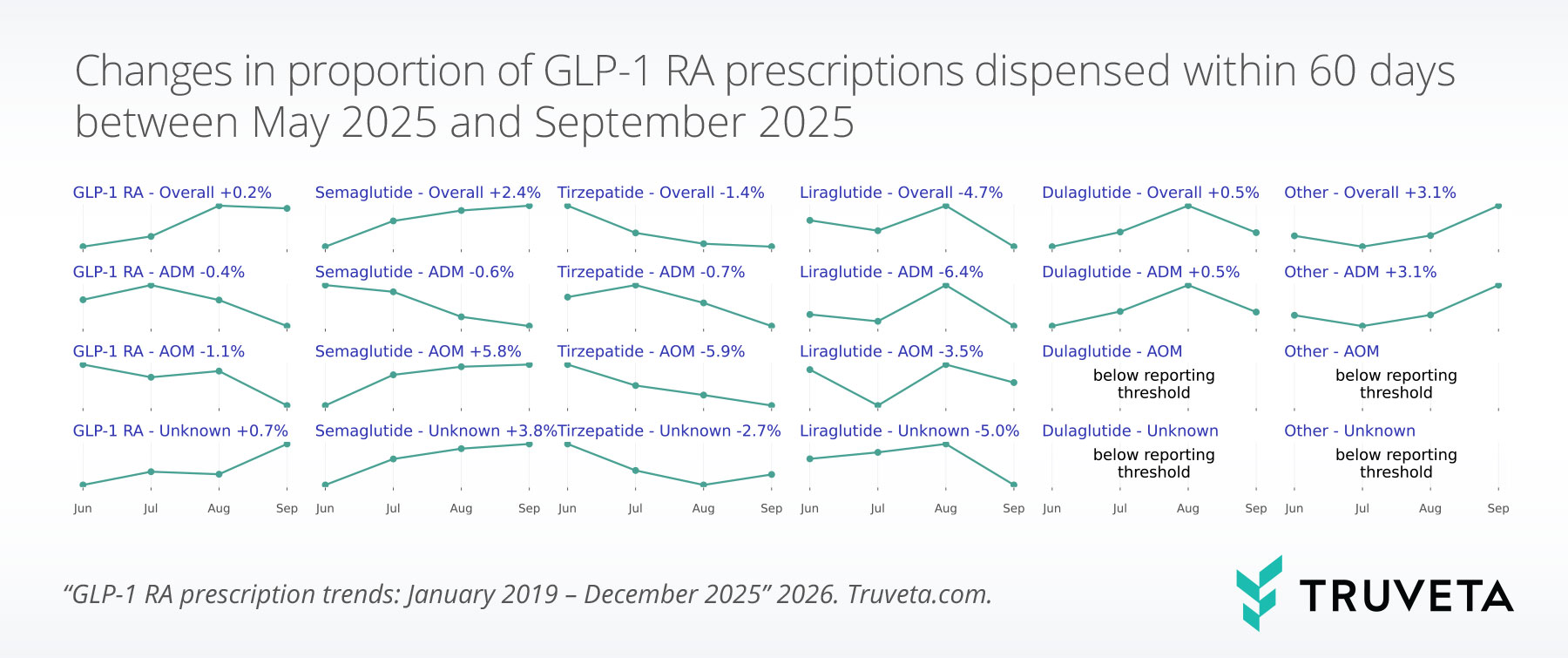
During the full time period, 70.7% of GLP-1 RA prescriptions had a dispense within 60 days of their prescription (e.g., were initiated within 60 days).
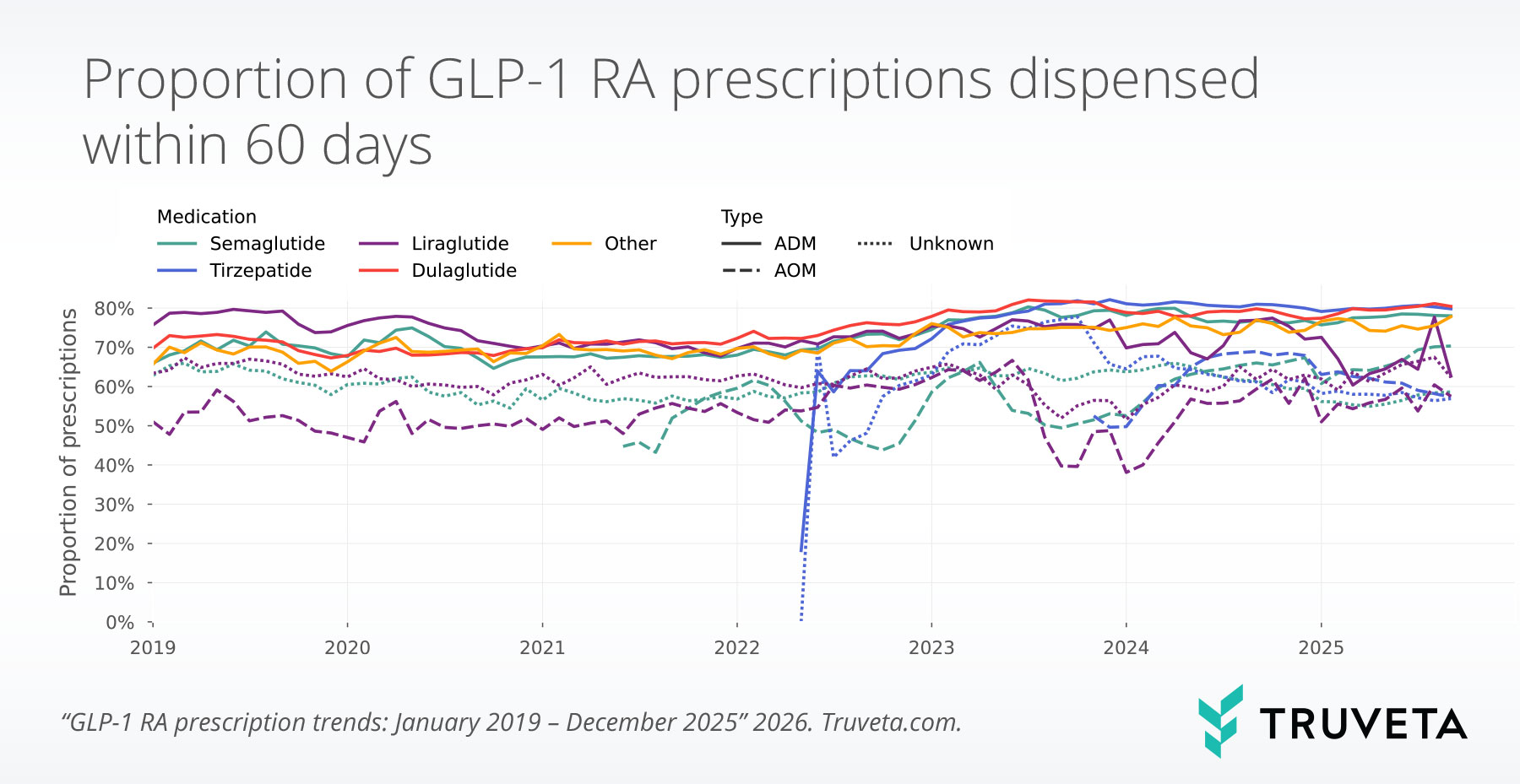
For patients first prescribed an ADM in September 2025, 72.5% filled a GLP-1 RA within 60 days. Initiation rates for ADM GLP-1 RA are about the same in September 2025, relative to June 2025 (+2.0%).
For patients first prescribed an AOM in September 2025, 47.5% filled a GLP-1 RA within 60 days. Initiation rates for AOM GLP-1 RA are about the same in September 2025, relative to June 2025 (+1.5%).
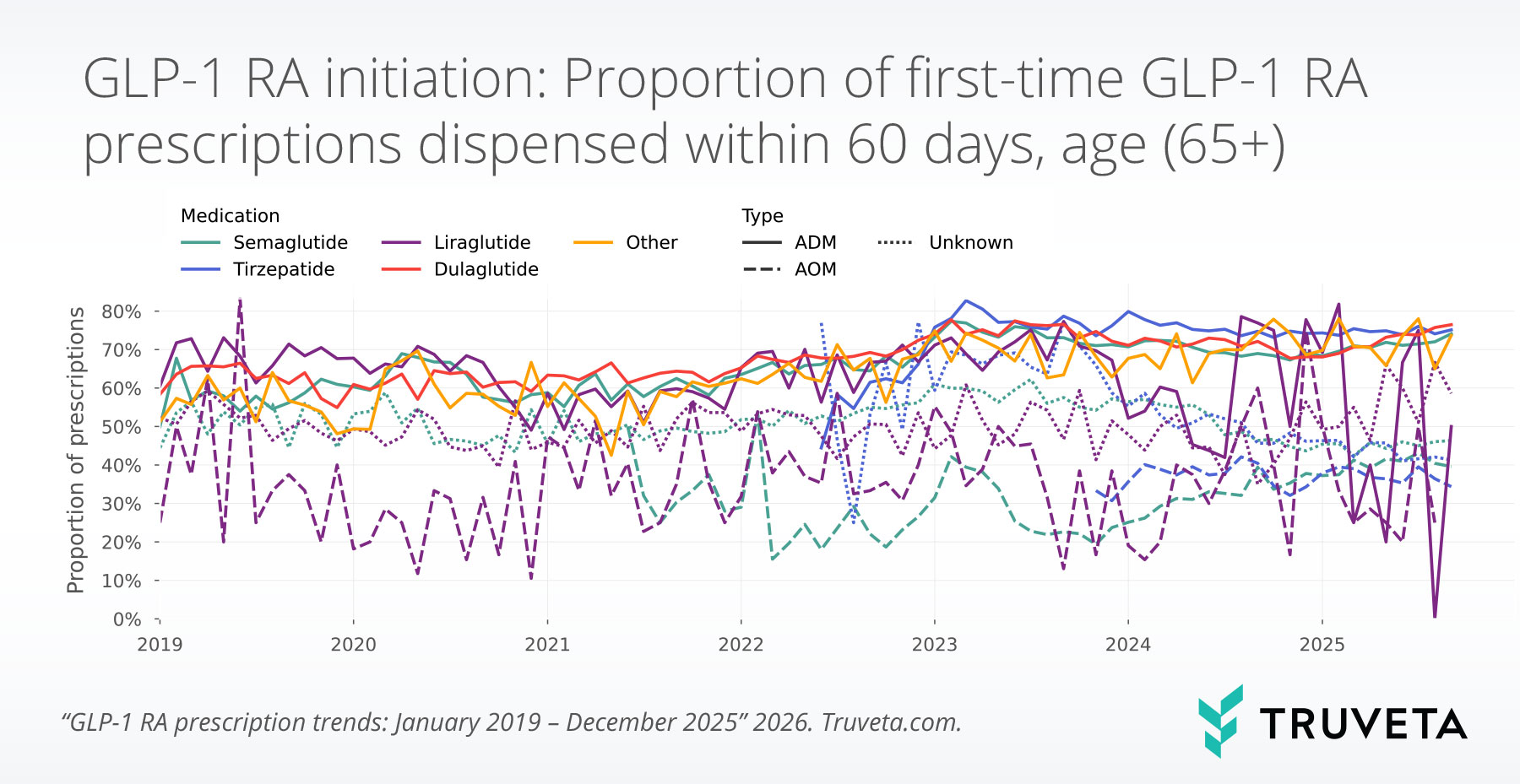
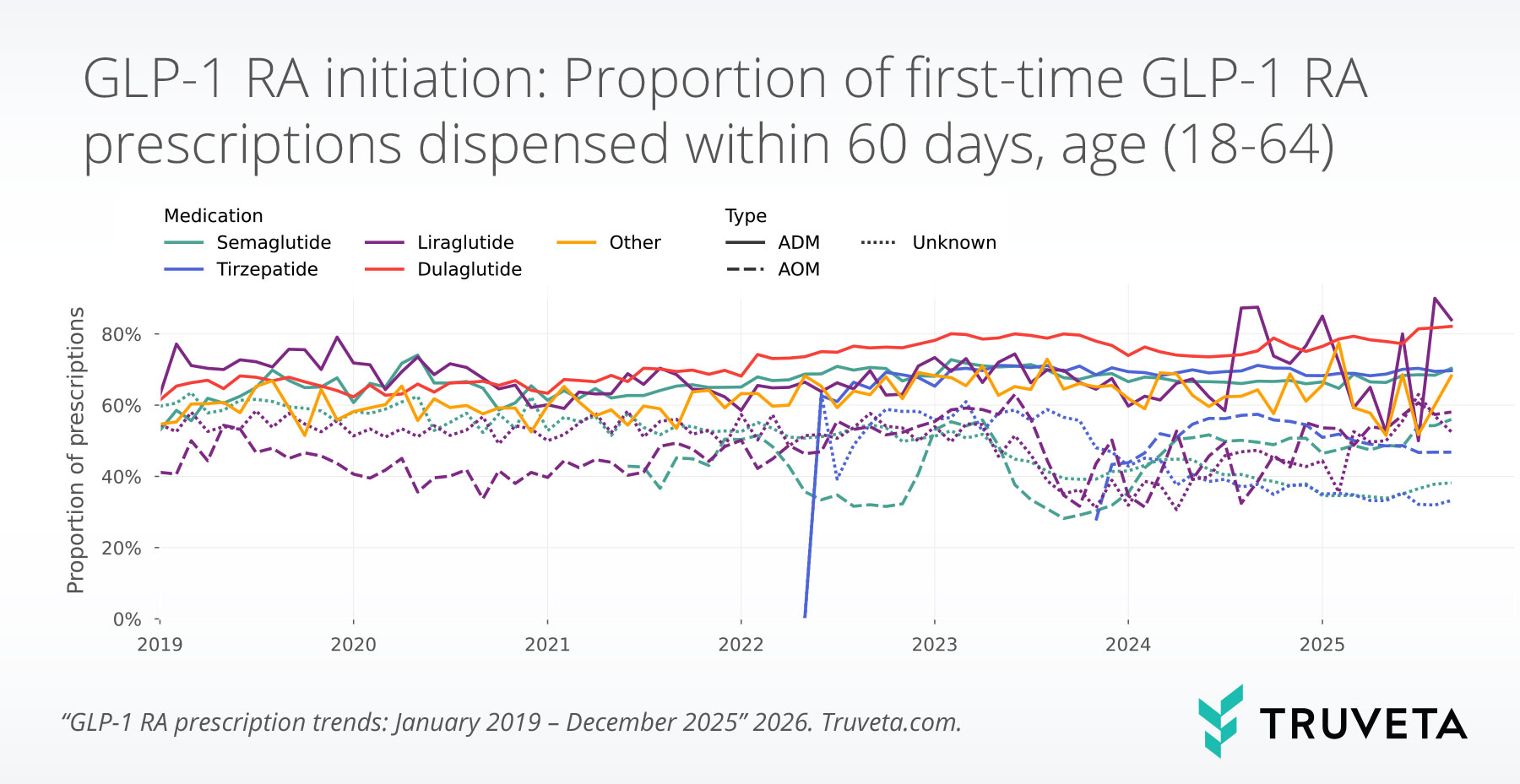
As a proxy for Medicare insurance, we segmented initiation rate by populations aged 65 and older versus those aged 18-64.
Discussion
With the popularity of GLP-1 RA medications and challenges in access and insurance coverage, we will continue to monitor these prescribing and dispensing trends over time.
The GLP-1 RA monitoring report describes more detailed information about the overall population of patients being prescribed these medications (including demographics and comorbidities), and the proportion and characteristics of patients who filled a GLP-1 RA prescription over time using dispenses. Methodologies, limitations, and citations are also available in the full report. You can also view the full study—including codes, definitions, and more—directly in Truveta Studio.
These are preliminary research findings and not peer reviewed. All data are preliminary and may change as additional data are obtained. These findings are consistent with data accessed January 12, 2026. Data presented in this analysis represent raw counts and/or rates, and post-stratification methods have not been conducted.