
Hematologic oncology is at an inflection point. Over the past decade, innovation in blood cancers has accelerated dramatically. Breakthroughs like CAR-T and next-generation immunotherapies have redefined what’s possible for patients with blood cancers, turning once-fatal diagnoses into chronic, manageable conditions for many.
As innovation accelerates, the reality of care is becoming more complex. Treatments are more personalized, delivered across a wider range of settings, and followed over years. Making sense of this complexity at scale requires a real-world view of how patients are treated and monitored over time.
Real-world hematology data built for today’s questions
Truveta Data was built to provide that view, with daily refreshed EHR data for more than 130 million patients—including clinical notes and imaging—linked with closed claims, mortality, and social drivers of health to enable longitudinal research across the full patient journey.
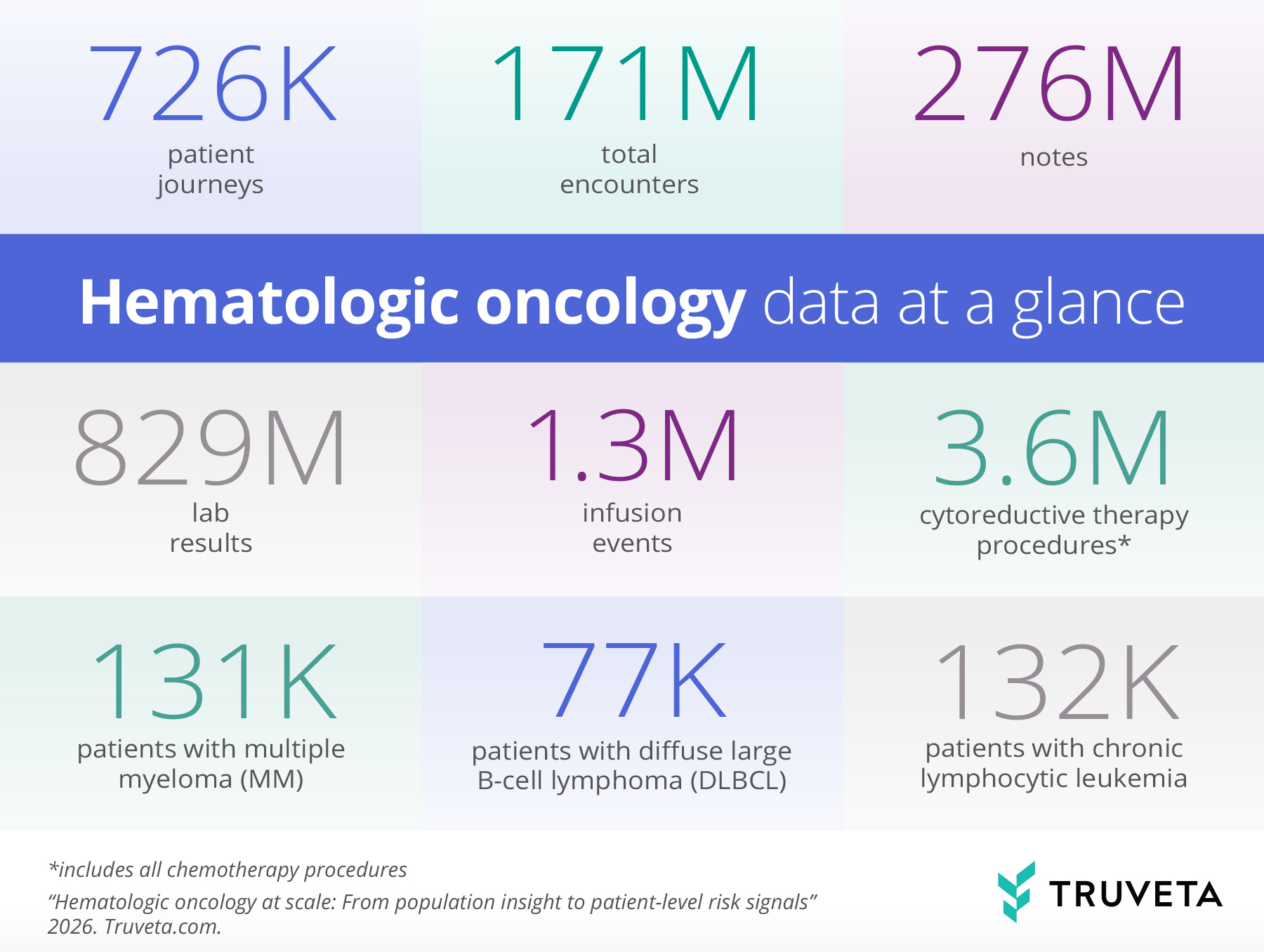
For hematology researchers, this means access to:
- Longitudinal laboratory data, including blood transfusions, hematocrit, hemoglobin, platelet counts, and white blood cell measures
- Medication exposure and timing, including cytoreductive therapies, targeted agents, and supportive medications such as anticoagulants
- Clinical outcomes, such as thromboembolic events, disease progression, and hospitalizations
- Up to 10 years of follow-up, reflecting chronic disease management rather than isolated episodes of care
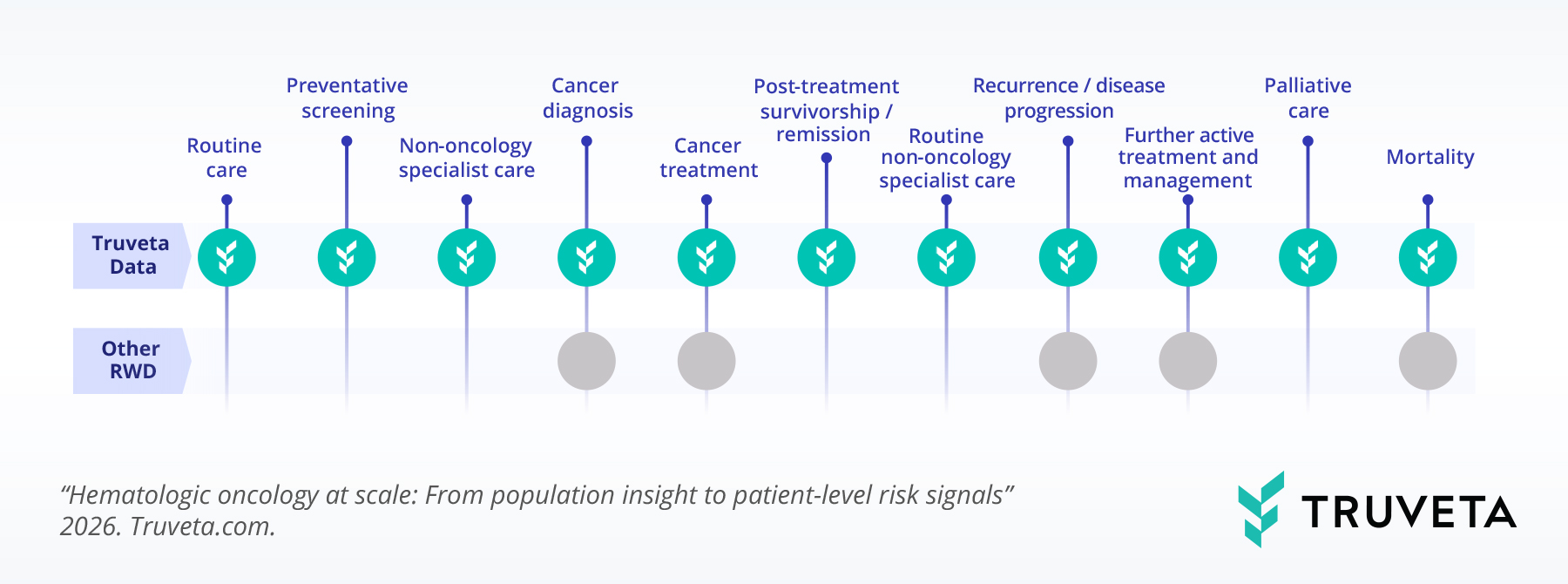
Real-world example: Longitudinal safety signals in polycythemia vera
Polycythemia vera (PV) is a chronic hematologic malignancy defined by elevated hematocrit (HCT) and long-term risks of disease progression, including transformation to myelofibrosis (MF). Patients are monitored closely over time, with treatment decisions guided by laboratory trends.
Using Truveta Data, a quick analysis examined longitudinal hematocrit trajectories among 47,647 patients with PV, stratified by whether patients later transformed to MF. Patients were followed from the time of PV diagnosis through routine clinical care, capturing hematocrit values collected over months to years of follow-up.
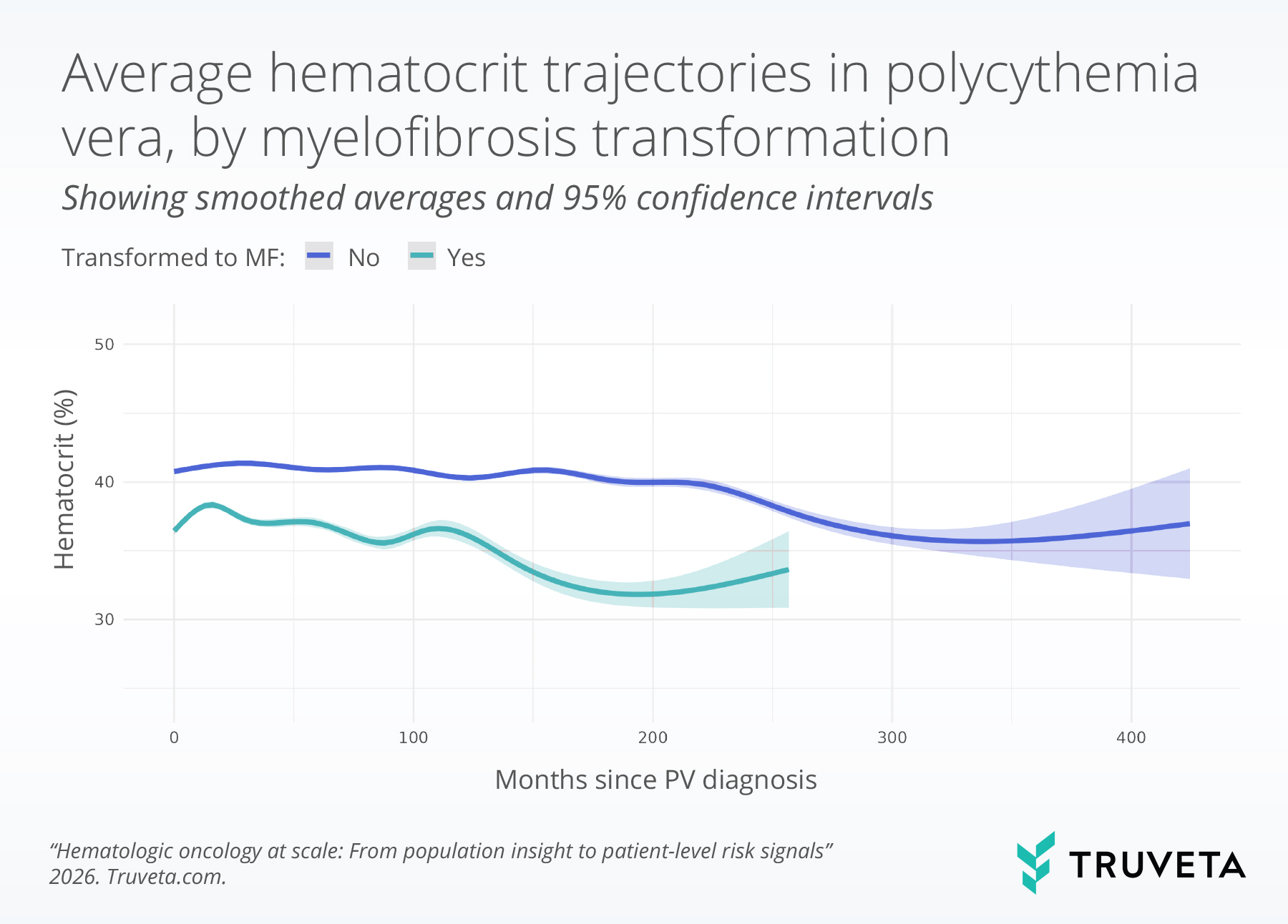
The journeys above showcase patients who transformed to MF and those who did not. Those who transformed had lower hematocrit during the start of observation and slowly trended downward, whereas those who did not transform maintained relative stability.
This analysis highlights how longitudinal, real-world EHR data can be used to study disease evolution over time, revealing early phenotypic signals that are difficult to observe in static datasets or short-term studies. By following large patient populations across years of routine monitoring, researchers can move beyond static snapshots to better understand how hematologic malignancies progress in real-world clinical practice.
Extracting clinically meaningful insight from clinical notes
In hematologic oncology, critical clinical details—such as disease progression, line of therapy, treatment response, and reasons for discontinuation—are frequently documented only in clinical notes.
The Truveta Language Model enables access to these essential oncology signals by extracting clinically relevant information directly from clinical notes and linking it with structured EHR data. By unlocking this unstructured information at scale, Truveta Data supports longitudinal, clinically grounded research that would not be possible using structured data alone.
Enabling modern hematology oncology research
As hematologic oncology continues to evolve, the quality of real-world evidence increasingly depends on whether data reflects how care is delivered at scale. Truveta Data provides the most complete, timely and representative data available in the US, supporting evidence generation as blood cancers are studied and treated in the real world.
Explore a custom feasibility and see how Truveta can support your hematologic oncology research strategy.