
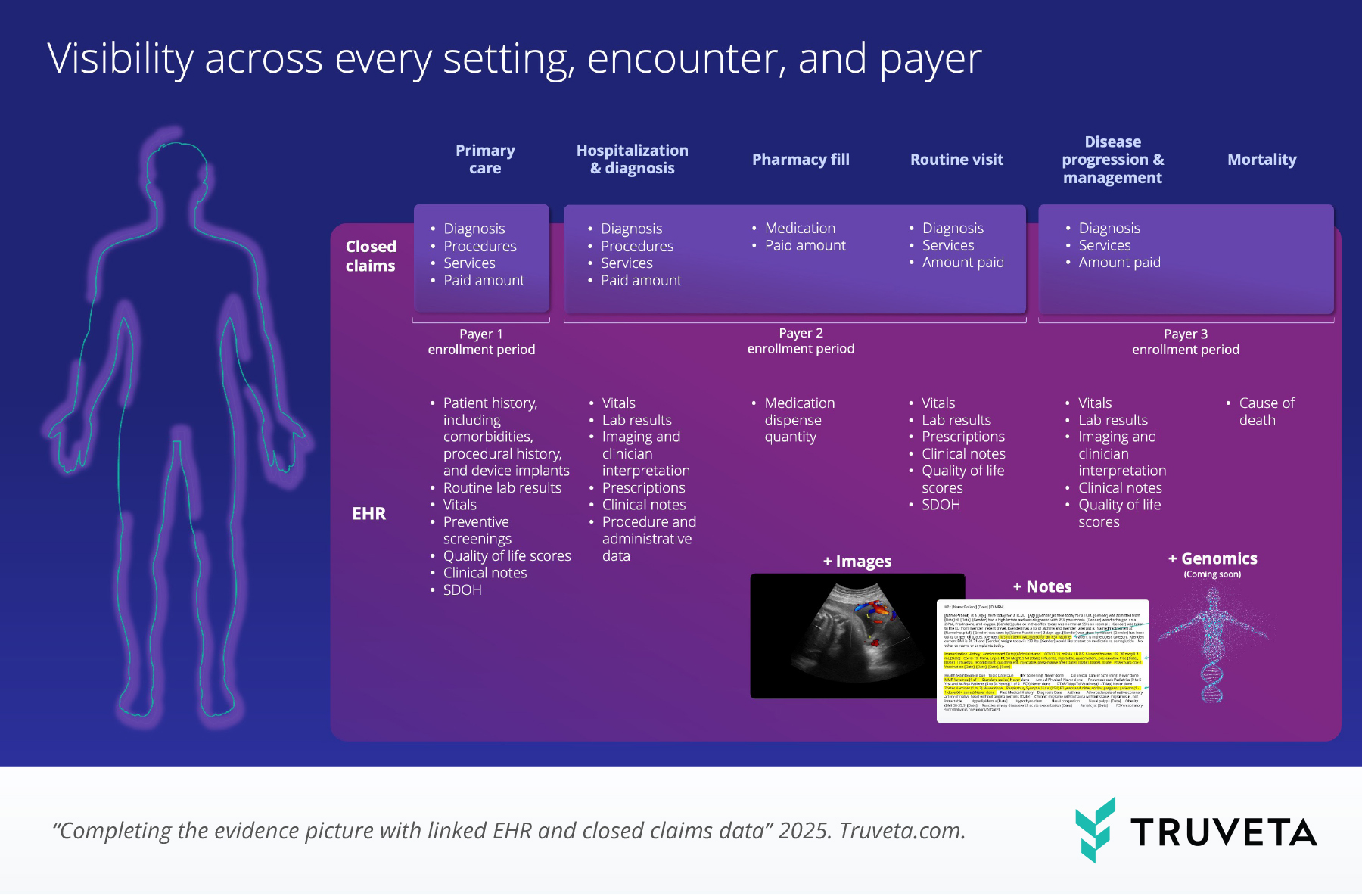
Truveta Data combines these complementary sources into one research-ready dataset, linking expert-determined EHR and claims records for more than 50 million patients. This linkage creates a complete and trusted view of real-world outcomes.
Why linking EHR and closed claims matters
Closed claims datasets capture the activity of health care delivery, recording the transactions, diagnoses, and procedures paid by public and private payers. Yet patients frequently move between insurers (roughly one in five Americans change their plan each year), creating gaps in continuity and clinical context.
Daily updated EHR data fill those gaps with longitudinal clinical insight. Together, the two data types form a unified, end-to-end record of care that spans payers, settings, and time. In Truveta Data, this linkage supports large-scale analyses for health-economics and outcomes research (HEOR), safety monitoring, and other comparative-effectiveness studies—advancing real-world evidence that can supplement or replace traditional clinical trials and registries.
How this linkage improves real-world research
Linking EHR and closed claims data allows researchers to follow the full trajectory of care, from diagnosis and clinical measures to the treatments and outcomes that follow. Recent Truveta Research studies illustrate how this connection deepens real-world understanding:
1. Treating anemia among patients with chronic kidney disease and diabetes
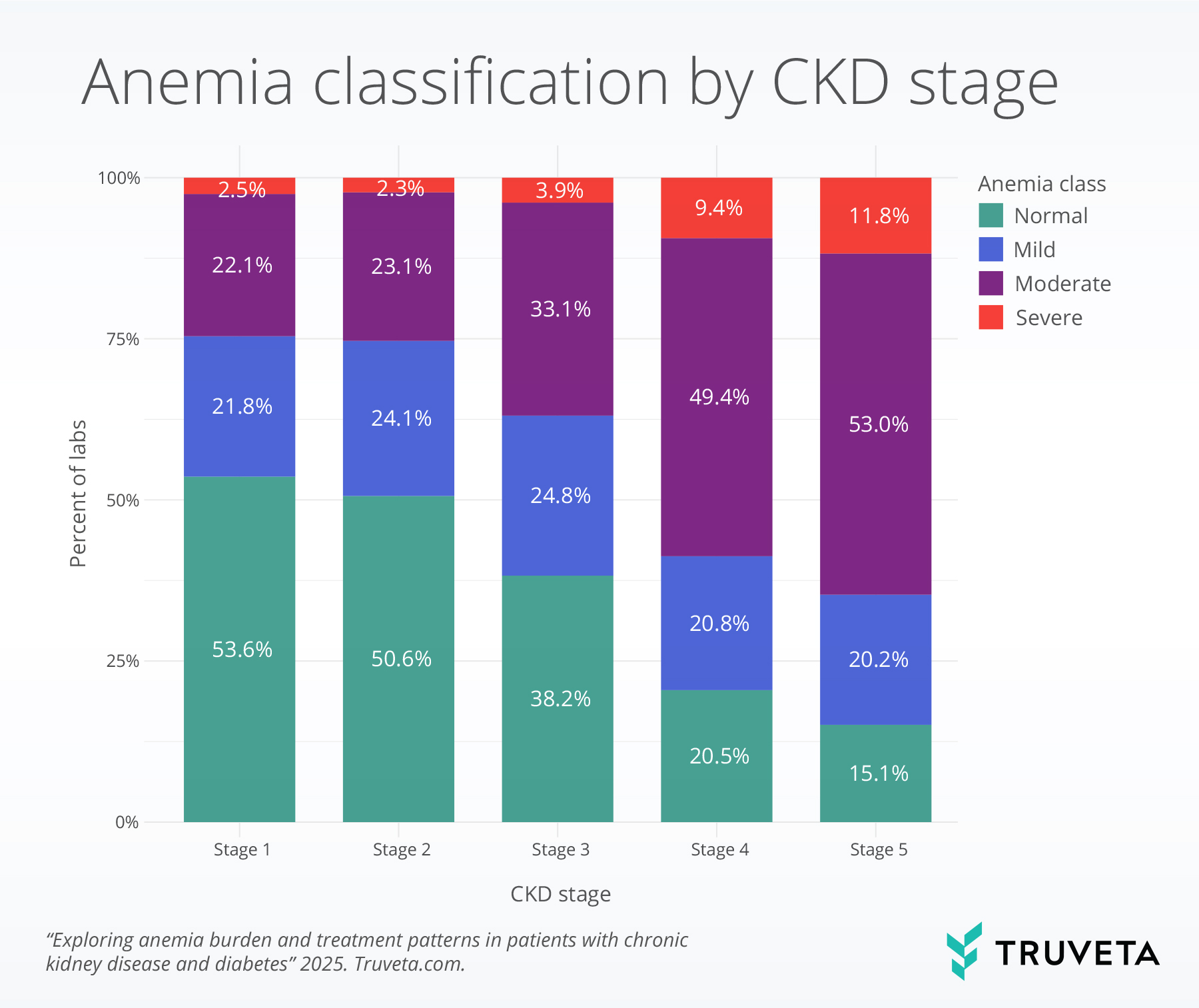
Linking claims with EHR data enabled a comprehensive view of anemia management across chronic kidney disease (CKD) stages. EHR-based lab values defined anemia severity, while linked claims captured interventions such as dialysis and intravenous iron that often occur in outpatient centers beyond the health system’s EHR. Together, these data revealed when and how treatment began across settings and how those real-world decisions related to patient outcomes and clinical guidelines. Read the full report here.
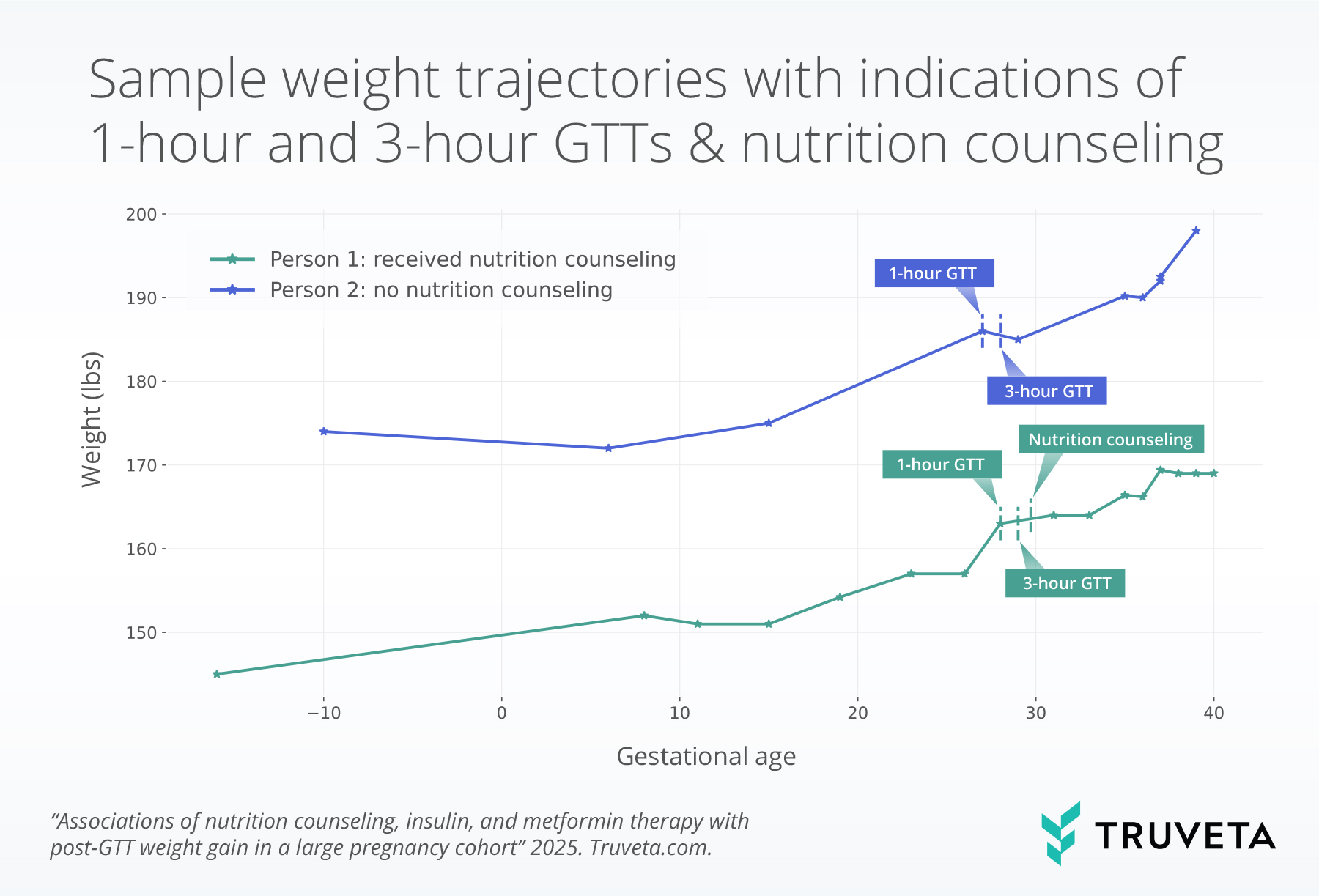
In analyses of gestational diabetes, linking claims with EHR data made it possible to observe the timing of key interventions—particularly nutrition counseling and medication use—and relate them to changes in maternal and newborn weight. Continuous EHR measures of weight and labs, combined with claims-based encounter information, showed how care patterns varied across patient groups and where opportunities exist to improve adherence to recommended care. Read the full report here.
What’s gained through completeness
Linked EHR and claims data provide:
- Comprehensive capture: All payer types (Medicare, Medicaid, and commercial) across care settings and specialties
- Continuity: Longitudinal visibility, even when patients change insurers
- Clinical and administrative context: The “why” from the EHR and the “what happened” from claims
- Traceability: Every data point retains provenance to its source, supporting reproducible, regulator-ready research
This level of completeness turns real-world data into fit-for-purpose evidence for regulators, payers, and researchers.
Looking ahead
Truveta’s linked EHR and closed claims data support a growing range of research—from chronic disease management to maternal health, cardiovascular outcomes, and beyond. By connecting what happens inside the clinic to what happens after, these data offer a unified view of care that is clinically detailed, representative, and continuous.
Researchers and life sciences partners can layer closed claims into EHR-based analyses—or enrich claims studies with the clinical depth of EHR data—to achieve a more complete understanding of care delivery.
Talk with us today.