
Hero banner displaying the headline ‘Monitoring respiratory virus trends’ over a blue background with stylized stacked curves representing seasonal hospitalization peaks for multiple respiratory viruses.
  • Respiratory virus–associated hospitalizations increased overall in November 2025 (+91.1%) and now make up 2.5% of all hospitalizations.
  • Respiratory virus–associated hospitalizations increased substantially among children aged 0-4 years old (+73.1%), reaching 3.9% of all hospitalizations.
  • RSV-associated hospitalizations in children aged 0-4 years old more than doubled for the third consecutive month and now account for 1.5% of hospitalizations in this age group.
Respiratory viruses, including COVID-19, influenza, and respiratory syncytial virus (RSV), continue to contribute to hospitalizations across the United States. Vulnerable populations, such as infants, children, and older adults, are particularly at risk of severe outcomes. Few sources regularly monitor hospitalizations associated with respiratory viruses. Truveta Research has created a respiratory virus monitoring report to supplement the surveillance data provided by the CDC by describing weekly trends in the rate of hospitalizations overall and for each of the six most common respiratory viruses: COVID-19, influenza, human metapneumovirus (HMPV), parainfluenza virus, RSV, and rhinovirus. This information can inform decisions about public health, clinical care, and public policy.

Because Truveta Data provides the most complete, timely, and clean de-identified EHR data, including full patient medical records, notes, and images, linked with closed claims for more than 120 million patients across the US, we can show the latest trends in these respiratory virus-associated hospitalizations, including valuable insight into two at-risk populations: infants and children (age 0-4 years old) and older adults (age 65 and over).

This report provides a snapshot of the key findings with data through November 30, 2025 in the report specific to the overall population across all respiratory viruses, as well as for two high-risk populations: infants and children (age 0-4 years old) and older adults (age 65 and older). For the full analysis—inclusive of demographics, comorbidities, and overall trends in virus-associated hospitalizations and testing across all age groups for each virus—see the complete report with data through November 30, 2025 on MedRxiv.

Key findings: Trends in respiratory virus-associated hospitalizations

Using a subset of Truveta Data, we identified 925,124 hospitalizations of 808,192 unique patients who tested positive for a respiratory virus between October 1, 2020 and November 30, 2025.
Overall hospitalization rates increasing
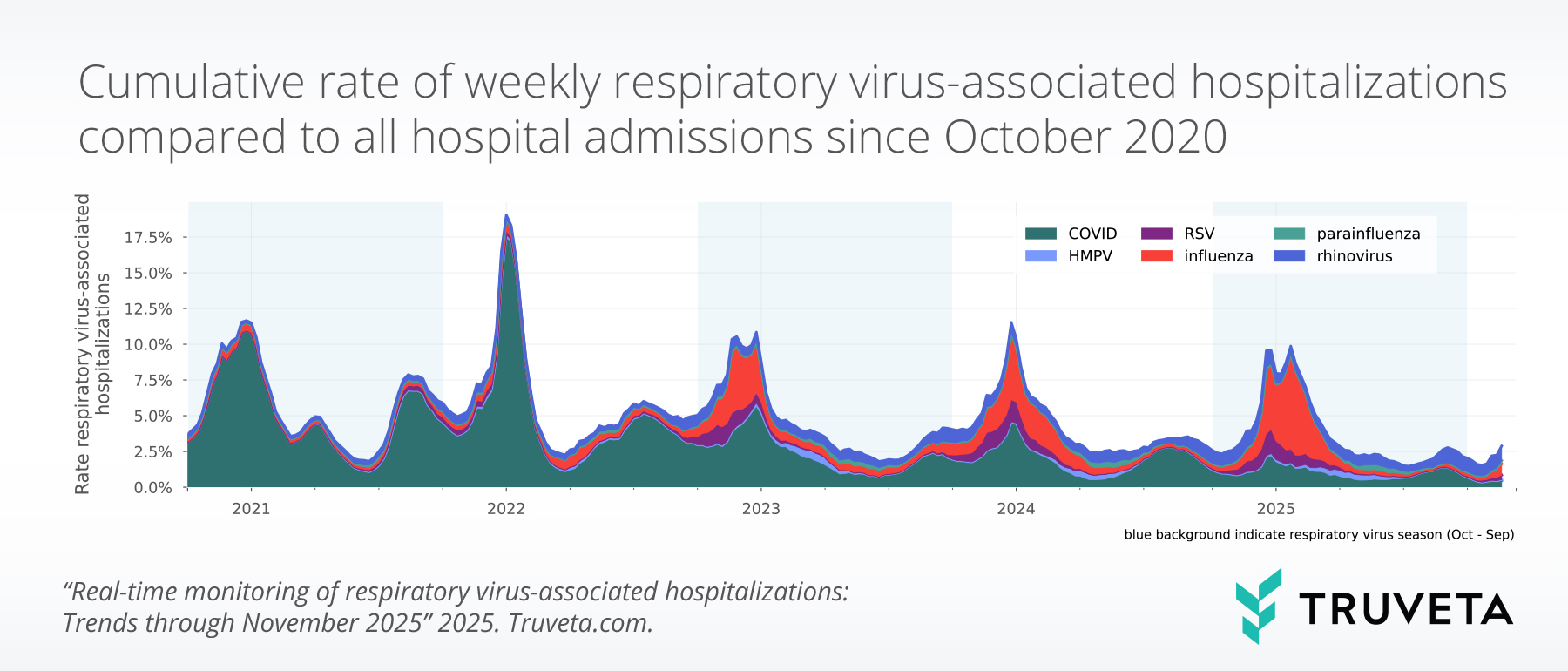
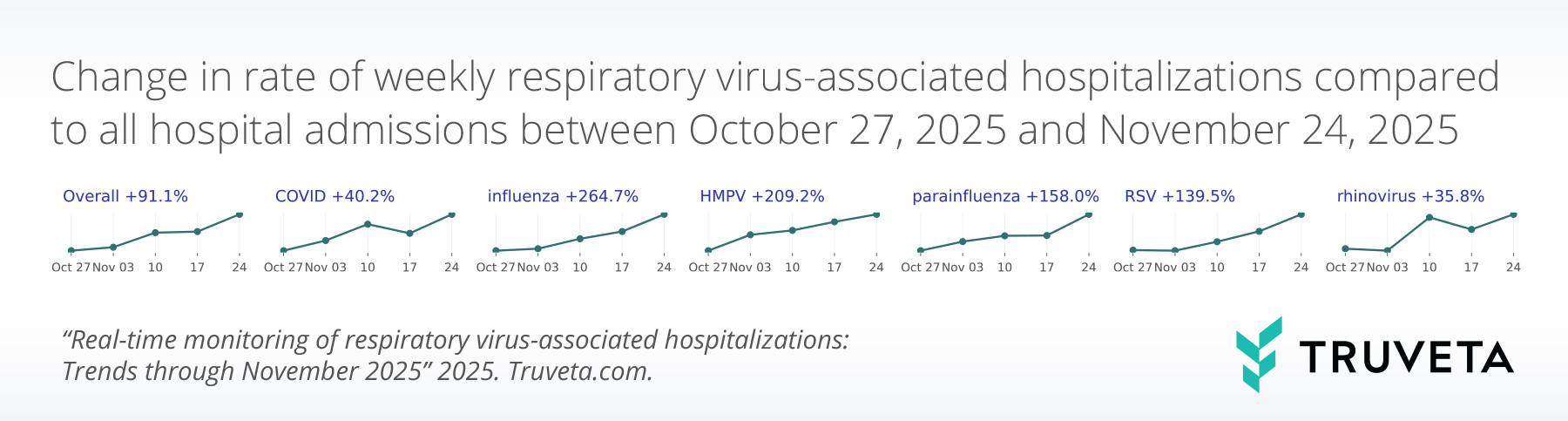
The overall rate of respiratory virus-associated hospitalizations increased in November. There was a 91.1% increase in the rate of hospitalizations through the month of November, with respiratory virus-associated hospitalizations accounting for 2.5% of all hospitalizations the last week of November.
Line chart showing weekly rates of respiratory virus–associated hospitalizations compared with all hospital admissions from October 2020 to November 2025. COVID shows the largest peaks, with major surges in early 2021 and early 2022. Smaller seasonal peaks appear for influenza, RSV, HMPV, parainfluenza, and rhinovirus. Shaded blue regions mark respiratory virus seasons (October through September). Chart includes a legend and Truveta branding.
Stacked area chart showing cumulative weekly respiratory virus–associated hospitalization rates for all ages from October 2020 through November 2025. COVID accounts for most hospitalizations, with sharp peaks in 2021–2022. Influenza, RSV, HMPV, parainfluenza, and rhinovirus produce recurring seasonal waves. Blue shading marks respiratory virus season.
Notably, influenza-associated hospitalizations increased from 0.2% of to 0.8% of all hospitalizations (+264.7%), COVID-associated hospitalizations rose moderately from 0.3% to 0.5% of all hospitalizations (+40.2%), and rhinovirus remained the leading cause of virus-associated hospitalizations (1.0% of all hospitalizations).
Small multiple line charts showing the weekly percent change in respiratory virus–associated hospitalization rates for all ages from October 27 to November 24, 2025. Overall hospitalizations increased 91.1%, with COVID up 40.2%, influenza 264.7%, HMPV 209.2%, parainfluenza 158.0%, RSV 139.5%, and rhinovirus 35.8%.
Pediatric respiratory virus-associated hospitalizations increasing substantially
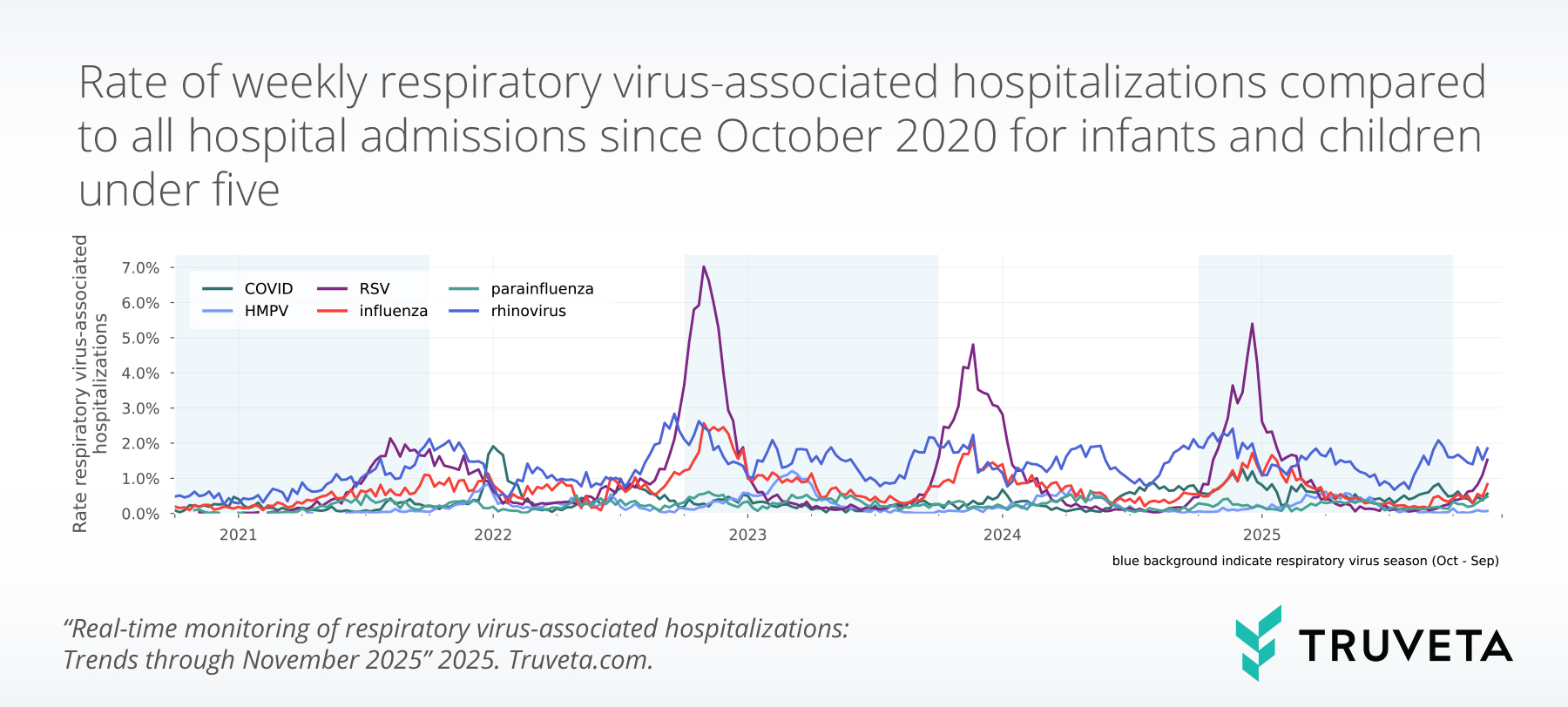
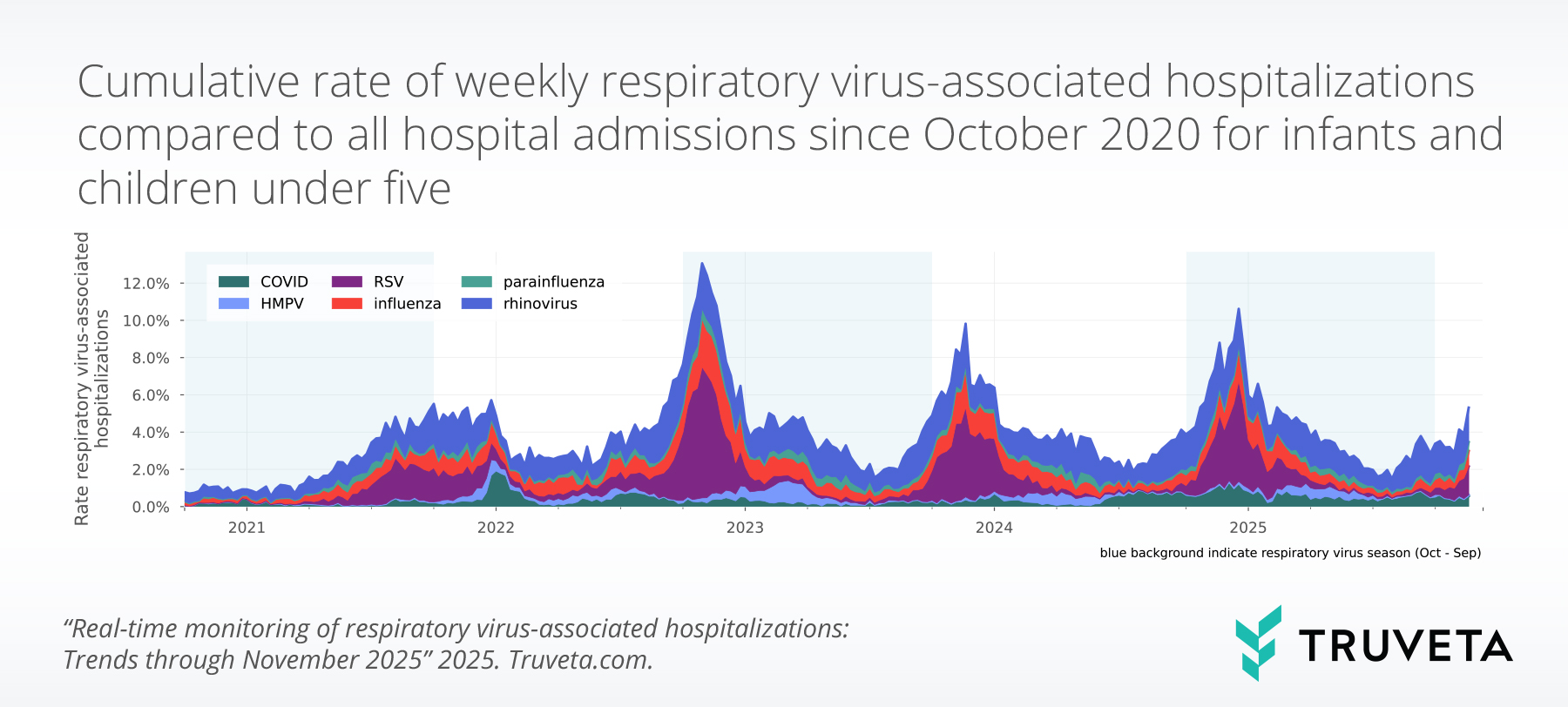
Among children aged 0–4 years, respiratory virus-associated hospitalizations increased substantially, reaching 3.9% of all hospitalizations (+73.1%).
Line chart showing weekly respiratory virus–associated hospitalization rates for infants and children under five from October 2020 through November 2025. RSV shows major peaks, including a large surge in late 2022. Influenza, rhinovirus, COVID, HMPV, and parainfluenza show additional seasonal patterns. Blue shading indicates respiratory virus season.
Stacked area chart showing cumulative weekly respiratory virus–associated hospitalization rates for infants and children under five from October 2020 through November 2025. Layers represent COVID, HMPV, RSV, influenza, parainfluenza, and rhinovirus. Seasonal peaks appear each winter, with the highest around early 2023. Blue background bands show respiratory virus seasons (Oct–Sept).
RSV-associated hospitalizations among the pediatric population more than doubled for the third month in a row, now accounting for 1.5% of all hospitalizations in this age group. However, rhinovirus continues to be the leading cause of respiratory virus-associated hospitalizations in this age group (1.8%).

Influenza- and parainfluenza- associated hospitalizations also increased, while COVID- and rhinovirus- associated hospitalizations increased more modestly.
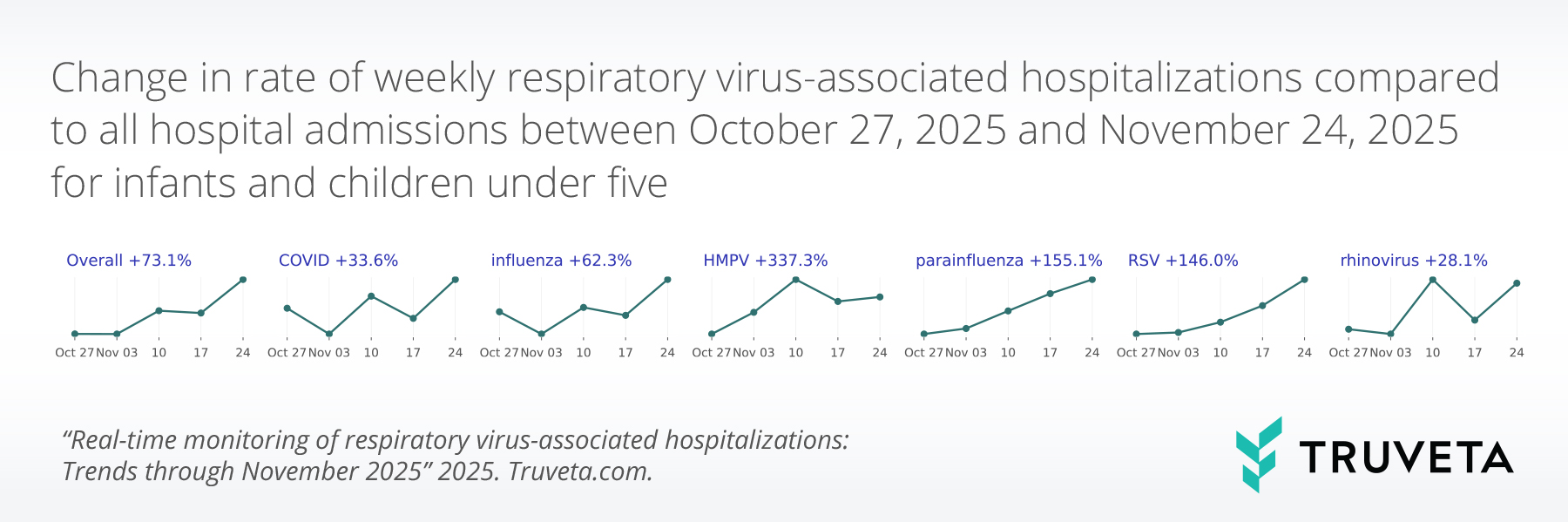
Small multiple line charts showing week-to-week percentage change in respiratory virus–associated hospitalization rates for infants and children under five from October 27 to November 24, 2025. Overall hospitalizations increased 73.1%, COVID 33.6%, influenza 62.3%, HMPV 337.3%, parainfluenza 155.1%, RSV 146.0%, and rhinovirus 28.1%.
Respiratory virus-associated hospitalizations also increase in adults over the age of 65
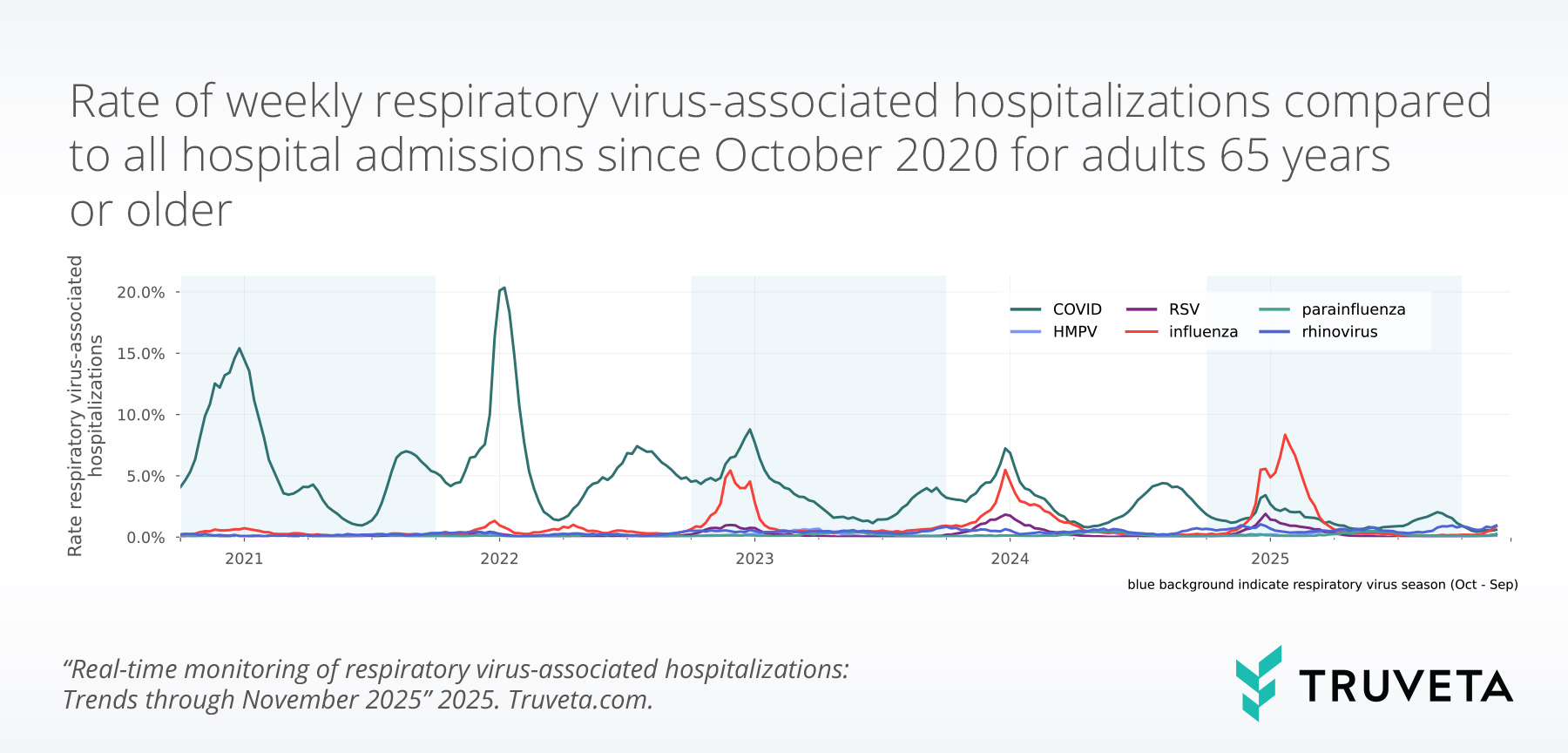
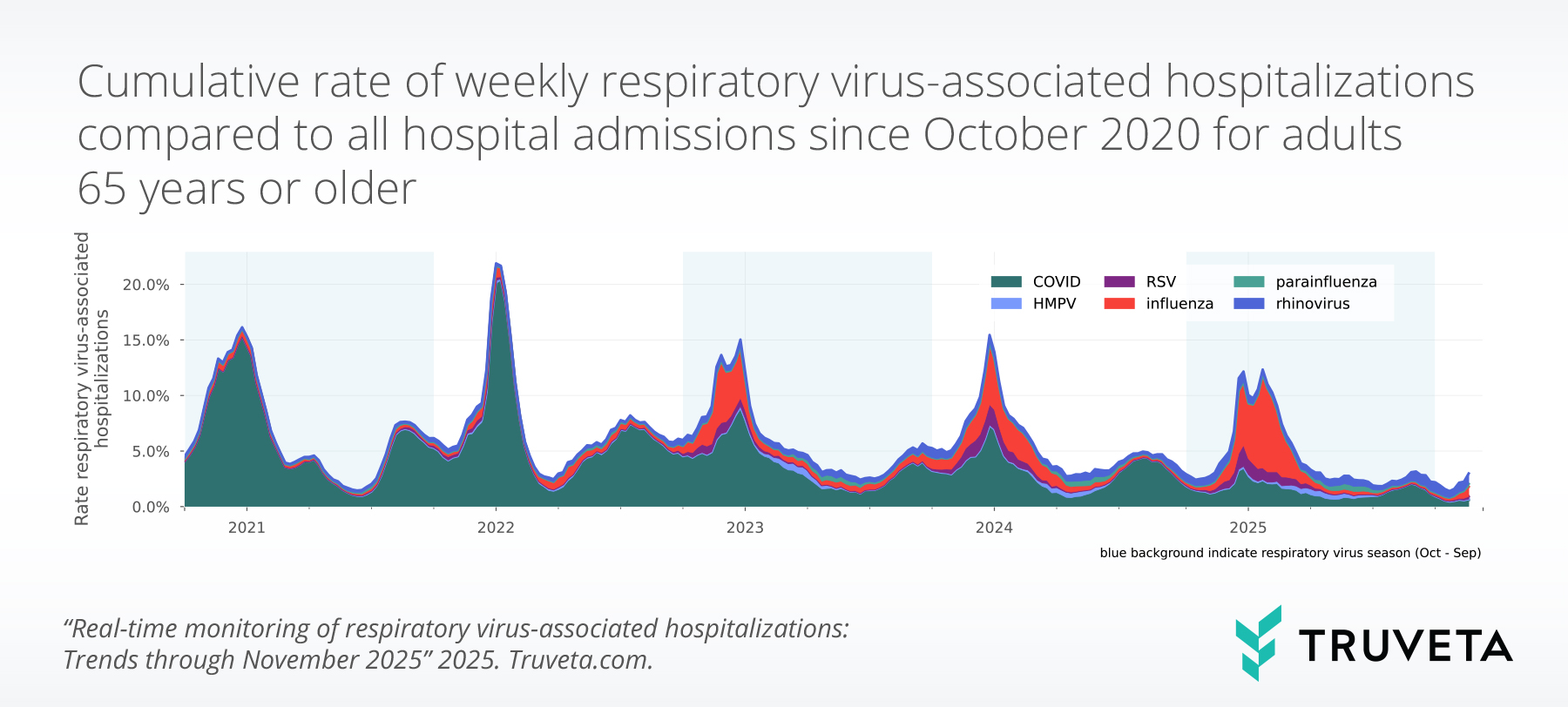
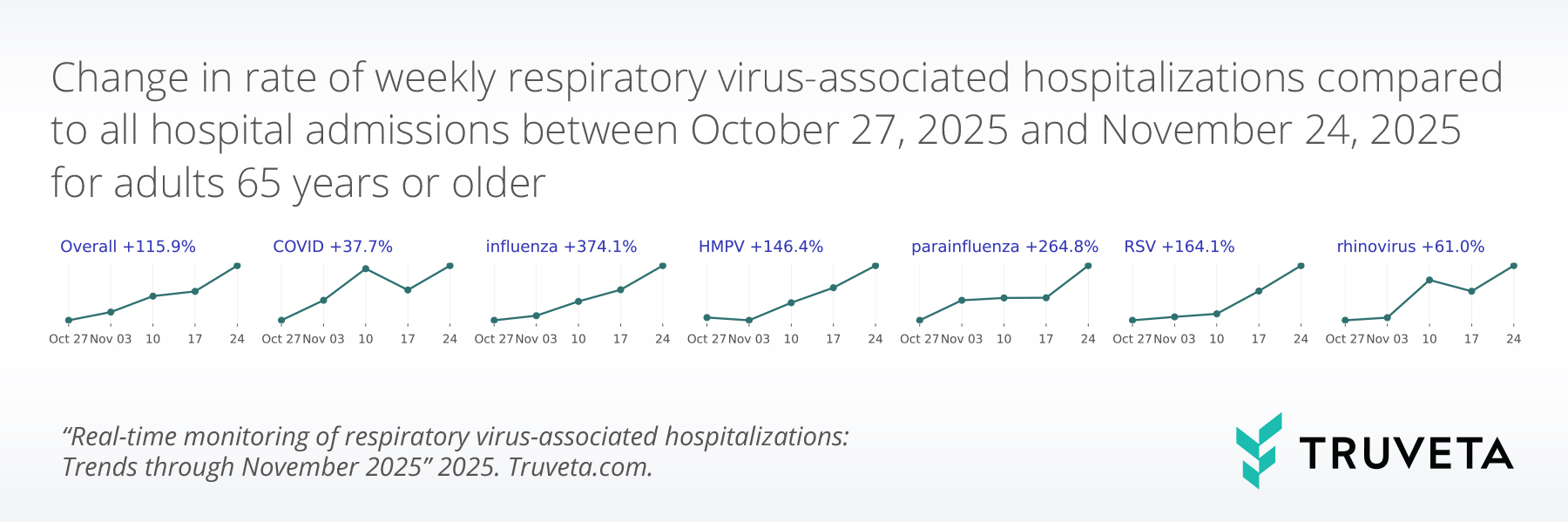
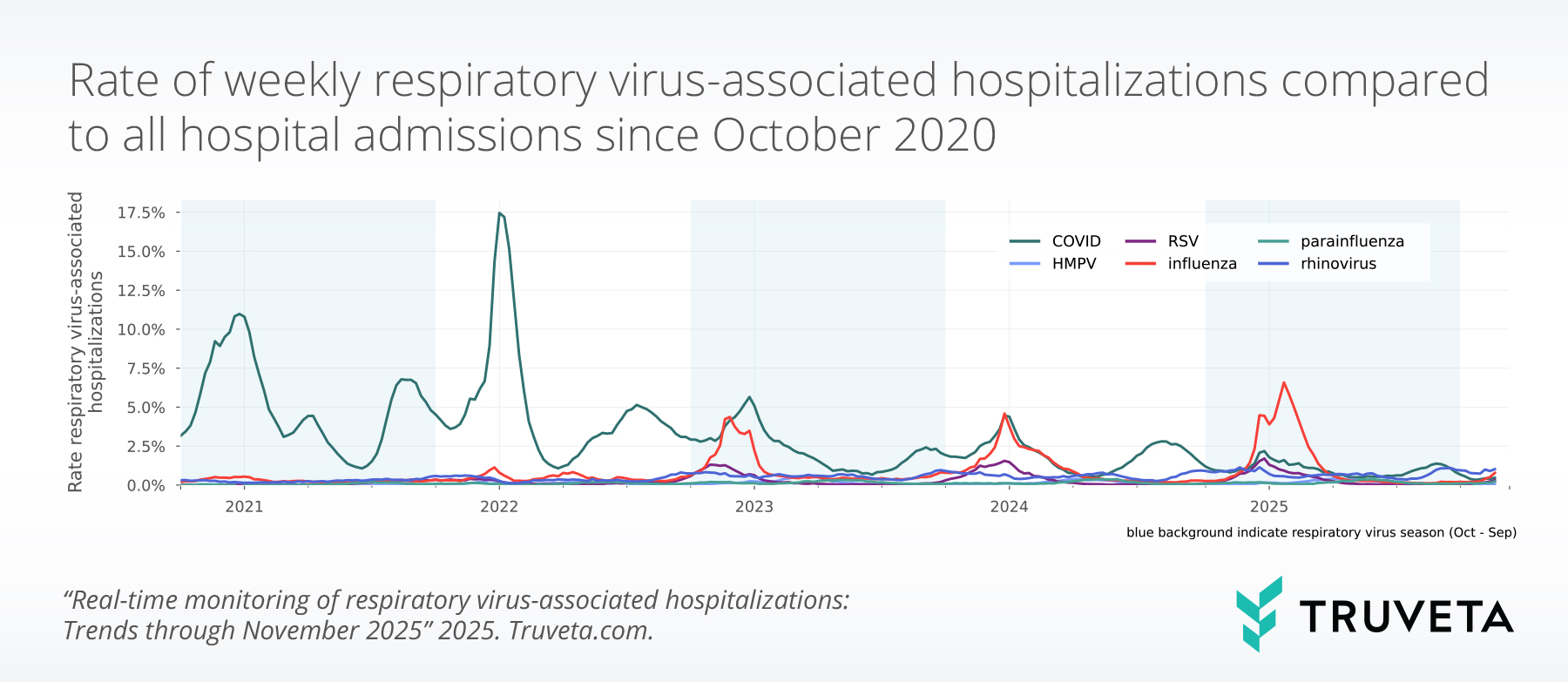
Among adults aged 65 and older, hospitalizations related to respiratory viruses increased to 2.8% of all hospitalizations (+115.9%) through November.
Line chart showing weekly respiratory virus–associated hospitalization rates for adults 65+ from October 2020 through November 2025. COVID dominates the trends with large seasonal peaks, especially in early 2022. Smaller peaks appear for influenza, RSV, HMPV, parainfluenza, and rhinovirus. Blue background bands denote respiratory virus seasons.
Stacked area chart showing cumulative weekly respiratory virus–associated hospitalization rates for adults 65+ from October 2020 through November 2025. COVID contributes the majority of cases, with notable peaks in early 2021 and early 2022. Influenza, RSV, HMPV, parainfluenza, and rhinovirus add seasonal fluctuations. Respiratory virus season is highlighted with blue background bands.
Influenza-associated hospitalizations increased substantially from 0.2% to 0.9% of hospitalizations (+374.1%), while COVID-associated hospitalizations rose modestly from 0.4% to 0.6% of hospitalizations (+37.7%) in this age group. Rhinovirus-associated hospitalizations also increased modestly from 0.6% to 0.8% of hospitalizations (+61.0%). RSV-, parainfluenza-, and HMPV-associated hospitalizations remained low and stable.
Small multiple line charts showing week-to-week percentage change in respiratory virus–associated hospitalization rates for adults 65+ from October 27 to November 24, 2025. Overall hospitalizations increased 115.9%, COVID 37.7%, influenza 374.1%, HMPV 146.4%, parainfluenza 264.8%, RSV 164.1%, and rhinovirus 61.0%. Each mini-chart shows rising trends across the period.

Discussion

It is important for public health experts and clinical providers to understand the trends in these infections to inform decisions about public health, clinical care, and public policy. Connecting population-level trends with granular clinical information can be very useful to understand which populations are most impacted and may require additional support.

We will continue to monitor respiratory virus-associated hospitalization overall and for at-risk populations throughout this 2025-2026 respiratory virus season (October 2025 through September 2026).