


- Nearly one in five patients receiving a GLP-1 medication reported experiencing food insecurity within the past year.
- Food insecurity was more frequently reported among patients who were dispensed GLP-1 medications for diabetes (20.5%) than among those who were dispensed GLP-1 medications for obesity (13.4%).
- A history of alcohol use was reported by nearly two-thirds (65.4%) of patients, while a history of tobacco use was reported by one in six (16.5%).
Glucagon-like peptide-1 (GLP-1) receptor agonists have rapidly transformed the treatment of type 2 diabetes and obesity (1,2). These medications help lower blood sugar, support weight loss, and reduce the risk of serious heart problems for many patients (1,3). As a result, their use has increased dramatically in recent years, making GLP-1s one of the fastest-growing prescription medication classes in the United States (4). As more people receive GLP-1 medications, it is important to understand the broader social and behavioral factors that may influence treatment access, medication use, and health outcomes.
Patients facing challenges, such as affording food, accessing reliable transportation, or maintaining stable housing, may have greater difficulty obtaining medications, attending medical appointments, and following recommended lifestyle changes (5). These factors, known as social determinants of health (SDOH), play an important role in managing chronic diseases such as obesity and type 2 diabetes (6,7). To better identify these challenges, many healthcare systems have begun routinely screening for SDOH. However, relatively little is known about the prevalence of documented social risk among patients receiving GLP-1 therapies.
In addition to SDOH screening, healthcare providers routinely document health-related behaviors such as alcohol and tobacco use. Together, these measures provide important context about patients’ health, lifestyle, and potential barriers to care.
Using Truveta Data, we examined adults who were dispensed at least one GLP-1 medication between January 2018 and June 2026. We described patient demographics, documented social risk identified through SDOH screening, and behavioral risk factors, including alcohol and tobacco use.
Methods
We used a subset of Truveta Data to identify adults aged 18 years and older who were dispensed at least one GLP-1 between January 2018 and July 2026. GLP-1 medications were classified according to their brand name and approved indication as either anti-diabetes medications (ADMs) or anti-obesity medications (AOMs).
SDOH screening
We evaluated four SDOH variables: food insecurity, housing payment difficulty, housing instability, and transportation insecurity, using standardized screening questions available in a patient’s electronic health record. These questions were selected because they assessed comparable constructs using similar wording and a consistent 12-month recall period, allowing responses to be interpreted consistently across domains. These screening questionnaires assess challenges experienced during the previous 12 months, including worrying that food would run out before there was money to buy more, being unable to pay rent or a mortgage on time, experiencing homelessness or living in a shelter, or lacking reliable transportation for medical appointments, work, or other daily needs. Responses indicating the presence of a social need (for example, “yes,” “sometimes,” or “a little”) were classified as “at risk,” whereas responses indicating no social need (such as “no” or “never”) were classified as “not at risk.” For each patient, we evaluated SDOH screenings completed during the year before their most recent GLP-1 medication dispense. Patients were classified as “at risk” for a given SDOH if they indicated they were at risk at least once during that period.
Behavioral risk screening
We also evaluated tobacco and alcohol use using standardized behavioral history questions. These data capture whether patients currently use or have previously used tobacco or alcohol, as well as the frequency of use when available. Patients were classified as having used tobacco or alcohol if there was evidence of use at least once in the year before their most recent GLP-1 medication dispense.
Analyses
We summarized the demographic characteristics of adults who were dispensed a GLP-1. Among patients with documentation from these standardized SDOH and behavioral history screening measures, we calculated the proportion who screened at risk in each domain. Results were summarized separately for patients who were dispensed ADMs and AOMs.
You can explore the full study directly in Truveta.
Results
Study population
The study included 3,997,023 adults who received a GLP-1 between January 1, 2018 and June 26, 2026. Overall, recipients were predominantly female (64.4%), 55 years or older (56.3%), and most resided in urban areas (78.9%). Most patients were White (64.9%) and non-Hispanic or Latino (72.9%). Race (16.2%) and ethnicity (17.3%) were unavailable for about one sixth of the cohort.
Availability of screening measures
Within the year before their most recent GLP-1 medication dispense, approximately one-quarter of patients had documented alcohol (25.9%) or tobacco (27.2%) history available. Documentation of SDOH screening measures included in this analysis were less common, ranging from 8.2% for housing payment difficulty and 8.9% for housing instability to 14.6% for food insecurity and 16.0% for transportation insecurity.
Comparing patients with and without SDOH data
Within a year before their most recent GLP-1 medication dispense, 17.2% of patients had responses to at least one SDOH screening questions included in this analysis. Patients with and without available SDOH screening data had similar age and sex distributions. However, those with SDOH data included a higher proportion of patients living in urban areas (82.7% vs. 78.1%) and patients identifying as Black or African American (17.3% vs. 13.7%).
Comparing patients with and without behavioral risk data
Within a year before their most recent GLP-1 medication dispense, 29.6% of patients had responses to at least one behavioral risk screening question included in this analysis. Patients with and without available behavioral screening data had similar age and sex distributions. However, those with behavioral data included a higher proportion of patients living in urban areas (83.3% vs. 77%) and patients identifying as Black or African American (19.2% vs. 12.3%).
Social determinants of health: food insecurity, housing, and transportation
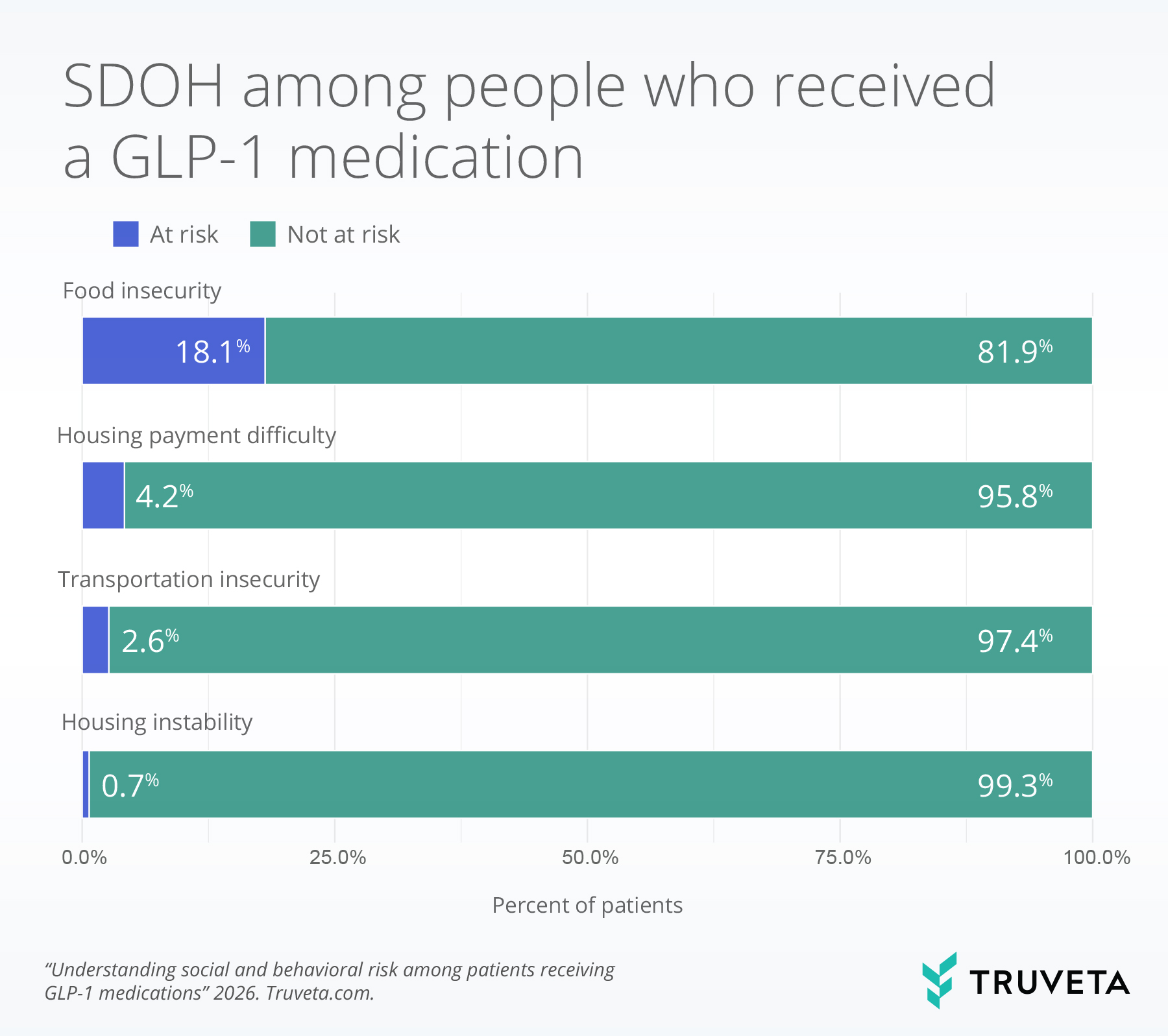
Among patients who completed SDOH screening, most did not report challenges related to food, housing, or transportation.
Food insecurity was the most commonly reported social risk, reported by 18.1% of patients. Housing payment difficulty was reported by 4.2% of patients, transportation insecurity by 2.6%, and housing instability by 0.7%.
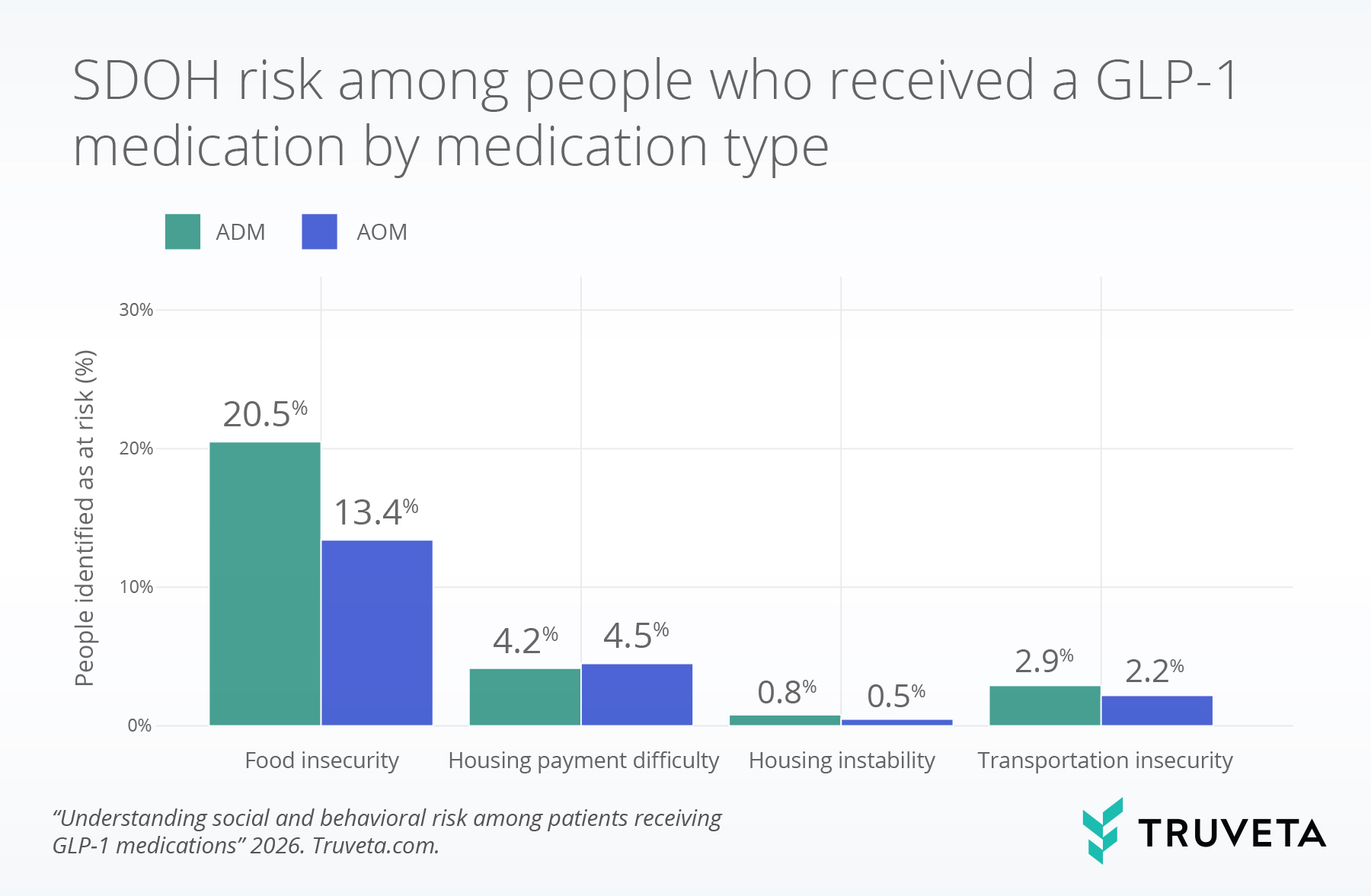
Food insecurity was more commonly reported by patients receiving ADMs (20.5%) than AOMs (13.4%). Housing payment difficulty was similar among patients receiving ADMs (4.2%) and AOMs (4.5%), as were transportation insecurity (ADM: 2.9%; AOM: 2.2%) and housing instability (ADM: 0.8%; AOM: 0.5%).
Behavioral risk screening: alcohol and tobacco use
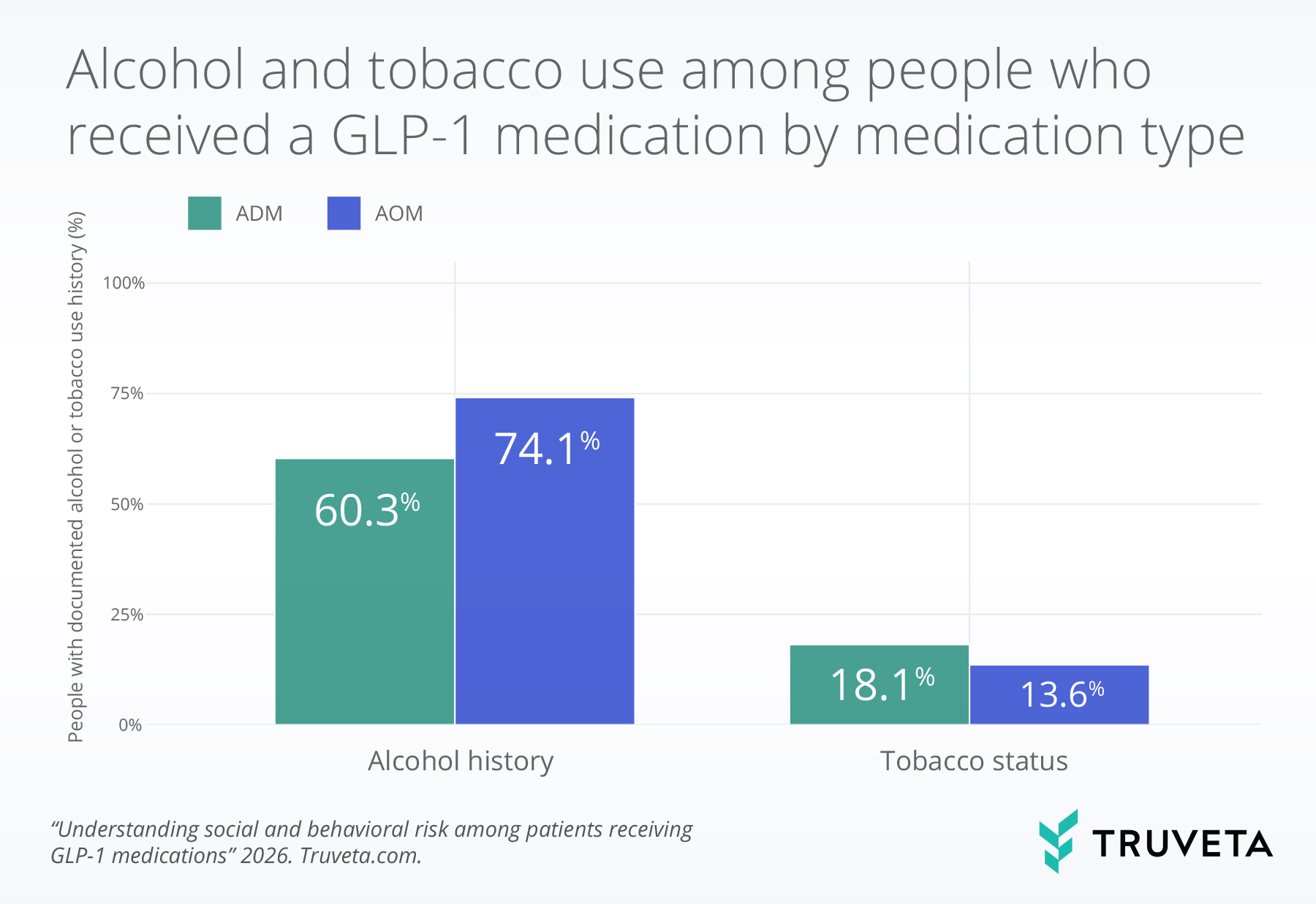
Among patients with available behavioral risk screening data, 65.4% reported a history of alcohol use, while 16.4% reported a history of tobacco use.
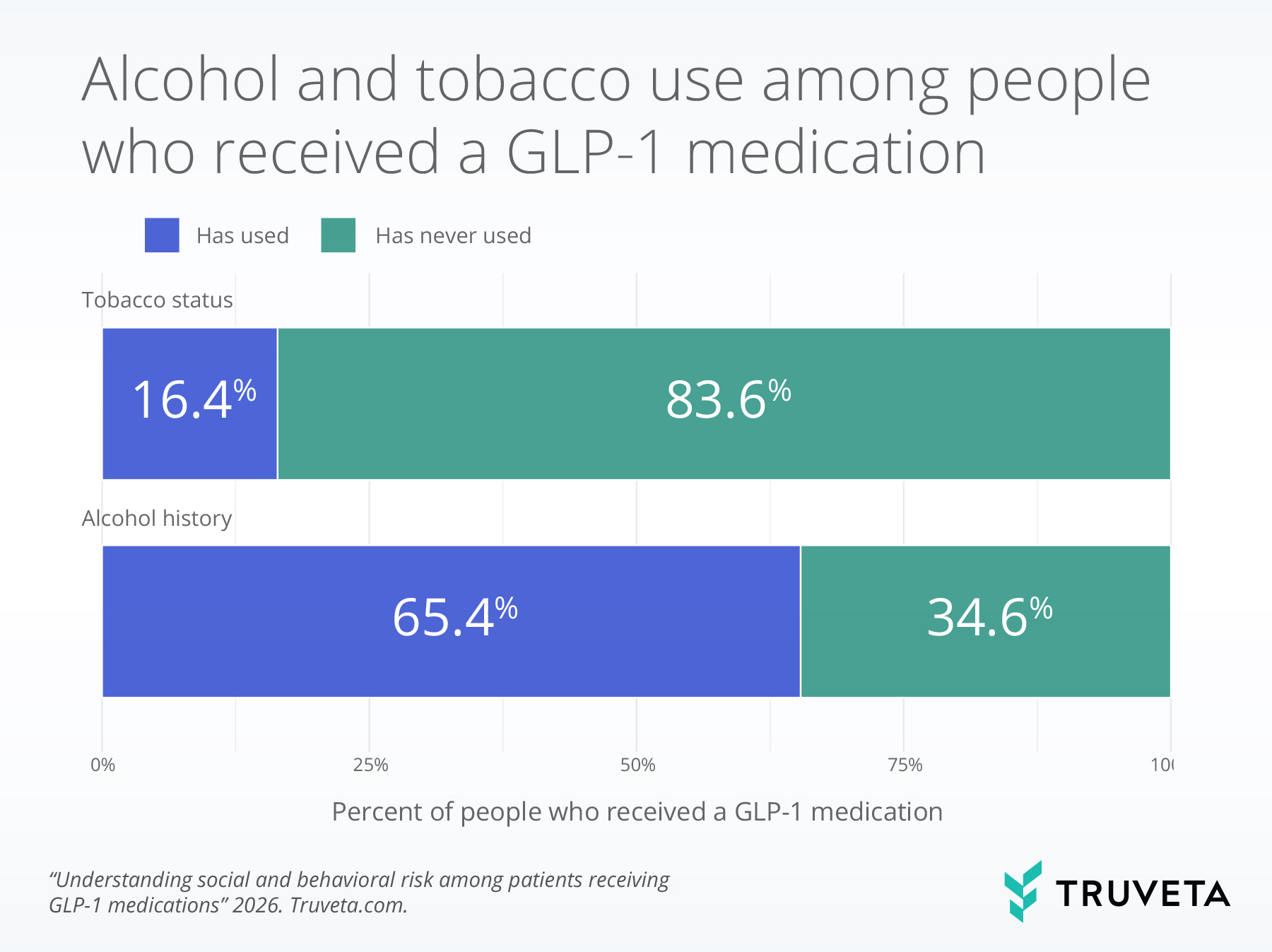
Patients receiving AOMs had a higher percentage reporting a history of alcohol use (74.1%) than patients receiving ADMs (60.3%). In contrast, patients receiving ADMs had a higher percentage reporting a history of tobacco use (18.1%) than patients receiving AOMs (13.6%).
Discussion
Overall, among patients with available SDOH screening, documented social risk was uncommon. Housing payment difficulty, housing instability, and transportation insecurity were each reported by fewer than 5% of screened patients, whereas food insecurity was substantially more common, affecting nearly one in five patients. Food insecurity was more frequently reported among patients who received GLP-1 medications for diabetes management (ADMs) than among those who received GLP-1 medications for obesity management (AOMs). Similarly, tobacco use was more common among patients receiving ADMs, whereas alcohol use was more common among those receiving AOMs.
Although relatively few GLP-1 recipients in our cohort had documented social risks, recent evidence suggests that interest in GLP-1 therapy is greatest among socioeconomically disadvantaged individuals, despite similar levels of medication use across socioeconomic groups (8). Because GLP-1 medications remain costly and often require prior authorization or have variable insurance coverage, patients who ultimately receive these therapies may represent a subset of individuals with diabetes or obesity who face fewer barriers to accessing care (9). This interpretation is supported by the relatively low prevalence of several documented social risks in our cohort compared with national estimates. For example, in this analysis, only 4.2% of patients reported housing payment difficulty compared with approximately one in five US adults reporting problems paying rent or a mortgage (10). Similarly, transportation insecurity was reported by 2.6% of patients compared with an estimated 5.7% of US adults (11). These differences suggest that patients receiving GLP-1s may differ from the broader population of individuals living with diabetes or obesity, potentially reflecting barriers to treatment access.
Despite this, food insecurity remained the most commonly documented social risk, particularly among patients receiving GLP-1 medications for diabetes. This finding is consistent with evidence demonstrating that food insecurity is a key social determinant influencing both diabetes management and obesity, contributing to poorer diet quality, financial tradeoffs between food and medical care, and persistent disparities in cardiometabolic health. (6,7) Food insecurity may be compounded by limited access to healthy foods in underserved neighborhoods and by the higher cost of nutritious foods relative to calorie-dense processed foods (12). These findings highlight the importance of ensuring equitable access to GLP-1s and routinely assessing SDOH into diabetes and obesity care to identify and address persistent social needs among those who do receive treatment (6).
A history of tobacco use was more common among patients receiving GLP-1 medications for diabetes than for obesity. This finding is consistent with the well-established association between cigarette smoking and type 2 diabetes, as tobacco use increases diabetes risk and contributes to poorer disease management and diabetes-related complications (14). In contrast, a history of alcohol use was more frequently documented among patients receiving GLP-1 medications for obesity. Although alcohol contributes additional caloric intake, evidence linking alcohol consumption to obesity and weight gain remains inconsistent, particularly among individuals with light-to-moderate alcohol consumption (15). Because our study captured only a documented history of alcohol and tobacco use rather than current use or quantity, these findings should be interpreted with caution.
This study has several limitations. First, only about 17.2% of patients had documented SDOH screening, and 29.6% had a behavioral risk screening in the year before their most recent GLP-1 dispense. Screening practices can vary across health systems, clinics, and providers, and patients who completed these questionnaires may differ from those who did not, although demographic characteristics were generally similar between groups. Second, the wording of screening questionnaires and available response options varied across patients. We classified any response indicating the presence of a social or behavioral risk as “at risk” or “has used” to enable consistent analyses, although this approach did not distinguish between different levels of severity or frequency. Third, comparisons between patients receiving ADMs and AOMs were not adjusted for differences in patient characteristics, and observed differences should therefore be interpreted cautiously.
Despite these limitations, this study provides a national description of documented social and behavioral risk factors among patients receiving GLP-1s. These findings highlight the importance of considering patients’ social circumstances alongside pharmacologic treatment and demonstrate how routinely assessing SDOH can provide a more complete understanding of the populations receiving GLP-1 medications.
These are preliminary research findings and not peer reviewed. Data are regularly updating. These findings are consistent with data accessed on June 26, 2026.
Citations
- D. J. Drucker, Efficacy and safety of GLP-1 medicines for type 2 diabetes and obesity. Diabetes care 47, 1873–1888 (2024).
- S. Patel, S. K. Niazi, Emerging Frontiers in GLP-1 Therapeutics: A Comprehensive Evidence Base (2025). Pharmaceutics 17, 1036 (2025).
- E. D. Michos, F. Lopez‐Jimenez, M. Gulati, Role of Glucagon‐Like Peptide‐1 Receptor Agonists in Achieving Weight Loss and Improving Cardiovascular Outcomes in People With Overweight and Obesity. JAHA 12, e029282 (2023).
- Li P, Varghese JS, Shah MK, et al. Prescribing trends of glucagon-like peptide 1 receptor agonists for type 2 diabetes or obesity. JAMA Netw Open. 2025;8:e2540890. 10.1001/jamanetworkopen.2025.40890
- Vrtikapa K, Hoque Urmy F, Hoque F. Social Determinants of Health: The Impact of This Overlooked Vital Sign. J Brown Hosp Med. 2025 Jul 1;4(3):138072. doi: 10.56305/001c.138072. PMID: 40612083; PMCID: PMC12224330.
- Hill-Briggs F, Adler NE, Berkowitz SA, Chin MH, Gary-Webb TL, Navas-Acien A, Thornton PL, Haire-Joshu D. Social Determinants of Health and Diabetes: A Scientific Review. Diabetes Care. 2020 Nov 2;44(1):258–79. doi: 10.2337/dci20-0053. Epub ahead of print. PMID: 33139407; PMCID: PMC7783927.
- Baez AS, Ortiz-Whittingham LR, Tarfa H, Osei Baah F, Thompson K, Baumer Y, Powell-Wiley TM. Social determinants of health, health disparities, and adiposity. Prog Cardiovasc Dis. 2023 May-Jun;78:17-26. doi: 10.1016/j.pcad.2023.04.011. Epub 2023 May 11. PMID: 37178992; PMCID: PMC10330861.
- Jackson, S.E., Brown, J., Llewellyn, C. et al. Prevalence of use and interest in using glucagon-like peptide-1 receptor agonists for weight loss: a population study in Great Britain. BMC Med 24, 1 (2026). https://doi.org/10.1186/s12916-025-04528-7
- Brennan-Davies, A. H., Lakey, S., & Lakey, S. M. (2025). Pharmacological Privilege: How Glucagon-Like Peptide-1 (GLP-1) Medications are Widening Health Inequalities. Cureus, 17(11).
- Pew Research Center. (2025, May 7). Growing share of U.S. adults say their personal finances will be worse a year from now. https://www.pewresearch.org/short-reads/2025/05/07/growing-share-of-us-adults-say-their-personal-finances-will-be-worse-a-year-from-now/
- Ng, A. E., Adjaye-Gbewonyo, D., & Dahlhamer, J. (2024, January). Lack of reliable transportation for daily living among adults: United States, 2022 (NCHS Data Brief No. 490). National Center for Health Statistics. https://www.cdc.gov/nchs/data/databriefs/db490.pdf
- Odoms-Young A, Brown AGM, Agurs-Collins T, Glanz K. Food Insecurity, Neighborhood Food Environment, and Health Disparities: State of the Science, Research Gaps and Opportunities. Am J Clin Nutr. 2024 Mar;119(3):850-861. doi: 10.1016/j.ajcnut.2023.12.019. Epub 2023 Dec 30. PMID: 38160801; PMCID: PMC10972712.
- U.S. Department of Agriculture, Economic Research Service. (2025). Key statistics & graphics. https://www.ers.usda.gov/topics/food-nutrition-assistance/food-security-in-the-us/key-statistics-graphics
- Centers for Disease Control and Prevention. (2023). Smoking and diabetes. https://www.cdc.gov/tobacco/campaign/tips/diseases/diabetes.html
- Carmen Sayon-Orea, Miguel A Martinez-Gonzalez, Maira Bes-Rastrollo, Alcohol consumption and body weight: a systematic review, Nutrition Reviews, Volume 69, Issue 8, 1 August 2011, Pages 419–431, https://doi.org/10.1111/j.1753-4887.2011.00403.x