
Substance use disorder (SUD) affects nearly 16.8% of Americans aged 12 and older, or more than 48 million people in the US. It is commonly seen in clinical practice, but rarely simple.
In healthcare records, SUD does not always present as a single, stable diagnosis. It may appear in an emergency department visit before it is formally recognized, or surface in behavioral health documentation, medication histories, or clinician notes. It often intersects with anxiety, depression, chronic disease, or pregnancy. For many patients, substance use unfolds across encounters rather than fitting neatly into a category.
Studying substance use requires data that can follow care over time, connect related clinical events, and do so responsibly for some of the most sensitive conditions in medicine.
Using Truveta Data to study substance use disorder
Substance use research relies upon more than isolated encounters or billing codes. Truveta Data includes daily refreshed, de-identified electronic health record (EHR) data from more than 130 million patients—including clinical notes and imaging—linked with closed claims, mortality, and social drivers of health to enable longitudinal research across the full patient journey.
Within this dataset, more than 12 million patients have a documented diagnosis of substance use disorder. Because Truveta Data includes longitudinal encounters, notes, medication histories, and linked claims, researchers can study not only when SUD is formally diagnosed, but how substance use presents, progresses, and intersects with other conditions over time.
Truveta Data also includes more than 1.4 million explicitly linked mother–child pairs, enabling aligned maternal and pediatric studies on pregnancy, neonatal outcomes, and early childhood health using privacy-preserving linkage aligned with HIPAA Expert Determination standards.
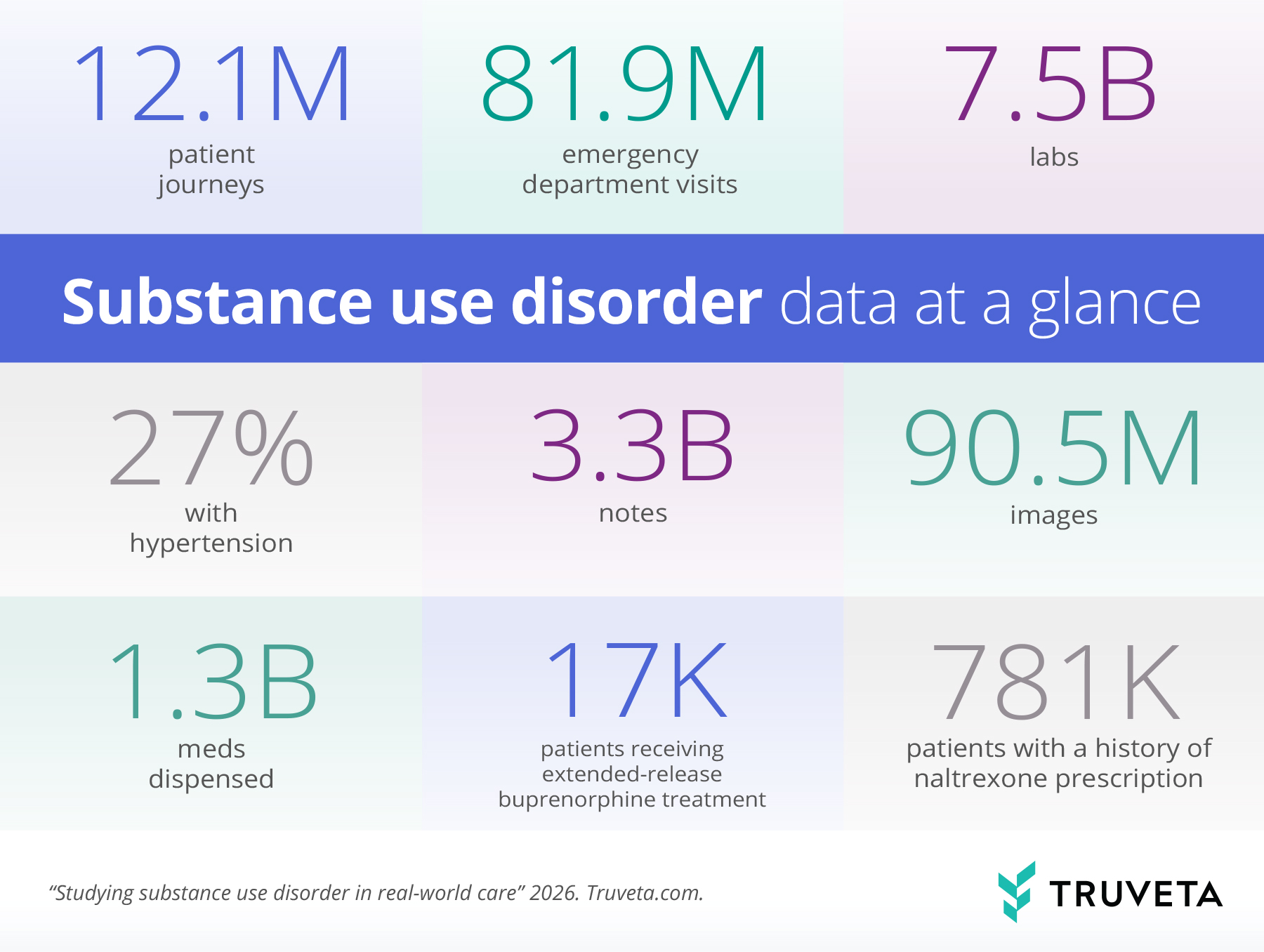
Two recent analyses illustrate how this clinical depth translates into practical SUD research — from distinguishing cannabis-related clinical presentations in emergency care to following substance exposure outcomes across pregnancy and early childhood.
Cannabis and mental health: Distinguishing exposure from disorder
A recent Truveta Research analysis explored the potential relationship between mental health and cannabis use, examining trends in cannabis-related emergency department visits between 2019 and 2023 using more than 33.5 million emergency department encounters.
The study distinguished between two related but clinically different measures:
- Cannabis-involved emergency department visits, defined using a CDC-aligned approach
- Cannabis-induced disorder visits, defined by specific mental or behavioral health diagnoses associated with cannabis use
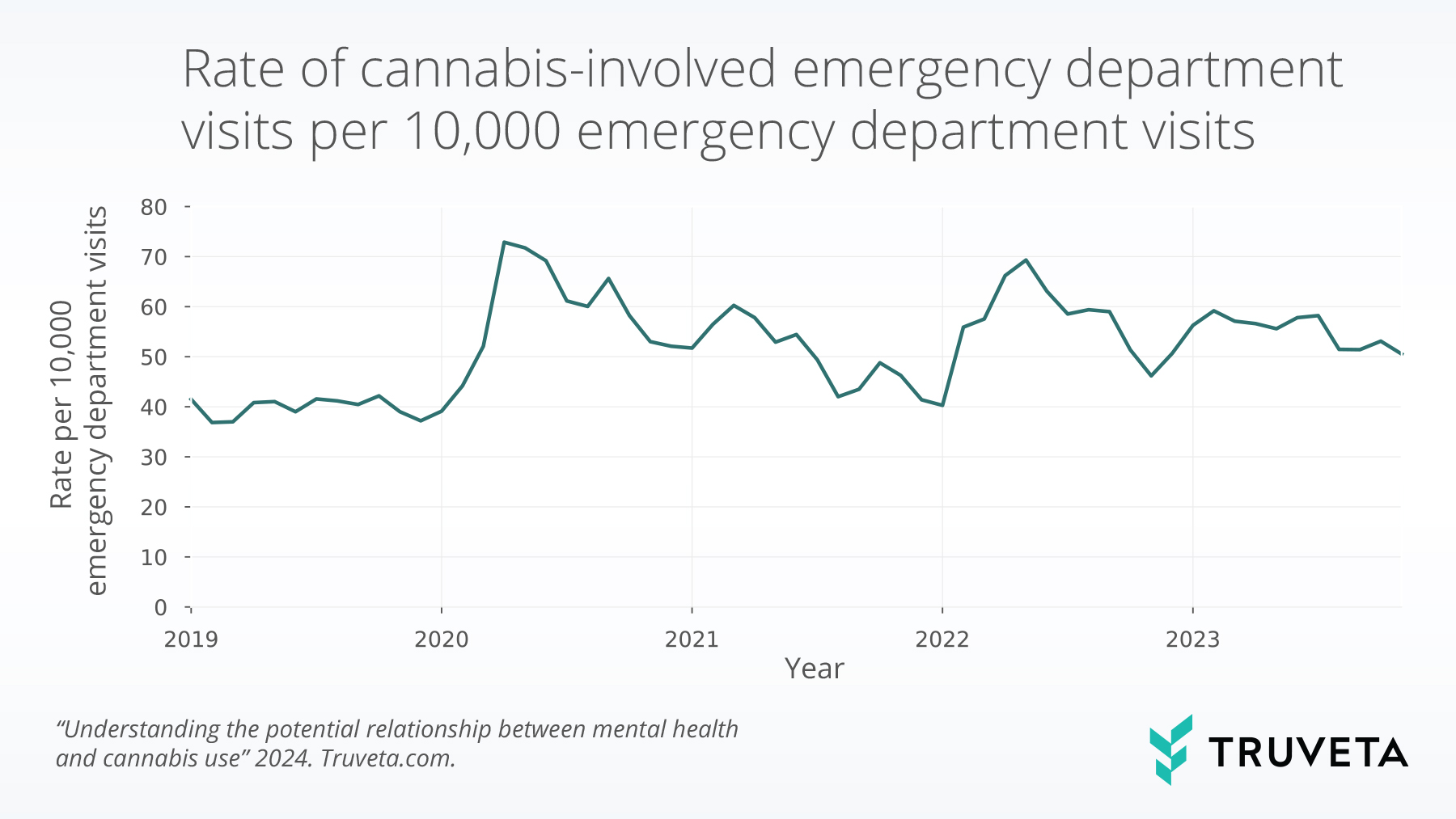
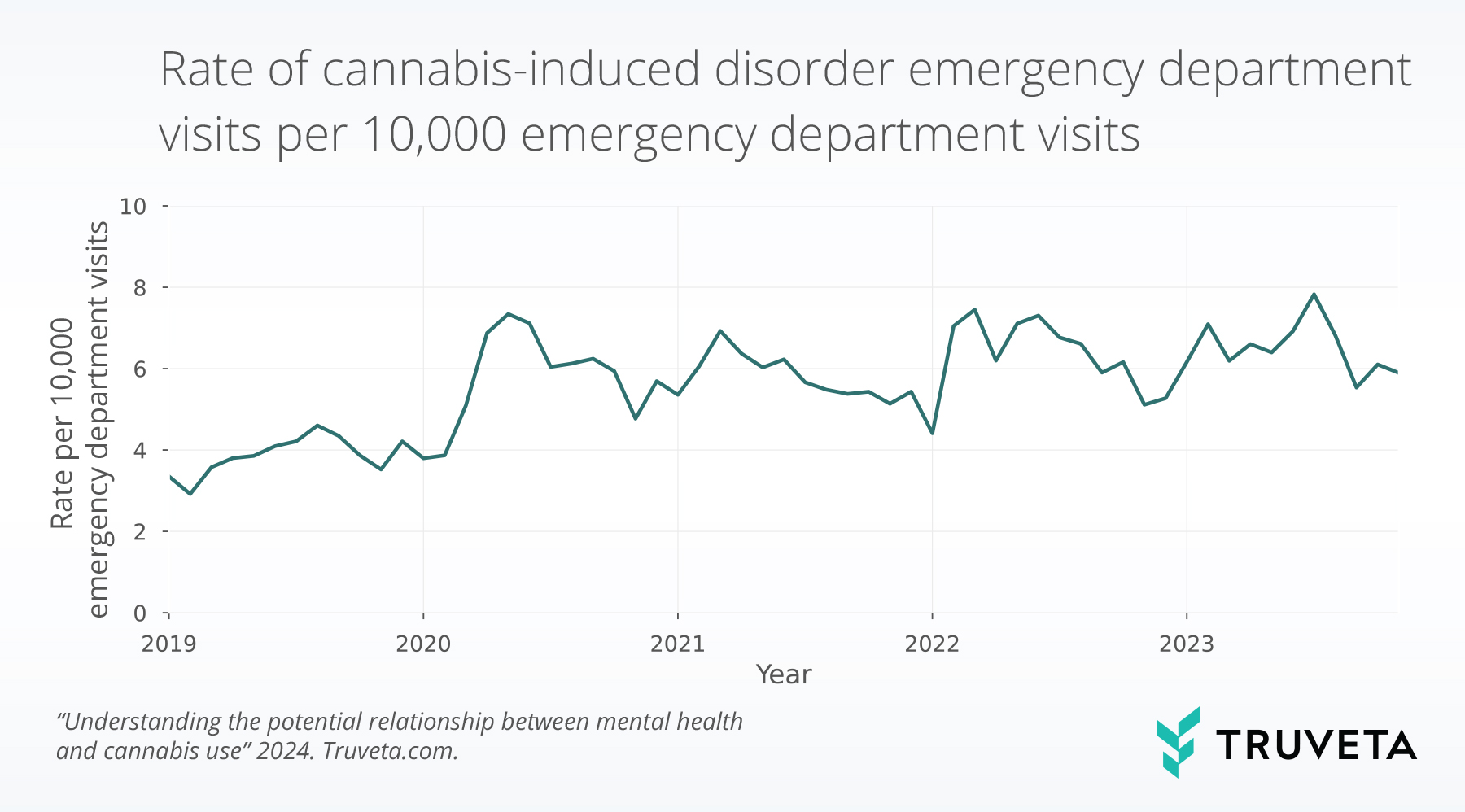
Between 2019 and 2020, both rates increased by nearly 50%. In subsequent years, however, the patterns diverged. Cannabis-induced disorder visits continued to rise through 2023, while cannabis-involved visits fluctuated without the same sustained increase.
That difference suggests that presentations involving cannabis-related mental or behavioral disorders may be evolving differently from broader cannabis exposure. Observing that divergence depends on linking encounter data, diagnosis patterns, and patient-level history over time.
Opioid use disorder and neonatal outcomes: Extending beyond delivery
Another Truveta Research analysis exploring the effect of the opioid crisis on babies examined trends in neonatal abstinence syndrome (NAS) using more than 1.3 million births between 2016 and 2022. More than 7,000 infants were diagnosed with NAS during the study period.
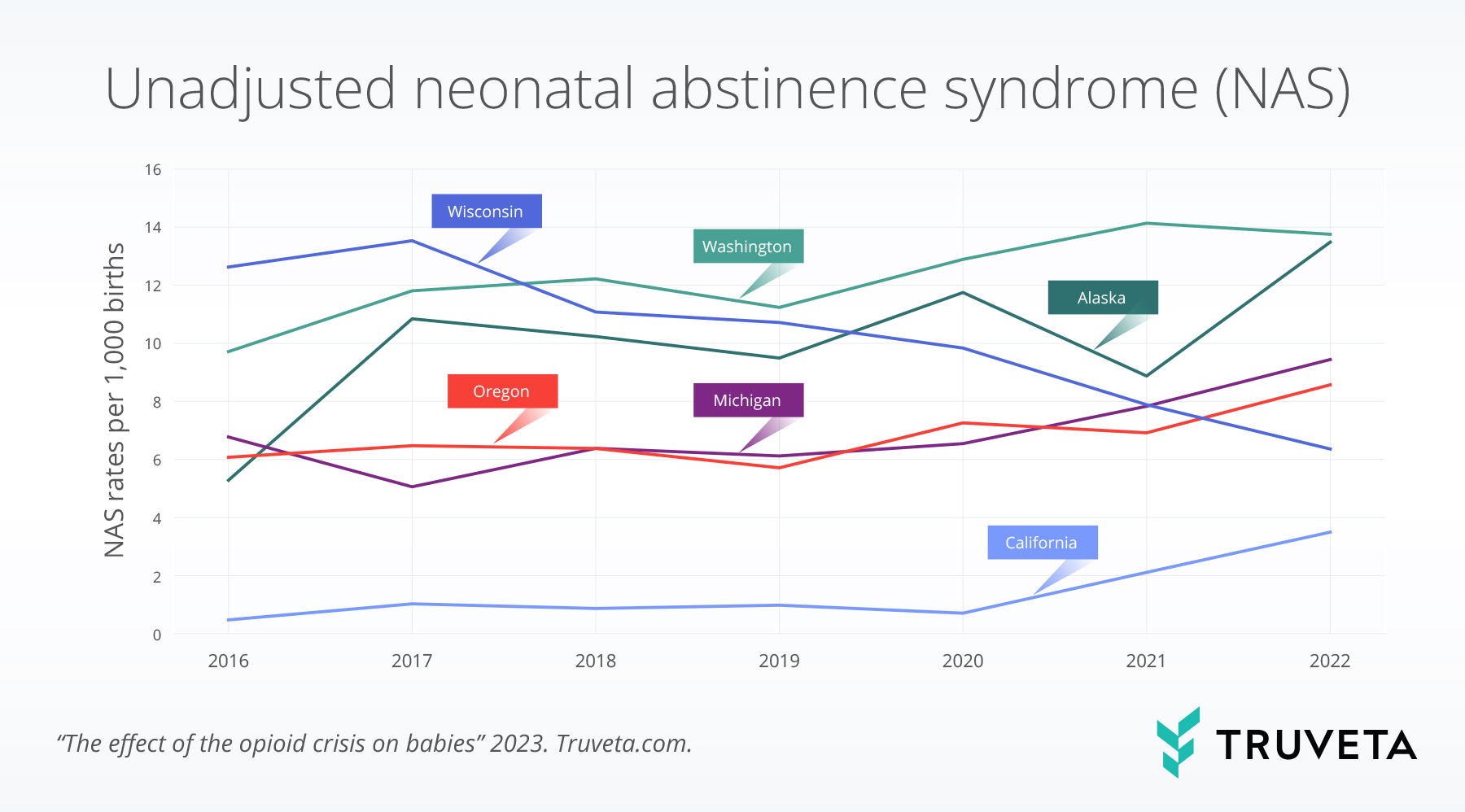
The figure above shows unadjusted NAS rates per 1,000 births across several states. Rates varied meaningfully by geography and shifted over time. In multiple states, increases beginning in 2019–2020 paralleled broader reports of rising opioid-related mortality.
NAS is an important marker of prenatal opioid exposure, but represents a single point in a longer clinical trajectory. With more than 1.4 million explicitly linked mother–child pairs within Truveta Data, researchers can extend analyses beyond delivery-based metrics. Researchers can now align maternal diagnosis with pregnancy timelines, examine treatment patters before and after delivery, and follow pediatric encounters beyond the newborn period.
This ability to move from a state-level birth outcome to longitudinal, linked maternal and pediatric histories illustrates the depth possible when substance use is studied across connected patients over time.
Tracking treatment in real time
The treatment landscape for SUD continues to evolve, including expanded access to medication treatment, long-acting injectable formulations, and new investigational therapies. Researchers need timely visibility into how these innovations are adopted and how patients fare in routine care. With daily refreshed, longitudinal data spanning emergency, inpatient, outpatient, maternal, and pediatric settings, Truveta Data enables researchers to monitor uptake, adherence, safety, and outcomes as clinical practice changes.
Studying sensitive conditions responsibly
Substance use data is among the most sensitive information documented in healthcare. Longitudinal research in this area depends on privacy protections strong enough to preserve trust without limiting analytic depth.
Truveta Data is de-identified using a HIPAA Expert Determination–based approach that supports longitudinal analysis and secure linkage within a controlled research environment. This privacy architecture makes it possible to examine substance use trajectories without compromising regulatory standards. Additional detail are available in Truveta’s approach to protecting patient privacy .
SUD research increasingly demands complete, timely, and representative real-world data that reflect how care is delivered in practice—across encounters, time, and within a privacy framework designed for responsible research.
To explore how Truveta Data can support your substance use research priorities, reach out for a custom feasibility assessment today.