
In this Truveta experts analysis, Karen Gilbert Farrar, PhD examines the relationship between sleep disorders and mental health conditions among adolescents using Truveta’s de-identified electronic health record (EHR) data. The analysis focuses on patients ages 12–17 and evaluates how often mental health diagnoses co-occur within six months of a documented sleep disorder encounter, as well as how patterns in sleep disorder diagnoses have shifted over time.
Key points
- Half (50.5%) of adolescents with a sleep disorder also had a mental health diagnosis within six months of their sleep encounter.
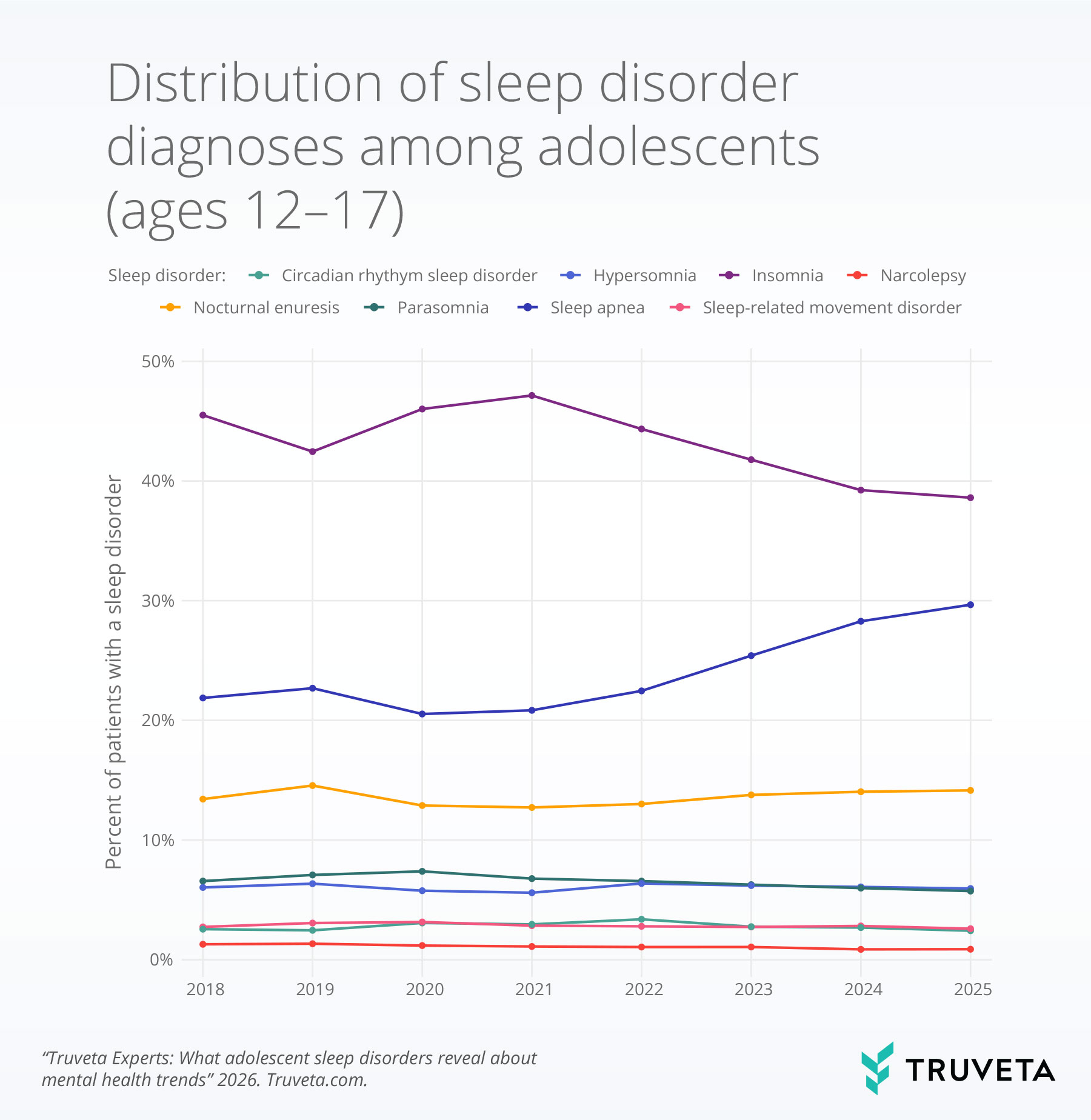
- Insomnia remained the most common sleep disorder but declined as a share of diagnoses from 52.5% in 2018 to 44.0% in 2025, while sleep apnea increased from 25.2% to 33.8%.
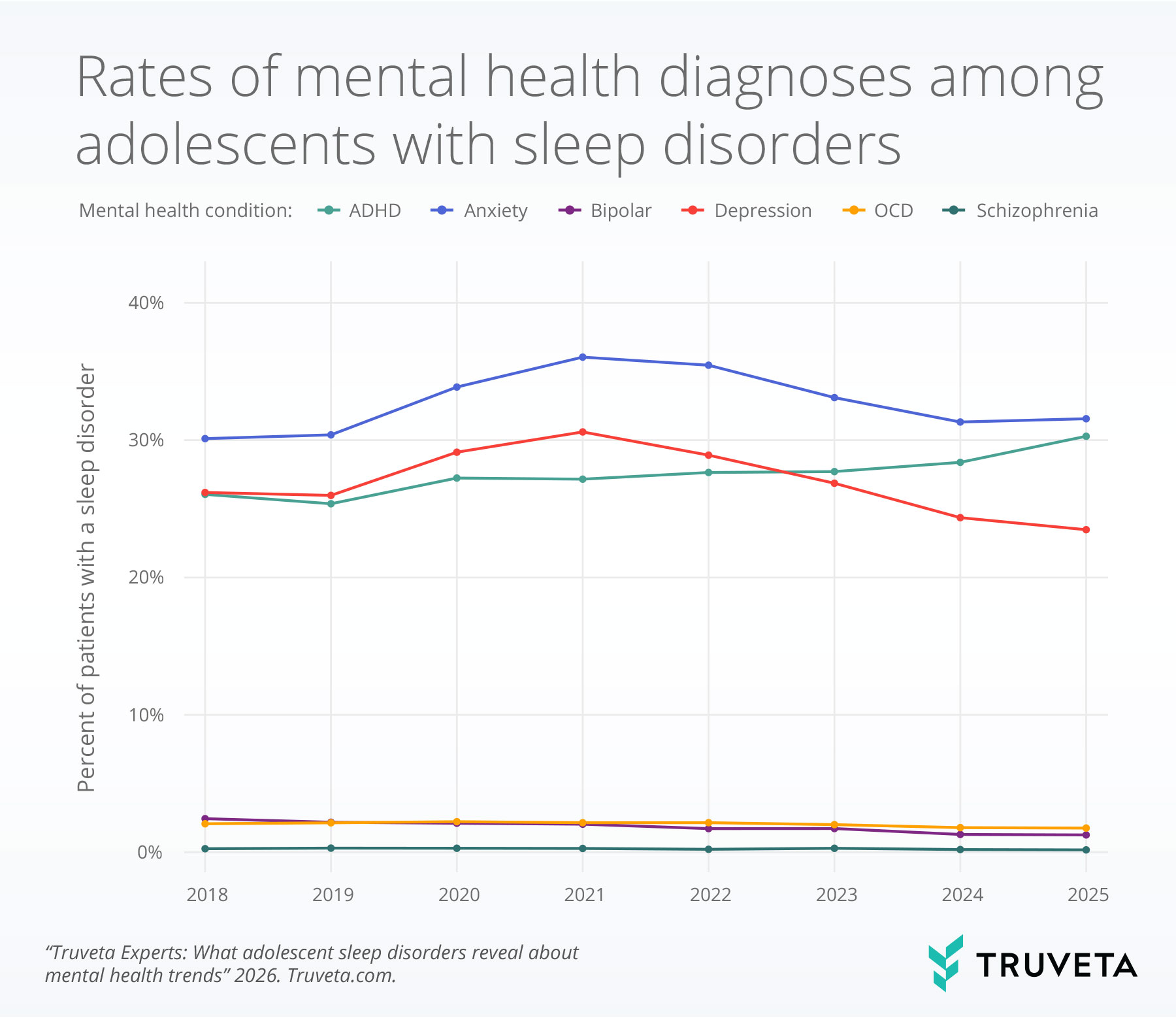
- Depression, anxiety, and ADHD were the most common co-occurring conditions, reflecting broader adolescent mental health trends during and after the COVID-19 pandemic.
Sleep is essential to adolescent health and development, influencing learning, emotional regulation, and physical well-being. Yet sleep disturbances are increasingly recognized among youth, often occurring alongside mental health conditions such as anxiety, depression, and ADHD.
Understanding how these conditions intersect in real-world clinical care can help inform earlier identification and more integrated approaches to treatment.
Methods
Using a subset of Truveta Data, Karen identified 109,853 patients aged 12–17 who had an encounter with a sleep disorder diagnosis—including insomnia, sleep apnea, circadian rhythm disorders, hypersomnia, parasomnia, and related conditions—between 2018 and 2025.
For each year, she calculated the percentage of patients who had a mental health diagnosis—including ADHD, anxiety, bipolar disorder, depression, OCD, or schizophrenia—within six months of their sleep disorder encounter (three months before or after).
Results
Shifts in adolescent sleep disorder diagnoses over time
Insomnia was the most common sleep disorder across all years, accounting for more than half of diagnoses in 2018 (52.5%) but declined steadily to 44.0% in 2025.
In contrast, sleep apnea diagnoses increased from 25.2% to 33.8% over the same period.
Other conditions such as parasomnia, hypersomnia, and circadian rhythm disorders remained relatively stable across the study period.
Mental health diagnoses frequently co-occur with adolescent sleep disorders
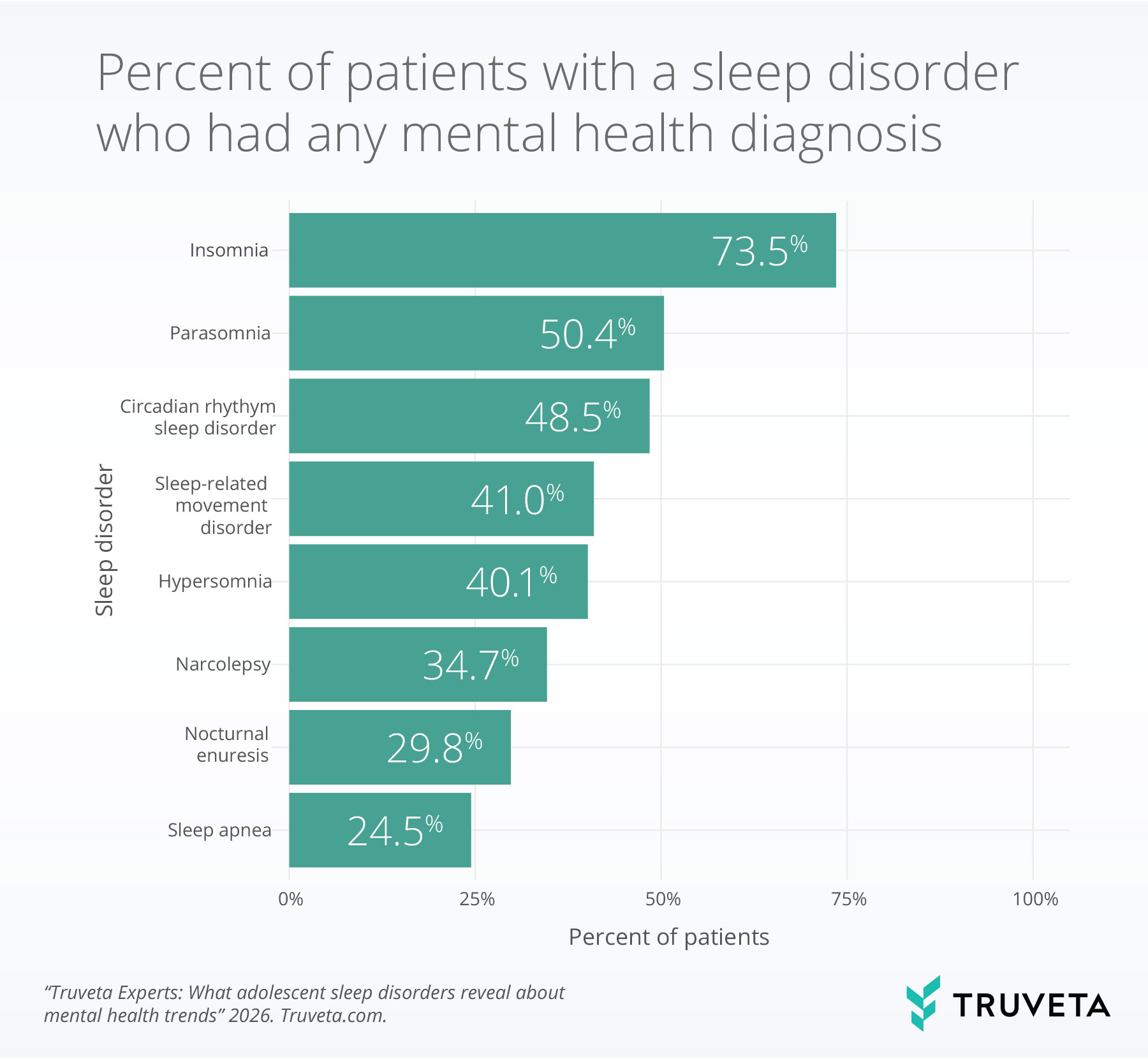
Across the study period, about 50.5% of adolescents with a sleep disorder had a mental health diagnosis within six months of their sleep-related encounter. Among the sleep disorder categories:
- Insomnia showed the highest co-occurrence, with 73.5% of patients also receiving a mental health diagnosis within six months.
- Sleep apnea had the lowest rate at 24.5%, though this remains higher than rates observed in the overall adolescent population in recent years.
Depression, anxiety, and ADHD drive most co-occurring diagnoses
Depression, anxiety, and ADHD were the most common co-occurring mental health conditions among adolescents with sleep disorders. Peaks in depression and anxiety in 2021 coincide with pandemic-related disruptions, while ADHD diagnoses showed a gradual increase through 2025.
Discussion
This analysis highlights the strong link between sleep and mental health in adolescents—more than half of adolescents with a sleep disorder also had a mental health diagnosis within six months.
These findings reinforce that mental health challenges are highly prevalent among youth presenting with sleep concerns and underscore the importance of integrated screening for both conditions in clinical practice.
Temporal patterns suggest potential influences from pandemic-related stress, changes in school schedules, and increased attention to adolescent behavioral health. While causal directions cannot be determined from this study, the co-occurrence of these conditions emphasizes opportunities for early detection and multidisciplinary care approaches.
These findings are preliminary and have not been peer reviewed. Truveta Data is updated regularly, and results may change as new data are added. Findings reflect data accessed in Decdember 2025.
See how Truveta Data can accelerate your next study—Request a customized demo today.
Explore more in this series:
Treatment trends for trigeminal neuralgia
Fireworks during the fourth of July
Real-world trends in Rituxan biosimilar adoption
Sudden cardiac arrest and arrhythmia among patients with chronic kidney disease
Biomarker testing trends in metastatic non-small cell lung cancer