



- The rate of e-bike and e-scooter injury-related emergency department (ED) visits increased 7.5-fold among children and adolescents (<18 years) between 2023 and May 2026.
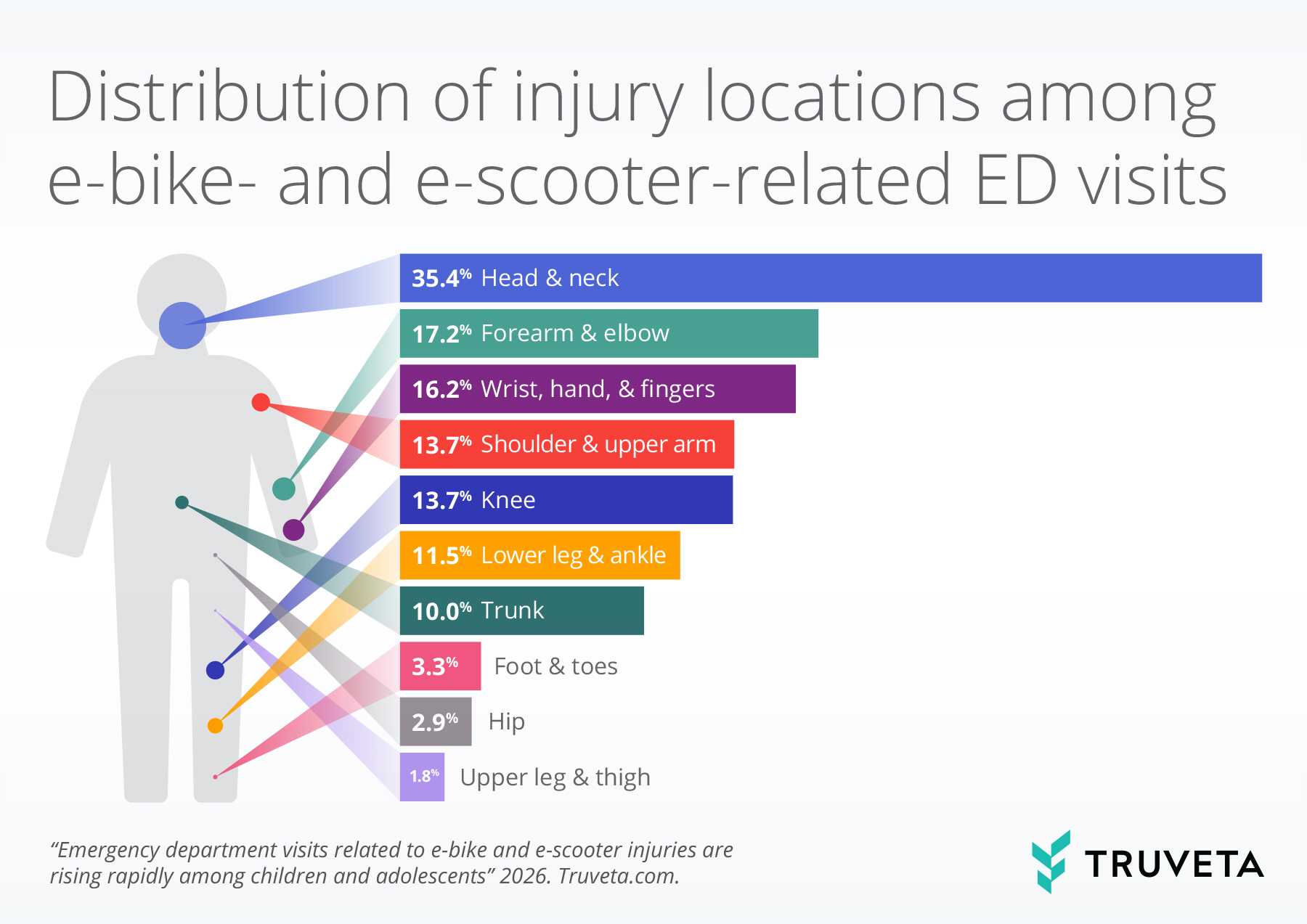
- More than one-third (35.4%) of patients were diagnosed with a head or neck injury.
- Traumatic brain injuries were diagnosed in nearly 7% of e-bike and e-scooter injury-related ED visits among children and adolescents.
Electric bicycles (e-bikes) and electric scooters (e-scooters) have rapidly transformed personal transportation over the past decade (1). Their popularity has grown because they offer affordable, convenient, and environmentally friendly alternatives to automobiles for commuting and recreation. According to the National Association of City Transportation Officials (NACTO), in 2025, people took approximately 150 million trips on shared e-bikes and e-scooters in the United States (2). Although the number of cities offering shared electric micromobility remained relatively stable in recent years (1), ridership continued to accelerate, with the number of shared e-bike and e-scooter trips increasing 30% in 2025 compared with 2023 (2).
Alongside this increased use, emergency departments (EDs) and trauma centers have reported increasing numbers of injuries associated with e-bikes and e-scooters (3, 4). Previous studies have described rising hospitalization and ED utilization related to e-bike and e-scooter crashes, with injuries often involving head trauma, fractures, and upper extremity injuries (4–6). Compared with traditional bicycles, e-scooters and e-bikes can travel at higher speeds and accelerate more rapidly, potentially increasing the severity of crashes (7, 8). Maximum allowable speeds, minimum age requirements, and helmet laws differ by state and by electric vehicle class, resulting in inconsistent safety requirements (9–11).
Most peer-reviewed studies describing e-bike and e-scooter injuries in the US include data only through 2024, leaving limited information on more recent injury trends (3, 12). In the past few months, individual hospitals and trauma centers have reported increasing numbers of severe e-bike and e-scooter injuries in 2026, particularly among children and adolescents, highlighting the need for updated data to better understand current injury patterns (13–16).
Using a subset of Truveta Data, we examined trends in ED visits related to e-bike and e-scooter injuries. We evaluated how rates changed across age groups and characterized the body regions and injury types diagnosed during these visits.
Methods
We used a subset of Truveta Data to identify ED visits between January 2023 and May 2026 with a diagnosis code identifying an injury involving an e-bike or e-scooter. These diagnosis codes include patients riding an e-bike or e-scooter, as well as pedestrians or other individuals struck by these vehicles.
To avoid counting follow-up encounters for the same injury event, patients could contribute multiple ED visits only if visits occurred at least 30 days apart; otherwise, only the first visit was included.
We calculated monthly rates of individuals with an ED visit related to an e-bike or e-scooter injury visit per 100,000 people with an ED visit. We stratified results by age group (0–17, 18–24, 25–44, 45–64, and 65 years or older). Because the study period included data only through May 2026, we compared only the January–May period across years to account for seasonal changes in e-bike and e-scooter use.
To characterize injuries, we evaluated all injury diagnoses recorded on the same day as the e-bike or e-scooter ED visit. Injury diagnoses were categorized using the National Center for Health Statistics ICD-10-CM Injury Diagnosis Matrix, which classifies injuries according to both body region and injury type (17).
Body regions were grouped into the following categories:
- Head and neck
- Shoulder and upper arm
- Forearm and elbow
- Wrist, hand, and fingers
- Trunk
- Hip, upper leg, and thigh
- Knee
- Lower leg and ankle
- Foot and toes
Injury types were categorized as:
- Superficial injuries and contusions
- Fractures
- Unspecified injuries
- Open wounds
- Sprains and strains
- Traumatic brain injuries (including concussions)
- Dislocations
- Internal organ injuries
- Other injuries
As patients can receive multiple injuries during a single event, individuals could contribute to multiple injury categories.
Results
We identified 12,485 ED visits with an e-bike and e-scooter injury diagnosis code between January 2023 and May 2026. Approximately two-thirds of patients were male (67.6%). Children and adolescents <18 years accounted for 27.5% of visits, followed by adults aged 18–24 years (18.8%), 25–44 years (32.9%), 45–64 years (16.5%), and 65 years or older (4.4%).
Most patients identified as White (57.7%), followed by Black (14.6%), Asian (3.6%), and other races (17.6%). One-quarter of patients identified as Hispanic or Latino (25.1%), 65.6% identified as not Hispanic or Latino, and ethnicity was unavailable for 9.3%.
Emergency department visit rates by age group
Between 2023 and May 2026, rates of e-bike and e-scooter related ED visits increased across every age group. The largest increase occurred among children and adolescents aged <18 years.
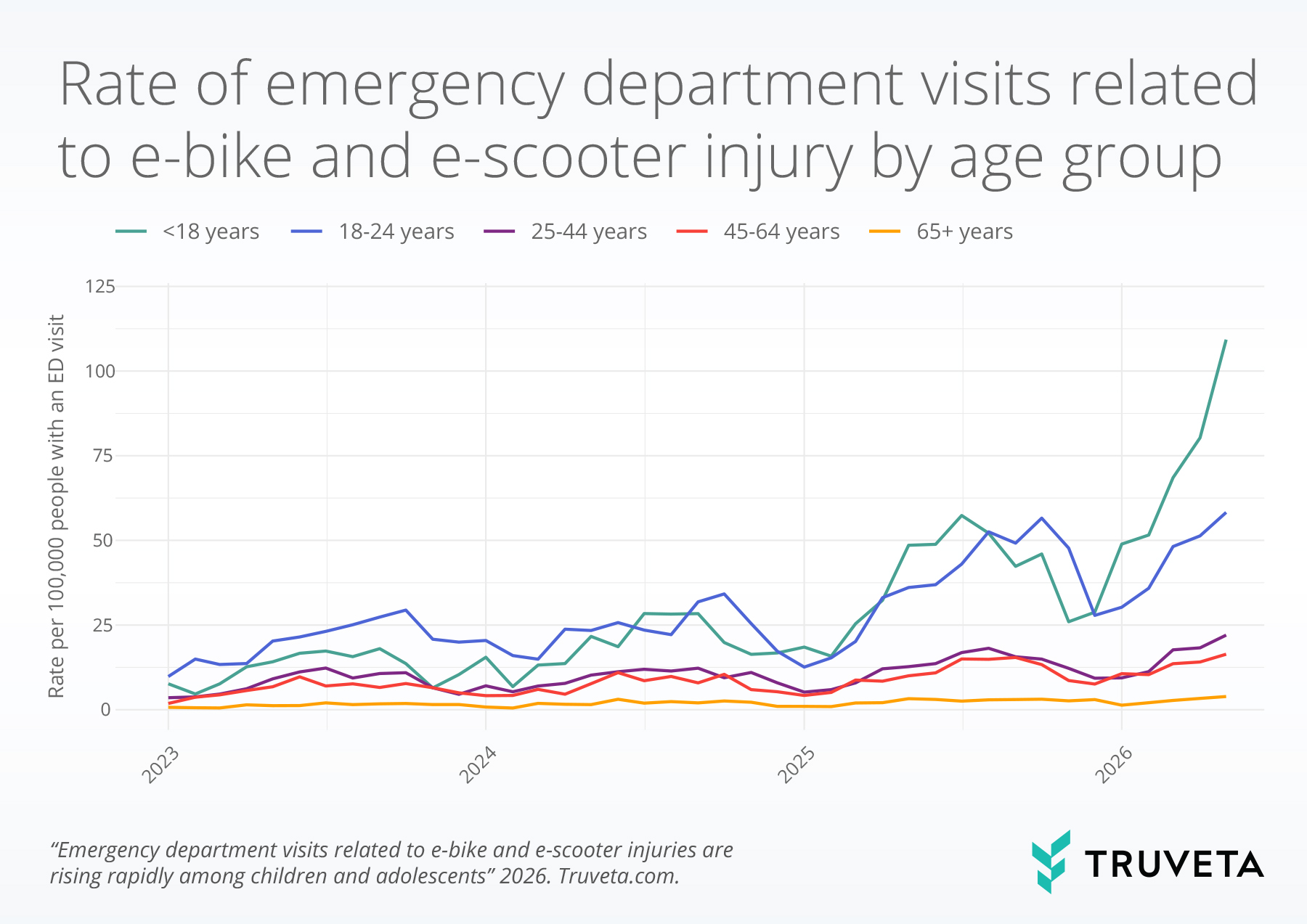
The rate among patients younger than 18 years old increased from 9.3 per 100,000 people with an ED visit in January–May 2023 to 71.7 per 100,000 in January–May 2026, representing a 671.0% increase. This increase substantially exceeded that observed in every other age group. Rates among adults aged 18–24 years also increased markedly, rising from 14.4 to 44.8 per 100,000 people with an ED visit (211.1% increase). Although adults aged 18–24 years had the highest rates of injury-related ED visits in 2023, children and adolescents became the age group with the highest rate by 2026.
Rates continued to increase substantially in 2026, particularly among younger riders. Between January–May 2025 and January–May 2026, the rate among children and adolescents increased from 28.1 to 71.7 per 100,000 people with an ED visit (155.2% increase), while the rate among adults aged 18–24 years increased from 23.4 to 44.8 per 100,000 (91.5% increase).
Body regions injured during emergency department visits
Among all injury diagnoses recorded during e-bike and e-scooter-related ED visits, injuries involving the head and neck were the most common, occurring in 35.4% of visits. Injuries involving the forearm and elbow (17.2%), wrist, hand, and fingers (16.2%), shoulder and upper arm (13.7%), and knee (13.7%) were also common.
Types of injuries diagnosed during emergency department visits
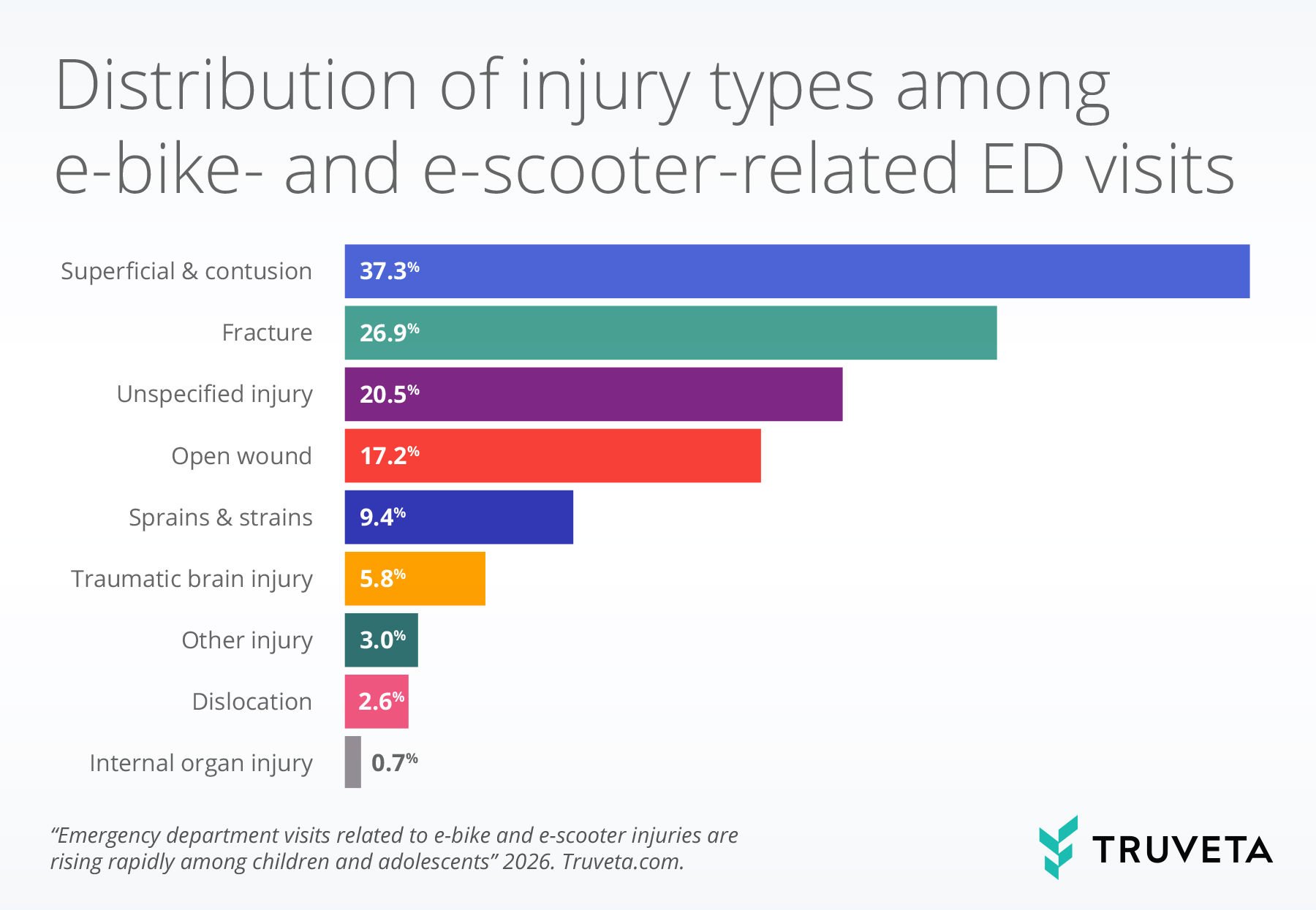
Superficial injuries and contusions were the most frequently diagnosed injury type, affecting 37.3% of visits. Fractures occurred in over one-quarter of visits (26.9%), followed by unspecified injuries (20.5%) and open wounds (17.2%). Sprains and strains accounted for 9.4% of injuries, while traumatic brain injuries represented 5.8% of injury diagnoses.
Injuries involving head and neck
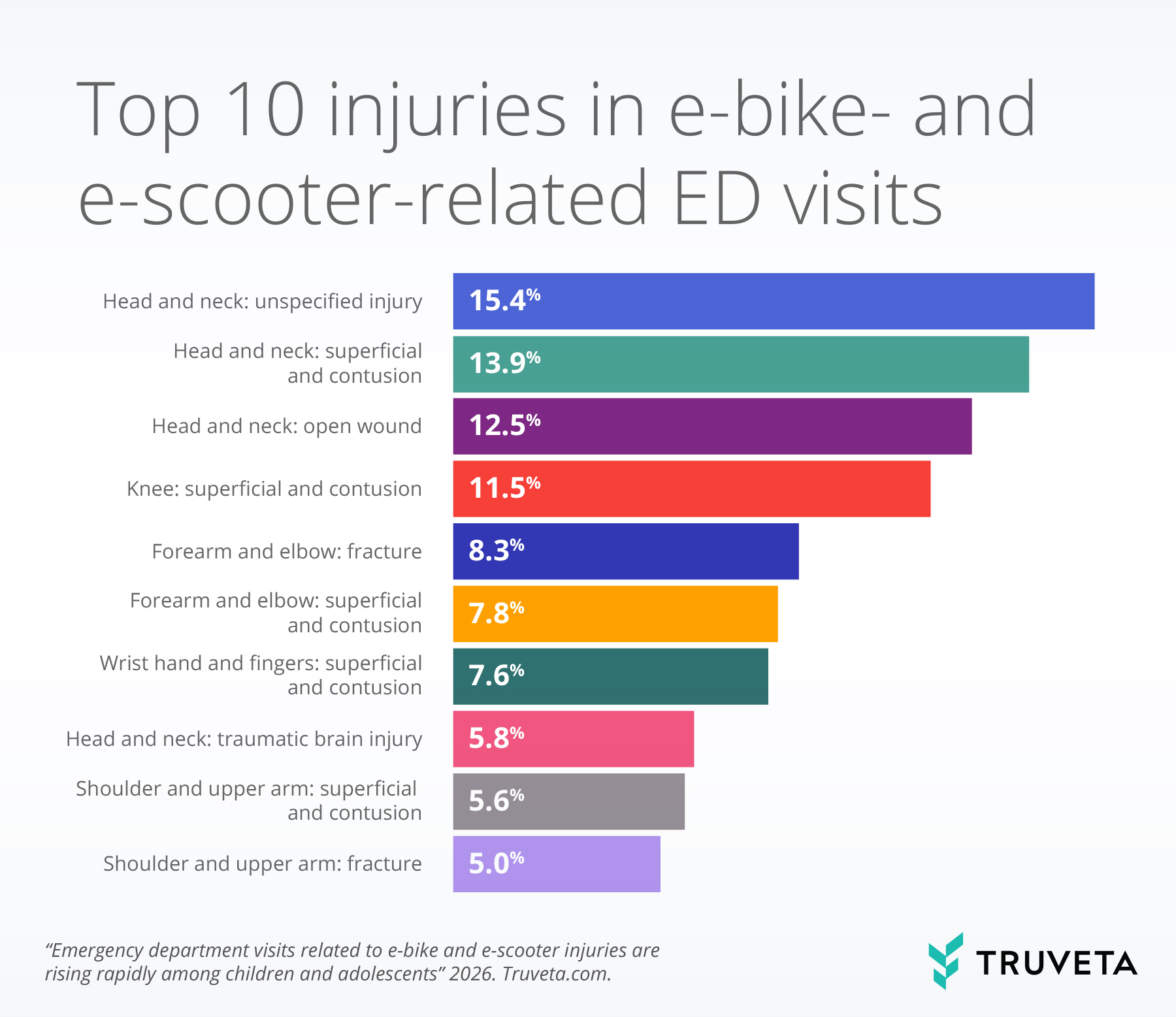
Injuries involving the head and neck accounted for many of the most frequent diagnoses. Unspecified head and neck injuries represented 15.4% of visits, followed by superficial head and neck injuries (13.9%) and open wounds involving the head and neck (12.5%). Traumatic brain injuries (TBIs) involving the head and neck accounted for an additional 5.8% of visits.
TBI rates varied by age group, with children and adolescents experiencing the highest rate. TBIs were diagnosed in 6.9% of ED visits among this age group. Rates declined among adults aged 18–24 years (6.2%), 25–44 years (5.3%), and 45–64 years (4.5%), before increasing slightly among adults aged 65 years or older (5.5%).
Discussion
In this analysis, we observed substantial increases in the rate of people with an e-bike or e-scooter injury-related ED visit across all age groups between 2023 and May 2026. The increase was especially pronounced among children and adolescents, who experienced a more than sevenfold increase in e-bike or e-scooter injury-related ED visits during the study period, exceeding that of every adult age group by 2026. These findings are consistent with recent studies demonstrating rapid increases in e-bike and e-scooter injuries in the United States (3–6). Previous analyses have shown that e-bike injuries have increased more rapidly than injuries involving traditional bicycles and mopeds and that adolescents represent one of the fastest-growing groups experiencing these injuries (3, 5, 6, 18). Other studies have also reported that e-scooter injuries occur more frequently among males, consistent with the predominance of male patients in our cohort (6).
Head and neck injuries were the most common injuries diagnosed during e-bike and e-scooter injury-related ED visits. More than one-third of patients sustained injuries involving the head or neck, and traumatic brain injuries were diagnosed in nearly 6% of visits overall. Importantly, children experienced the highest prevalence of traumatic brain injuries, with nearly 7% of pediatric ED visits resulting in a TBI diagnosis. These findings are consistent with previous studies identifying head injuries as the most common injury following e-bike and e-scooter crashes (6). Compared with conventional bicyclists, riders of electric micromobility devices are more likely to sustain traumatic brain injuries and require intensive care (19–21). Among children, head injuries are the most common injury following both conventional bicycle and e-bike crashes (22).
Studies of conventional bicycles have consistently shown that helmet use substantially reduces the risk of head injury, traumatic brain injury, and fatal injury (23–25). Although evidence specific to e-bikes and e-scooters continues to emerge, existing literature similarly demonstrates that helmet use is associated with lower rates of head injury among riders (25–28). Research has also shown that helmet laws are associated with higher helmet use and lower rates of head injury (26, 29–31). Given the rapid increase in injury-related ED visits among children and adolescents and the high proportion of head and neck injuries observed in our study, increasing helmet use represents an important opportunity to reduce preventable injuries. This may include policies that encourage helmet use, education for parents and young riders, and improving access to helmets, particularly for riders using shared e-bike and e-scooter programs where helmets are often not provided.
This study has several limitations. First, increases in e-bike and e-scooter injury-related ED visit rates over time may reflect both increased injury cases by these vehicles and improved documentation. The ICD-10-CM external cause codes for e-scooter injuries were introduced in October 2020, while codes specific to e-bike injuries became available in October 2022. We therefore began our analysis in 2023, the first full calendar year in which both code sets were available. As clinicians became more familiar with these newly introduced diagnosis codes and awareness of e-bike and e-scooter injuries increased, coding completeness may also have improved over time. Consequently, some e-bike and e-scooter injuries occurring earlier in the study period may not have been identified using these specific diagnosis codes. Second, our analysis only included injuries resulting in ED visits with diagnoses recorded on the same day, and therefore, represents injuries severe enough to seek emergency care. Less severe injuries treated in urgent care, outpatient settings, or managed at home were not captured. Third, the ICD-10-CM external cause codes include both riders and individuals struck by e-bikes or e-scooters, and we did not distinguish between these groups. Finally, patients could sustain multiple injuries during a single event; therefore, injury categories are not mutually exclusive.
This analysis helps characterize recent trends in ED visits related to e-bike and e-scooter injuries in the US. We found rapidly increasing rates of injury-related ED visits, particularly among children and adolescents, alongside a high burden of head and neck injuries. As use of e-bikes and e-scooters continues to increase, particularly among younger riders, continued monitoring of injury trends will be important for informing injury prevention efforts. Our findings reinforce the importance of helmet use and other strategies to reduce preventable head injuries.
These are preliminary research findings and not peer reviewed. Data are regularly updating. These findings are consistent with data accessed on June 26, 2026.
Citations
- “6th Annual Shared Micromobility State of the Industry Report” (North American Bikeshare and Scootershare Association, 2025); https://doi.org/0.7922/G2Z899S6.
- Shared Micromobility in NACTO Member Agencies: 2025 Trends, NACTO. https://nacto.org/publication/shared-micromobility-in-nacto-member-agencies-2025-trends/.
- E. Atkinson, T. Atkinson, Injury patterns and safety implications for electric bikes compared to mopeds in the United States. Traffic Injury Prevention 26, 15 (2025).
- A. R. Locke, N. H. Koehne, M. D. Ramey, J. J. Corvi, A. A. Alley, A. Yendluri, J. Song, N. K. Namiri, O. Enabulele, B. R. Waterman, X. Li, R. L. Parisien, The rise in electric biking (E-bike) injuries: a 10-year age and sex-specific analysis of national injury data. The Physician and Sportsmedicine 53, 345–352 (2025).
- N. K. Namiri, H. Lui, T. Tangney, I. E. Allen, A. J. Cohen, B. N. Breyer, Electric Scooter Injuries and Hospital Admissions in the United States, 2014-2018. JAMA Surg 155, 357–359 (2020).
- K. X. Farley, M. Aizpuru, J. M. Wilson, C. A. Daly, J. Xerogeanes, M. B. Gottschalk, E. R. Wagner, Estimated Incidence of Electric Scooter Injuries in the US From 2014 to 2019. JAMA Netw Open 3, e2014500 (2020).
- M. Dozza, G. F. Bianchi Piccinini, J. Werneke, Using naturalistic data to assess e-cyclist behavior. Transportation Research Part F: Traffic Psychology and Behaviour 41, 217–226 (2016).
- J.-K. Kim, S. Kim, G. F. Ulfarsson, L. A. Porrello, Bicyclist injury severities in bicycle–motor vehicle accidents. Accident Analysis & Prevention 39, 238–251 (2007).
- Electric Bikes Are Emerging as Public Health Hazard, ACS. https://www.facs.org/for-medical-professionals/news-publications/news-and-articles/bulletin/2024/julyaugust-2024-volume-109-issue-7/electric-bikes-are-emerging-as-public-health-hazard/.
- HB17-1151 Electrical Assisted Bicycles Regulation Operation | Colorado General Assembly. https://leg.colorado.gov/bills/hb17-1151.
- J. MacArthur, N. Kobel, Regulations of E-bikes in North America. (2014).
- K. G. Burford, N. G. Itzkowitz, A. G. Rundle, C. DiMaggio, S. J. Mooney, The Burden of Injuries Associated With E-Bikes, Powered Scooters, Hoverboards, and Bicycles in the United States: 2019‒2022. Am J Public Health 114, 1365–1374 (2024).
- A. Arellano, Hospitals see surge in e-bike/scooter trauma cases, KLAS (2026). https://www.8newsnow.com/news/local-news/sunrise-hospital-sees-concerning-amount-of-traumatic-brain-injuries-due-to-e-bike-accidents/.
- B. Garland, E-bike injuries at Wolfson Children’s Hospital surge from single digits to more than 100 cases | firstcoastnews.com, First Coast News (2026). https://www.firstcoastnews.com/article/news/local/e-bike-injuries-surge-wolfson-childrens-hospital/77-bfb740a9-f65c-4576-826a-075eb1549188.
- S. Villalba, Children’s Hospital Colorado ER sees huge spike in serious e-bike, e-scooter injuries, Denver 7 Colorado News (KMGH) (2026). https://www.denver7.com/lifestyle/health/childrens-hospital-colorado-er-sees-huge-spike-in-serious-e-bike-e-scooter-injuries.
- KCCI, Electric bike and scooter injuries surge in Iowa, UnityPoint Health reports, https://www.kcrg.com (2026). https://www.kcrg.com/2026/06/21/electric-bike-scooter-injuries-surge-iowa-unitypoint-health-reports/.
- H. Hedegaard, R. L. Johnson, M. Garnett, K. E. Thomas, The 2020 International Classification of Diseases, 10th Revision, Clinical Modification injury diagnosis framework for categorizing injuries by body region and nature of injury. (2020).
- A. N. Fernandez, K. D. Li, H. V. Patel, I. E. Allen, U. Ghaffar, N. Hakam, B. N. Breyer, Injuries With Electric vs Conventional Scooters and Bicycles. JAMA Netw Open 7, e2424131 (2024).
- B. Shannon, N. Ni, J. Ehsani, L. S. Friedman, Injuries From Electric Bikes and Scooters: Illinois, U.S., 2021–2023. American Journal of Preventive Medicine 69, 108065 (2025).
- A. Anderson, M. McLellan, A. Tedesco, K. Callan, C. Grabar, V. Joe, J. Nahmias, J. Learned, Comparison of Characteristics, Injury Patterns, and Orthopaedic Injuries Between Electric Bicycle, Pedal Bicycle, Electric Scooters, and Motorcycle Accidents at a Level 1 Trauma Center. JAAOS Global Research & Reviews 9, e25.00099 (2025).
- D. Baschera, D. Jäger, R. Preda, W. J. Z’Graggen, A. Raabe, A. K. Exadaktylos, R. M. Hasler, Comparison of the Incidence and Severity of Traumatic Brain Injury Caused by Electrical Bicycle and Bicycle Accidents—A Retrospective Cohort Study From a Swiss Level I Trauma Center. World Neurosurgery 126, e1023–e1034 (2019).
- E. Avrahamov-Kraft, A. Yulevich, Y. Sweed, Pediatric Electrical Bicycle Road Accidents. Eur J Pediatr Surg 32, 120–126 (2022).
- R. G. Attewell, K. Glase, M. McFadden, “Bicycle helmet efficacy: a meta-analysis” in Database of Abstracts of Reviews of Effects (DARE): Quality-Assessed Reviews [Internet] (Centre for Reviews and Dissemination (UK), 2001; https://www.ncbi.nlm.nih.gov/books/NBK68856/).
- J. Olivier, P. Creighton, Bicycle injuries and helmet use: a systematic review and meta-analysis. International journal of epidemiology 46, 278–292 (2017).
- G. Pitcher, M. Mendoza, A. McCague, A. Henken-Siefken, The Impact of Helmet Use on Injury Severity and Clinical Outcomes in E-Bike Riders. Cureus 17, e85153.
- J. Olivier, Safety Benefits of Bicycle Helmet Usage: Literature Review Findings. (2025).
- A. M. Fernandez, K. D. Li, H. V. Patel, I. E. Allen, U. Ghaffar, N. Hakam, B. N. Breyer, Electric Bicycle Injuries and Hospitalizations. JAMA Surg 159, 586–588 (2024).
- L. F. Goodman, Z. Birnbaum Flyer, J. Schomberg, M. Maginas, E. Wallace, O. Vukcevich, S. Awan, D. Gibbs, J. Nahmias, Y. S. Guner, Electric bicycles (e-bikes) are an increasingly common pediatric public health problem. Surg Open Sci 14, 46–51 (2023).
- A. Macpherson, A. Spinks, Bicycle helmet legislation for the uptake of helmet use and prevention of head injuries. Cochrane Database of Systematic Reviews (2008).
- P. De Jong, The Health Impact of Mandatory Bicycle Helmet Laws. Risk Analysis 32, 782–790 (2012).
- A. K. Macpherson, T. M. To, C. Macarthur, M. L. Chipman, J. G. Wright, P. C. Parkin, Impact of Mandatory Helmet Legislation on Bicycle-Related Head Injuries in Children: A Population-Based Study. Pediatrics 110, e60–e60 (2002).