


- The rate of infants not receiving vitamin K injections at birth has increased in recent years, accelerating in 2025 and 2026.
- In January 2026, 5.2% of births did not have documented receipt of vitamin K, increasing to 8.1% in June 2026, a 57.4% increase.
- Rates of infants not receiving vitamin K injections at birth are higher among female vs. male newborns, with 8.9% of female and 7.3% of male newborns not receiving the injection in June 2026.
Vitamin K is essential for normal blood clotting. It helps the liver activate proteins the blood needs to form clots and stop bleeding after an injury. Without enough vitamin K, even a small cut can take longer to stop bleeding. Newborns are born with very low vitamin K levels, which puts them at risk for vitamin K deficiency bleeding (VKDB), a rare but potentially life-threatening condition (1). They are especially vulnerable because only small amounts of vitamin K cross the placenta before birth, leaving them with limited stores in the liver. In addition, breast milk contains low levels of vitamin K, and the newborn gut has not yet developed the bacteria that help produce it (1–3).
Without a vitamin K injection at birth, VKDB can happen any time from birth through 6 months of age. The most concerning cases are typically “late VKDB,” which happens between 1 week and 6 months of age. These cases can involve internal bleeding that is not obvious to caregivers at first, with bleeding occurring in the intestines or brain (1, 2). The fatality rate of late VKDB is above 20% (4). The CDC reports that infants who do not receive vitamin K at birth are 81 times more likely to develop late VKDB than infants who receive vitamin K (1).
The American Academy of Pediatrics (AAP) recommends that all newborns weighing >1500 grams receive 1 mg of vitamin K by intramuscular injection within 6 hours of birth. Smaller preterm infants should receive a weight-based dose (2). The AAP also emphasizes that clinicians should explain both the benefits of vitamin K and the risks of refusal to caregivers (2, 5, 6).
Despite these longstanding recommendations, non-receipt of vitamin K appears to be increasing in the US. A recent national analysis found that the percentage of newborns without documented vitamin K injection increased from 2017-2024 (7). Other studies have shown that refusal may vary by newborn sex and may overlap with refusal of other newborn preventative care, such as hepatitis B vaccination and antibiotic eye ointment (8-10).
Using a subset of Truveta Data, we examined trends in vitamin K administration among liveborn newborns in the United States from January 2019 through June 2026. We evaluated whether administration changed over time overall and whether trends differed by newborn sex and maternal demographic characteristics.
Methods
We used a subset of Truveta Data, an electronic health record database that includes more than 140 million people receiving care across a collective of US healthcare systems.
We included mothers with evidence of a live birth between January 1, 2019 and June 30, 2026. Mothers were included if they were 15 to 49 years old at the time of delivery. If a mother had more than one live birth during the study period, each birth was counted as a separate birth event.
We identified vitamin K administration using procedure and medication administration records in the newborn electronic health record. Vitamin K was counted as received in the immediate newborn period if it was documented on the day of birth or one day after. This window was used to account for small differences in how birthdate or medication timing may be recorded in the health record.
We calculated the monthly percentage of liveborn newborns with documented receipt of vitamin K injection. We examined trends overall and by newborn sex and maternal characteristics, including maternal age, race, and ethnicity.
Results
Study population
We identified 1,026,375 infants born to 825,599 unique mothers with birth dates between January 2019 and June 2026 that met inclusion criteria. Among these, 995,628 newborns had documented vitamin K administration within a day of birth, corresponding to 97.0% of births across the full study period.
Among 1,026,375 newborns, 500,248 (48.7%) were female. Mothers aged 30-39 comprised 53.8% of the study population, followed by those aged 19-29 years (39.8%), 40-49 years (5.3%), and 15-18 years (1.1%). Most mothers were White (63.1%) and of non-Hispanic or Latino ethnicity (74.3%). Just over a third of mothers had commercial insurance recorded (36.6%), 37.6% had Medicaid recorded at the time of birth, 6.0% had other insurance, and the remaining 19.8% had unknown/no known insurance.
Overall time trends of vitamin K non-receipt
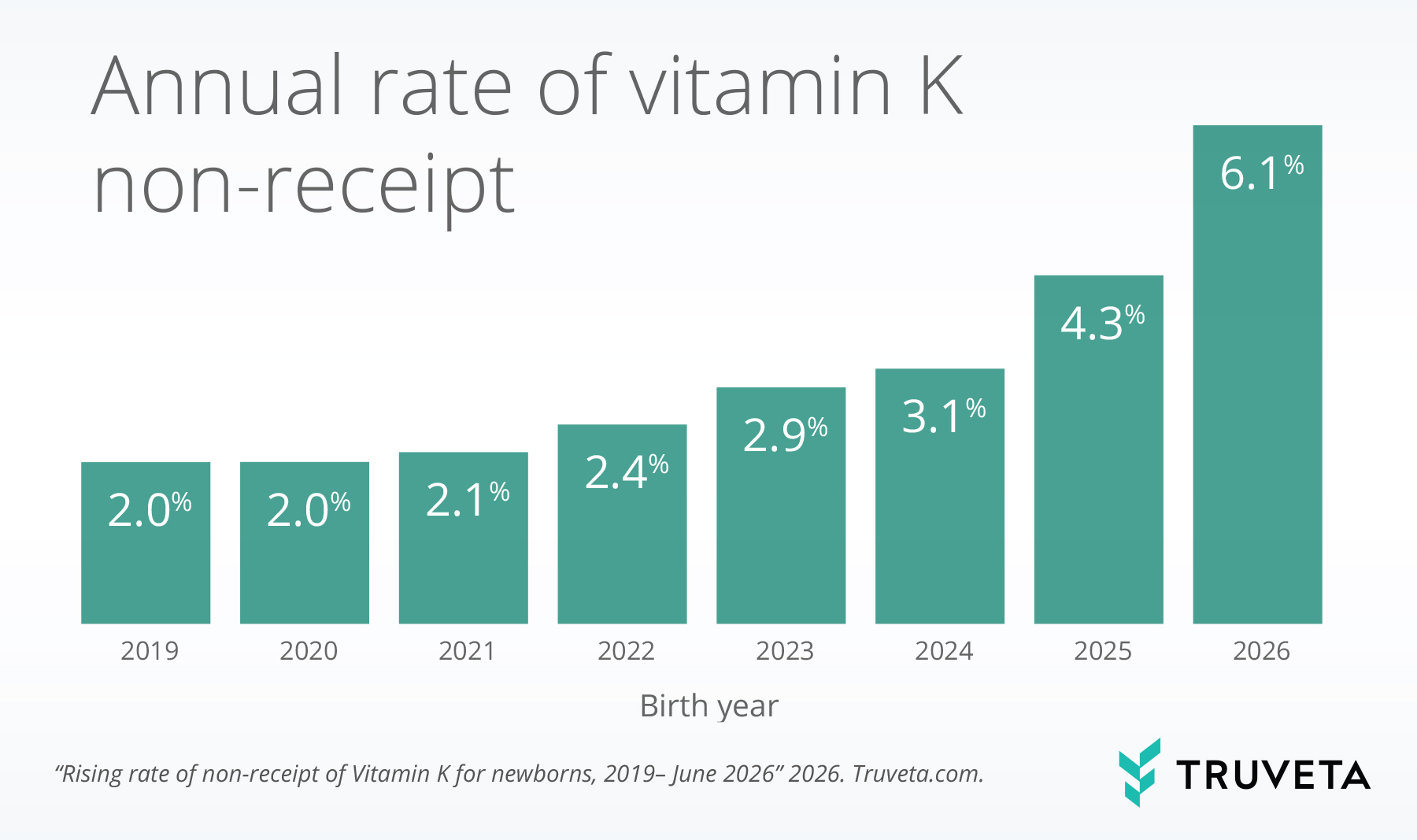
The rate of non-receipt of vitamin K has varied over time, and rates have increased in recent years, reaching 6.1% for January – June 2026.
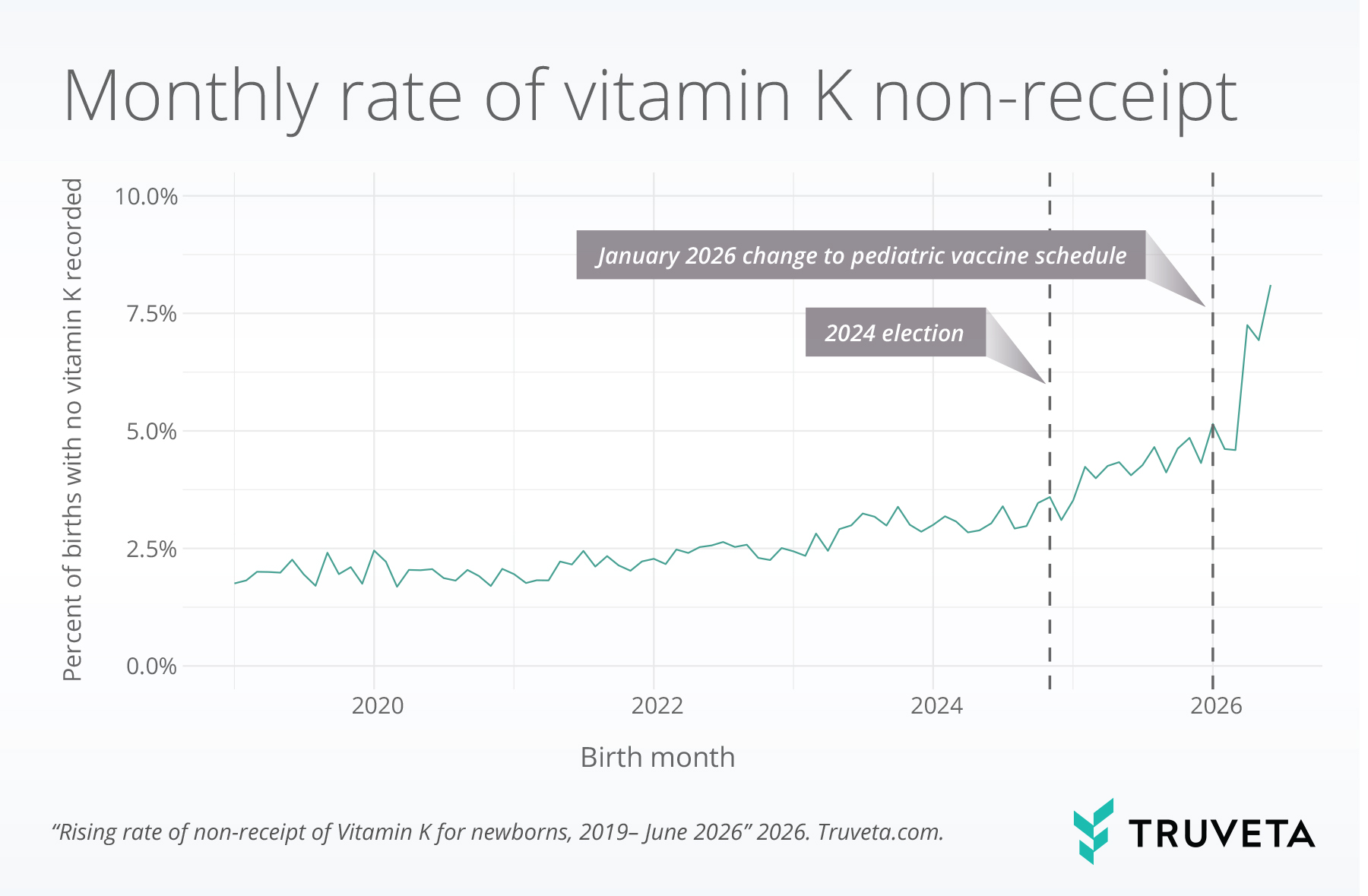
The monthly rate of non-receipt of vitamin K at birth began increasing in 2023 but accelerated in 2025 and 2026. In January 2026, 5.2% of births did not have documented receipt of vitamin K, increasing to 8.1% in June 2026, a 57.4% increase.
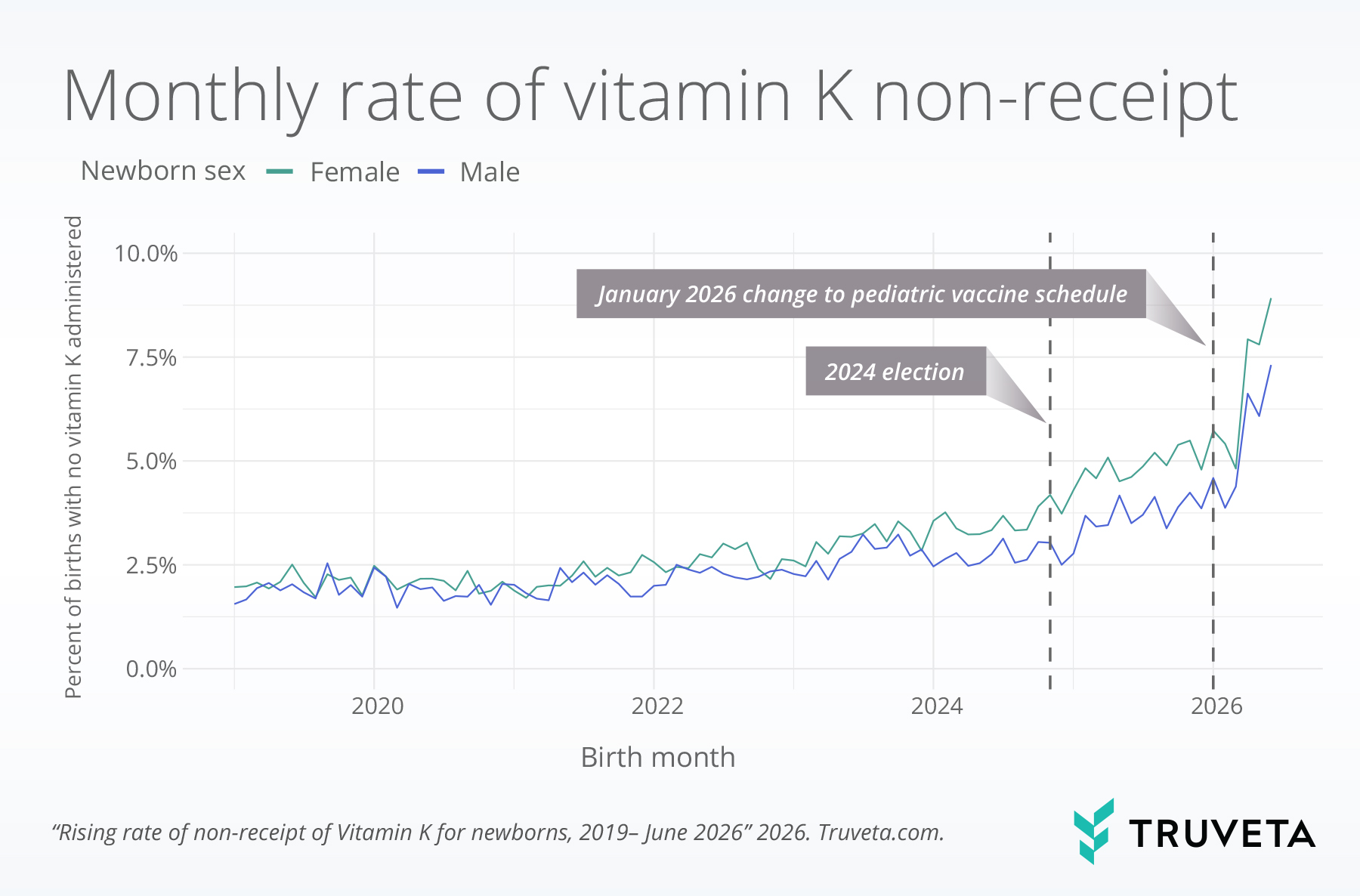
Among female newborns, 5.7% of births did not have documented receipt of vitamin K in January 2026, increasing to 8.9% in June 2026, a 55.6% increase.
Among male newborns, 4.6% of births did not have documented receipt of vitamin K in January 2026, increasing to 7.3% in June 2026, a 59.3% increase.
Annual time trends stratified by baby’s sex
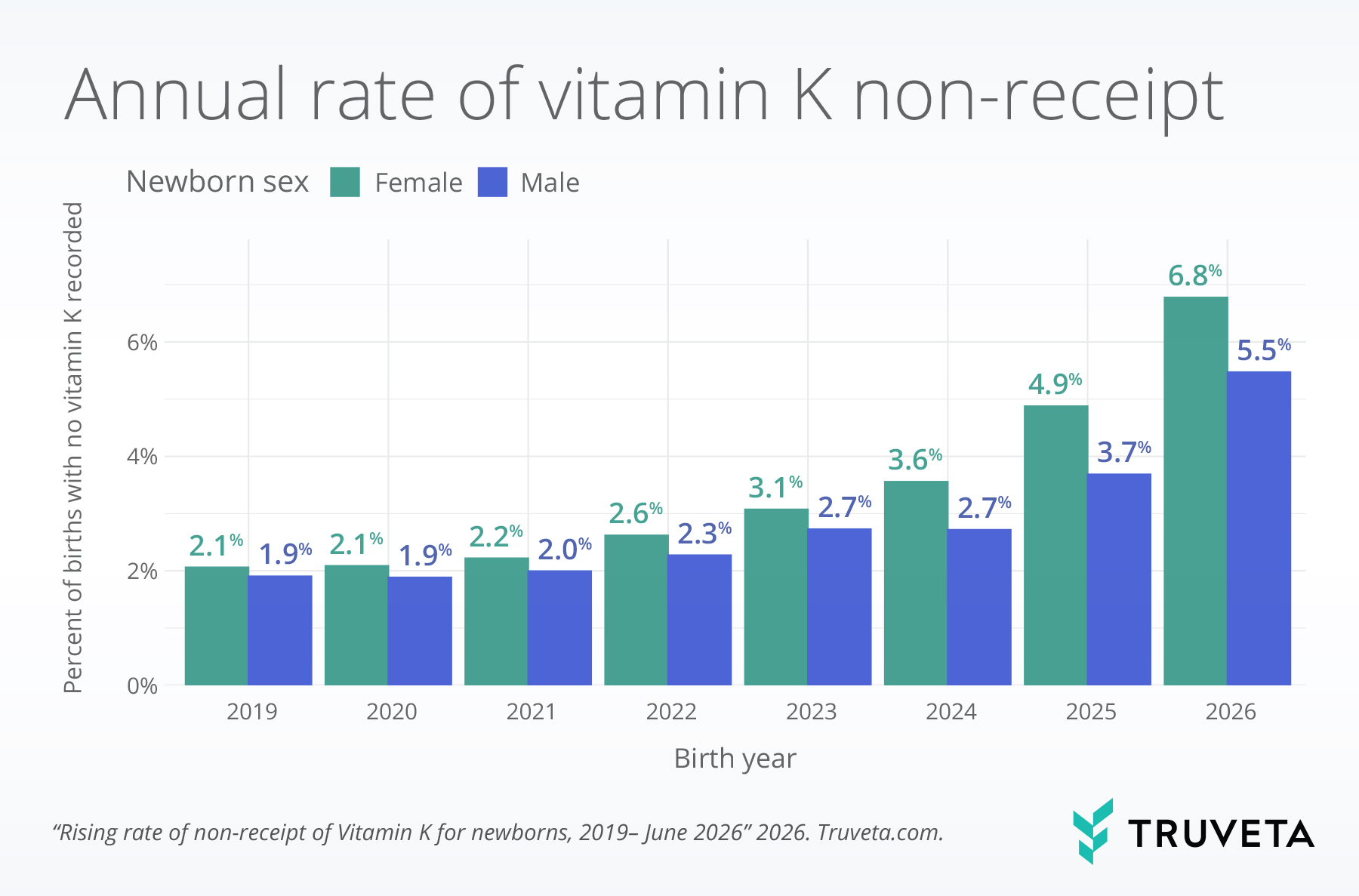
The rate of vitamin K non-receipt was higher among girls across most of the study period, with the gap between the rate in girls and boys diverging in recent years. From 2019 – 2022, the average rate of non-receipt was 2.0% among boys and 2.3% among girls. Rates increased to 4.9% for girls and 3.7% for boys in 2025 and to 6.8% for girls and 5.5% for boys in 2026.
Time trends stratified by maternal age
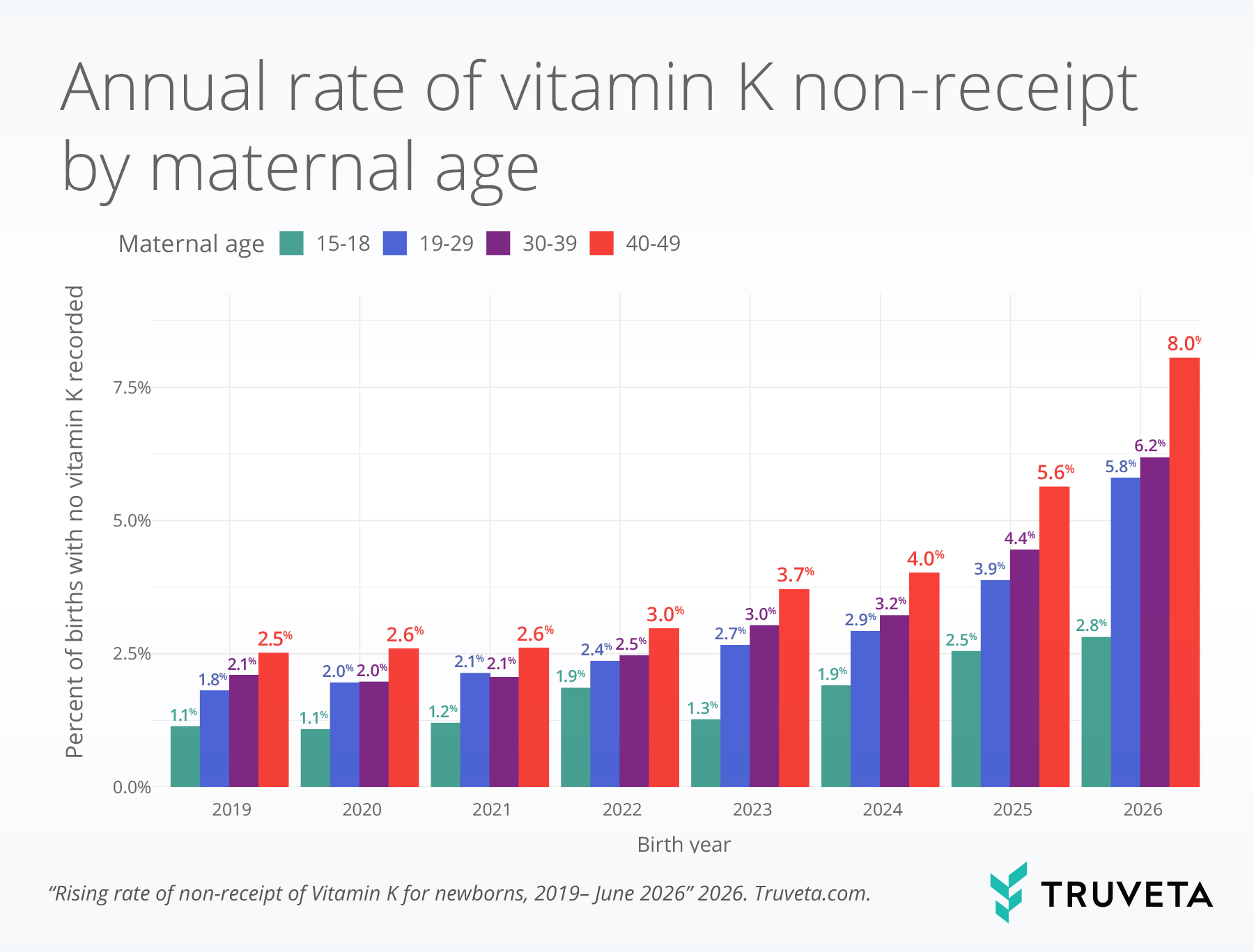
Vitamin K non-receipt was more common as maternal age increased. Among newborns of mothers aged 15-18 years, rates of non-receipt were the lowest, ranging from a low of 1.1% in 2019 to a high of 2.8% in 2026. By contrast, newborns of mothers aged 40-49 had the highest rates of non-receipt of birth-dose vitamin K, increasing from 2.5-3.0% from 2019-2022 and climbing to 5.6% in 2025 and 8.0% for January – June 2026.
Discussion
In this large real-world cohort of births from January 2019 through June 2026, we found that the number of babies who did not receive vitamin K within one day of birth increased over time. Non-receipt varied by newborn sex and maternal demographics, including maternal age. These findings provide a timely national view into newborn vitamin K administration patterns in routine clinical care.
Vitamin K injection is a simple, longstanding, and highly effective intervention that prevents the potential for a life-threatening bleeding event. The AAP has recommended vitamin K injection since 1961, and its current guidance continues to recommend intramuscular vitamin K for all newborns (2, 12). Decades of medical precedent have served to prevent vitamin K deficiency bleeding (VKDB); while VKDB is rare, it can be catastrophic when it occurs. Late VKDB—occurring from 1 week to 6 months of age—is particularly concerning because it often happens after an otherwise healthy infant has been discharged from the hospital and can first appear as bleeding in the brain, which may go unnoticed by parents (1-3, 11).
Our findings build on recent evidence showing that vitamin K non-receipt is increasing in the US (7) and add to recent research from three centers in Pennsylvania showing that parental refusal may differ by the baby’s sex (8). The disparity seen by newborn sex may reflect an association with circumcision for male newborns, as many hospitals will not perform the procedure if the infant has not received vitamin K due to increased bleeding risk. Our analysis builds on these prior studies by using Truveta Data to examine extremely recent vitamin K trends nationwide and describing patterns across multiple maternal demographic dimensions.
Differences in vitamin K non-receipt by maternal age and ethnicity may reflect several overlapping factors. These may include care setting, local hospital practices, counseling approaches, access to prenatal education, parental beliefs, and documentation completeness. Prior studies have found that parents who decline vitamin K often also decline other routine newborn preventive interventions, such as hepatitis B vaccination and antibiotic eye ointment (9, 10). Research on parental decision-making has found that concerns about ingredients, dose, side effects, and misinformation found online can contribute to refusal (10, 13). This suggests that vitamin K refusal may be part of broader hesitation about newborn preventive care, even though vitamin K is not a vaccine (2, 10, 14).
Some families who decline the vitamin K injection may ask for oral vitamin K instead. However, oral Vitamin K is less effective than intramuscular vitamin K at preventing VKDB, and there is currently no FDA-approved oral vitamin K product for newborn prophylaxis in the United States (2, 15).
Although almost all newborns still receive a vitamin K injection, even small increases in non-receipt can cause significant public health impacts. In 2013, a cluster of VKDB cases in Tennessee occurred among infants whose parents had declined vitamin K. Investigators found that some parents declined because of misinformation. Four infants developed VKDB; three had bleeding in the brain, and one had gastrointestinal bleeding (16). This outbreak shows how misinformation can lead to serious and preventable harm. If vitamin K refusal continues to rise, more infants may be at risk for this preventable and potentially fatal bleeding disorder.
This study has limitations. First, vitamin K administrations were counted if recorded from the child’s birthdate to one day after. This allows for variation in documented timing of birth and vitamin K administrations but does not allow us to determine whether administration occurred within the recommended 6-hour window. Second, this analysis describes documented vitamin K administration, not parental refusal directly. Lack of documented administration could reflect refusal, documentation gaps, transfer, data availability, or other clinical circumstances. Third, demographic differences may be influenced by variation in health system composition, local policies, and documentation practices across sites. Finally, these data do not capture downstream VKDB outcomes, including bleeding events after discharge, which may occur outside the delivery health system.
Despite these limitations, this analysis provides timely evidence on newborn vitamin K administration patterns across a large US real-world dataset. By describing trends through June 2026 and examining differences by newborn sex and maternal demographics, this study helps contextualize a concerning rise in non-receipt of a life-saving prophylactic injection for newborns. Continued monitoring of vitamin K administration, combined with clear communication about the risks of VKDB and the benefits of prophylaxis, may help prevent avoidable morbidity and mortality among newborns.
These are preliminary research findings and not peer reviewed. Data are constantly changing and updating. These findings are consistent with data accessed on July 22, 2026.
Citations
- Centers for Disease Control and Prevention. About vitamin K deficiency bleeding. 2025. https://www.cdc.gov/vitamin-k-deficiency/faq/index.html
- Hand I, Noble L, Abrams SA. Vitamin K and the newborn infant. Pediatrics. 2022;149(3). https://doi.org/10.1542/peds.2021-056036
- Sirachainan N, Komvilaisak P, van Ommen CH, et al. International perspectives on vitamin K deficiency bleeding in infants: A cross-sectional questionnaire-based survey. Pediatric Blood & Cancer. 2025;72(10). https://doi.org/10.1002/pbc.31889
- Al-Zuhairy SH. Late vitamin K deficiency bleeding in infants: five-year prospective study. J Pediatr (Rio J). 2021 Sep-Oct;97(5):514-519. https://doi.org/10.1016/j.jped.2020.09.003
- Puckett RM, Offringa M. Prophylactic vitamin K for vitamin K deficiency bleeding in neonates. Cochrane Database of Systematic Reviews. 2000;(4). https://doi.org/10.1002/14651858.CD002776
- Ardell S, Offringa M, Ovelman C, Soll R. Prophylactic vitamin K for the prevention of vitamin K deficiency bleeding in preterm neonates. Cochrane Database of Systematic Reviews. 2018;(2). https://doi.org/10.1002/14651858.CD008342.pub2
- Scott K, Miller E, Culhane JF, et al. Trends in vitamin K administration among infants. JAMA. 2026;335(3):272–274. https://doi.org/10.1001/jama.2025.21460
- Coggins SA, Flannery DD, Mukhopadhyay S, Puopolo KM. Parental decline of newborn vitamin K and hepatitis B vaccine administration by newborn sex. JAMA Network Open. 2026;9(6). https://doi.org/10.1001/jamanetworkopen.2026.18410
- Loyal J, Taylor JA, Phillipi CA, et al. Factors associated with refusal of intramuscular vitamin K in normal newborns. Pediatrics. 2018;142(2). https://doi.org/10.1542/peds.2017-3743
- Hamrick HJ, Gable EK, Freeman EH, Dunn LL, Zimmerman SP, Rusin MM, Skinner AC. Reasons for refusal of newborn vitamin K prophylaxis: implications for management and education. Hospital Pediatrics. 2016;6(1):15–21. https://doi.org/10.1542/hpeds.2015-0095
- Perrone S, Beretta V, Petrolini C, et al. Late vitamin K deficiency bleeding in infancy: The time to ensure effective prevention. Nutrition Reviews. Published online November 16, 2025. https://doi.org/10.1093/nutrit/nuaf214
- American Academy of Pediatrics, Committee on Nutrition. Vitamin K compounds and the water-soluble analogues: use in therapy and prophylaxis in pediatrics. Pediatrics. 1961;28(3):501–507. https://doi.org/10.1542/peds.28.3.501
- Schulte R, Jordan LC, Morad A, Naftel RP, Wellons JC, Sidonio R. Rise in late onset vitamin K deficiency bleeding in young infants because of omission or refusal of prophylaxis at birth. Pediatric Neurology. 2014;50(6):564–568. https://doi.org/10.1016/j.pediatrneurol.2014.02.018
- Rogers TP, Fathi O, Sánchez PJ. Neonatologists and vitamin K hesitancy. Journal of Perinatology. 2023;43:1067–1071. https://doi.org/10.1038/s41372-023-01611-w
- Kair LR, Loyal J, Phillipi CA. Oral vitamin K—US newborns need an FDA-approved option. JAMA Pediatrics. Published online April 20, 2026. https://doi.org/10.1001/jamapediatrics.2026.0832
- Warren M, Miller A, Traylor J, et al. Late vitamin K deficiency bleeding in infants whose parents declined vitamin K prophylaxis — Tennessee, 2013. MMWR Morb Mortal Wkly Rep. 2013;62(45):901–902. https://www.cdc.gov/mmwr/preview/mmwrhtml/mm6245a4.htm