


Authors: Amruta Nori-Sarma, PhD ⊕, Department of Environmental Health, Center for Climate, Health, and the Global Environment, Harvard T.H. Chan School of Public Health, Boston, MA, USA Brianna M. Cartwright, MS ⊕, Truveta, Inc, Bellevue, WA, USA Antonella Zanobetti, PhD ⊕, Department of Environmental Health, Harvard T.H. Chan School of Public Health, Boston, MA, USA Agnes Pastwa ⊕, Truveta, Inc, Bellevue, WA, USA Nicholas Stucky, MD, PhD ⊕, Providence Health, Portland, OR, USA Mary D. Willis, PhD, MPH ⊕Department of Epidemiology, Boston University School of Public Health, Boston, MA, USA
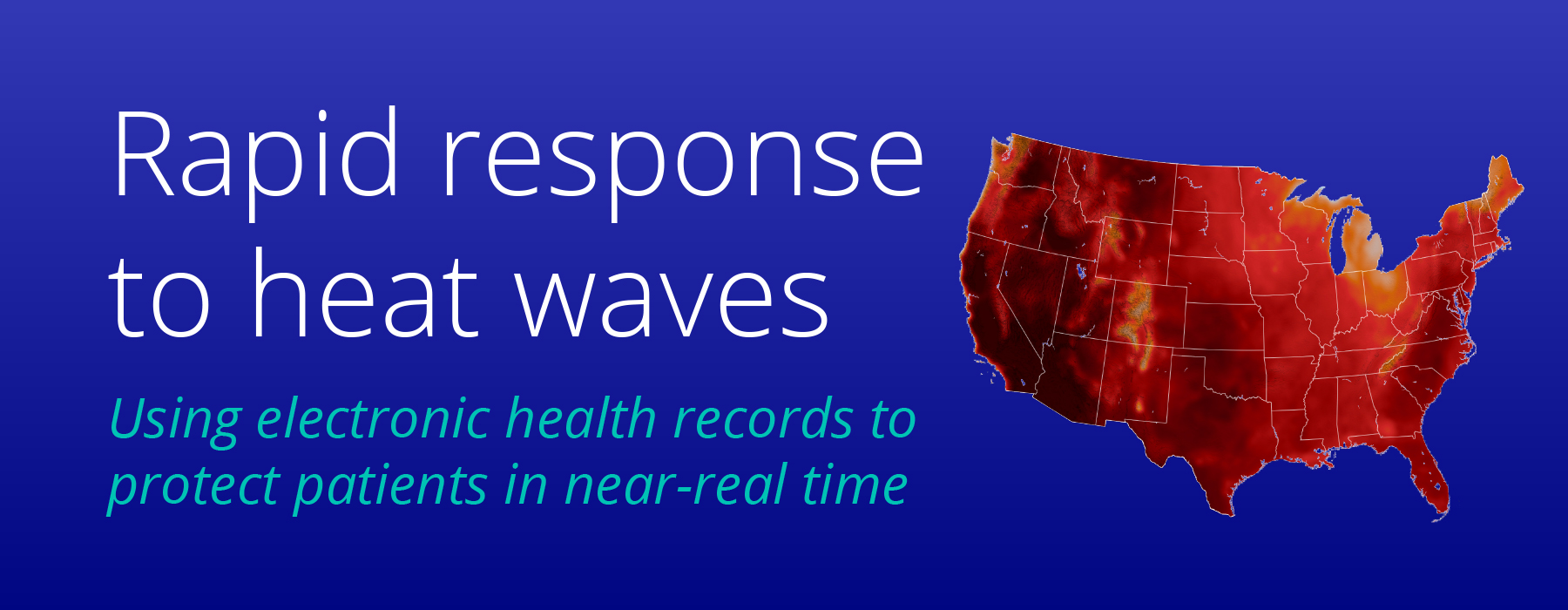
- Researchers from Harvard T.H. Chan School of Public Health, Boston University School of Public Health, and Truveta Research analyzed 8.1 million ED visits during the summers of 2023–2025 across 19 Eastern US states.
- During the June 2025 heat wave, 9.2% of all-cause ED visits were attributable to heat, representing approximately 6,986 additional visits.
- During the August 2025 heat wave, 8.3% of all-cause ED visits were attributable to heat, representing approximately 6,351 additional visits.
- Roughly one quarter of kidney disease–related ED visits during heat wave periods were attributable to heat.
Extreme heat is a growing public health threat, yet health officials often have to wait months to understand who was harmed during a heat wave and how severe the burden was. That delay can limit the ability to adjust public health messaging, staffing, outreach, and protective interventions while the heat season is still underway.
A new study led by researchers at Harvard T.H. Chan School of Public Health and Boston University School of Public Health, in collaboration with Truveta Research, evaluated whether real-time EHR data could be used to rapidly assess the health burden of extreme heat. The research team analyzed more than 8.1 million emergency department (ED) visits during the summers of 2023–2025 across 19 Eastern US states, linking daily maximum temperatures with ED visits for all-cause utilization, heat-related illnesses, kidney diseases, and psychiatric conditions.
The study found that the June and August 2025 heat waves were associated with thousands of additional ED visits across the 19 states studied, with the largest attributable share observed for kidney disease–related visits.
Extreme heat contributed to thousands of additional ED visits
During the June 2025 heat wave, 9.2% of all-cause ED visits were attributable to heat, corresponding to approximately 6,986 additional ED visits across the 19 states studied.
During the August 2025 heat wave, 8.3% of all-cause ED visits were attributable to heat, corresponding to approximately 6,351 additional ED visits.
Across both events, the findings suggest that roughly 1 in 10 all-cause ED visits on extreme heat days were attributable to high temperatures.
Kidney disease–related ED visits showed the largest attributable burden
The strongest heat-attributable burden was observed for kidney disease–related ED visits.
During the June heat wave, 25.9% of kidney disease–related ED visits were attributable to heat, corresponding to 381 additional visits. During the August heat wave, 24.0% of kidney disease–related ED visits were attributable to heat, corresponding to 350 additional visits.
These findings are consistent with the physiological risks of heat exposure, including dehydration and stress on kidney function, and highlight the importance of targeted outreach for people with kidney disease during extreme heat events.
Psychiatric condition–related ED visits also increased
The study also found increases in psychiatric condition–related ED visits during both heat waves.
During the June event, 11.4% of psychiatric condition–related ED visits were attributable to heat, corresponding to 900 additional visits. During the August event, 9.9% were attributable to heat, corresponding to 775 additional visits.
These results add to prior evidence that extreme heat can affect mental health and acute care needs, reinforcing the importance of including behavioral health considerations in heat preparedness planning.
Why rapid-response heat surveillance is critical
The key contribution of this study is not only that extreme heat was associated with increased ED utilization. Prior research has already established that heat can affect acute care use. What is different is the speed with which researchers were able to measure the impact.
Traditional claims-based analyses can provide valuable evidence, but they often become available several months after a heat event. By contrast, this study used EHR data available within one week of the ED encounter, creating an opportunity to assess health burden while public health agencies, health systems, and community organizations can still respond during the same season. Real-time heat surveillance can help inform public health messaging and emergency planning preparations.
Read the full study
Impact of the summer 2026 heatwaves on emergency department visits in the USA, Nature Health