


- GLP-1 prescribing among adults aged 65 years and older increased from June to July following implementation of the Medicare GLP-1 Bridge and remained relatively stable thereafter, with prescribing 20.6% higher three months after implementation than in June. The initial increase may reflect pent-up demand among patients who previously faced barriers to treatment.
- GLP-1 prescribing among adults aged 65 years and older with no prior history of GLP-1 use increased 21.3% during the first three months following the implementation of the Medicare GLP-1 Bridge program.
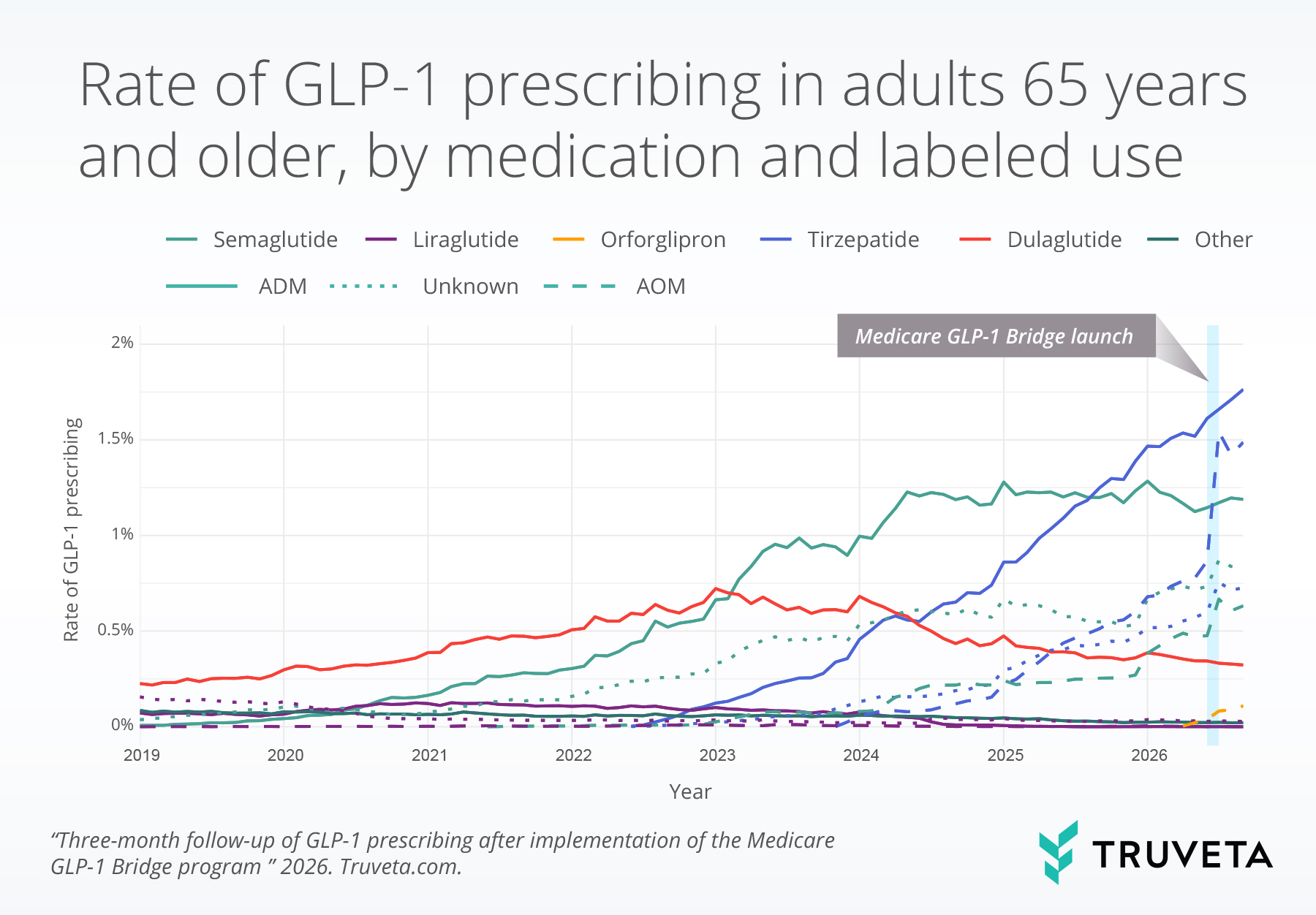
- Among adults aged 65 years and older, prescribing of AOM tirzepatide (Zepbound) and AOM semaglutide (Wegovy), the medications included in the program, increased 71.7% and 32.8%, respectively, between June and September 2026.
In a previous Truveta analysis, we found that the July 1, 2026 launch of the Medicare GLP-1 Bridge program coincided with an immediate increase in GLP-1 prescribing among adults aged 65 years and older, including the largest month-to-month increase observed in the last seven years. The increase was driven primarily by anti-obesity (AOM) formulations included in the program, particularly AOM tirzepatide (Zepbound) and AOM semaglutide (Wegovy).
The Medicare GLP-1 Bridge program is a pilot initiative aimed at expanding access to selected GLP-1 medications for weight management among eligible Medicare Part D beneficiaries. The program, which expires unless renewed by the end of next year, reduces out-of-pocket costs with the goal of improving coverage for medications that have historically been unaffordable or not covered for many older adults (1–4). Because the program represents a major change in access to GLP-1s, it is important to continue tracking the impact on GLP-1 prescribing in this population(5).
Using Truveta Data, we conducted a follow-up analysis of GLP-1 prescribing to examine trends in overall and first-time GLP-1 prescribing during the months following implementation of the Medicare GLP-1 Bridge program.
Methods
Using a subset of Truveta Data, we examined monthly GLP-1 prescribing from January 2019 through September 2026 across four age groups (18–34, 35–49, 50–64, and ≥65 years). Monthly prescribing rates were calculated as the proportion of patients with a GLP-1 prescription compared to patients with any prescription.
We additionally examined first-time GLP-1 prescribing, defined as patients receiving a GLP-1 prescription without evidence of prior GLP-1 prescribing. Rates were calculated as the proportion of patients with any prescription who received a first-time GLP-1 prescription.
Among adults aged 65 years and older, we further examined prescribing by individual GLP-1 medication and labeled use. AOM and anti-diabetic medication (ADM) formulations were identified using medication brand names (e.g., Wegovy and Zepbound were classified as AOM formulations, whereas Ozempic and Mounjaro were classified as ADM formulations). Both oral and injectable formulations were included.
Results
GLP-1 prescribing by age group
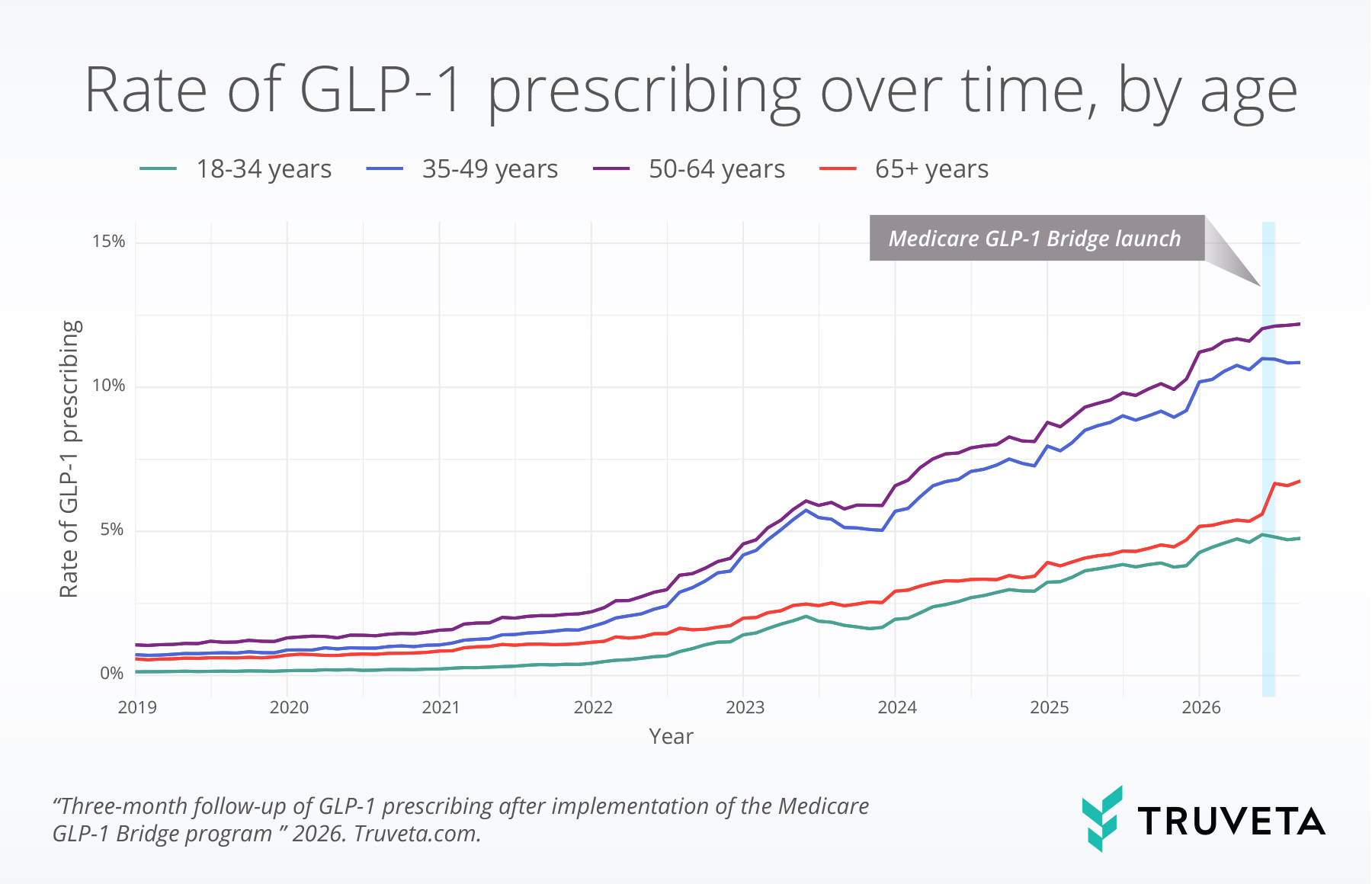
The proportion of adults aged 65 years and older with a GLP-1 prescription increased between June and September 2026, rising from 5.6% to 6.8%, a 20.6% relative increase. During the same period, prescribing remained relatively stable among younger age groups, changing from 4.9% to 4.8% among adults aged 18-34 years (-2.6%), from 11.0% to 10.9% among adults aged 35-49 years (-1.2%), and from 12.0% to 12.2% among adults aged 50-64 years (+1.4%).
First-time GLP-1 prescribing by age group
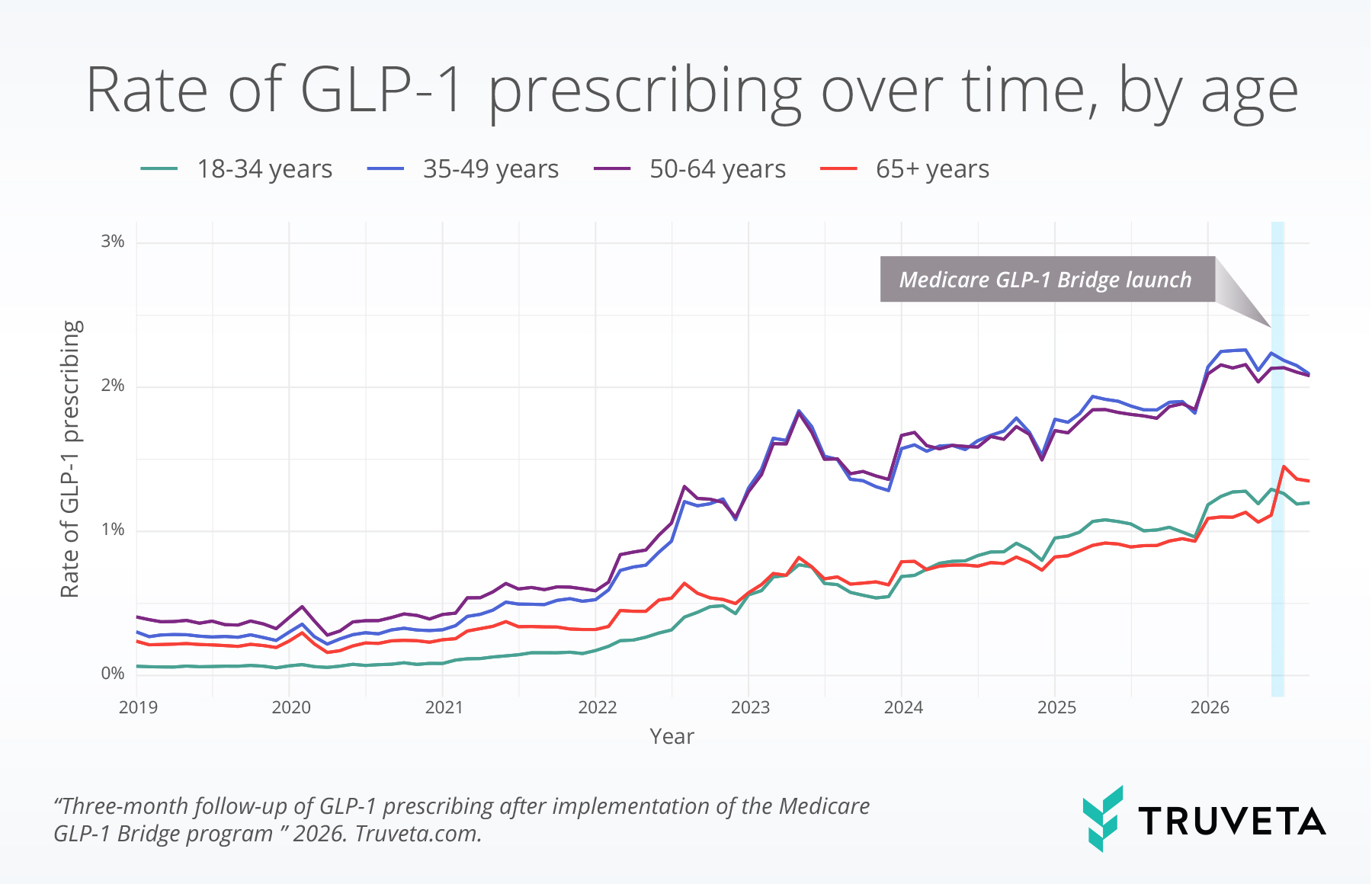
The proportion of adults aged 65 years and older who received a first-time GLP-1 prescription increased between June and September 2026, rising from 1.1% to 1.3%, a 21.3% relative increase. During the same period, first-time prescribing remained relatively stable among younger age groups, with small declines by 7.2% among adults aged 18-34 years, 6.6% among adults aged 35-49 years, and 2.4% among adults aged 50-64 years.
GLP-1 prescribing among adults aged 65 years and older, by medication
Changes in GLP-1 prescribing among adults aged 65 years and older differed by medication and labeled use. Between June and September 2026, AOM tirzepatide increased 71.7%, and AOM semaglutide increased 32.8%. In contrast, ADM tirzepatide and ADM semaglutide remained relatively stable, increasing 9.4% and 3.8%, respectively.
First-time GLP-1 prescribing among adults aged 65 years and older, by medication
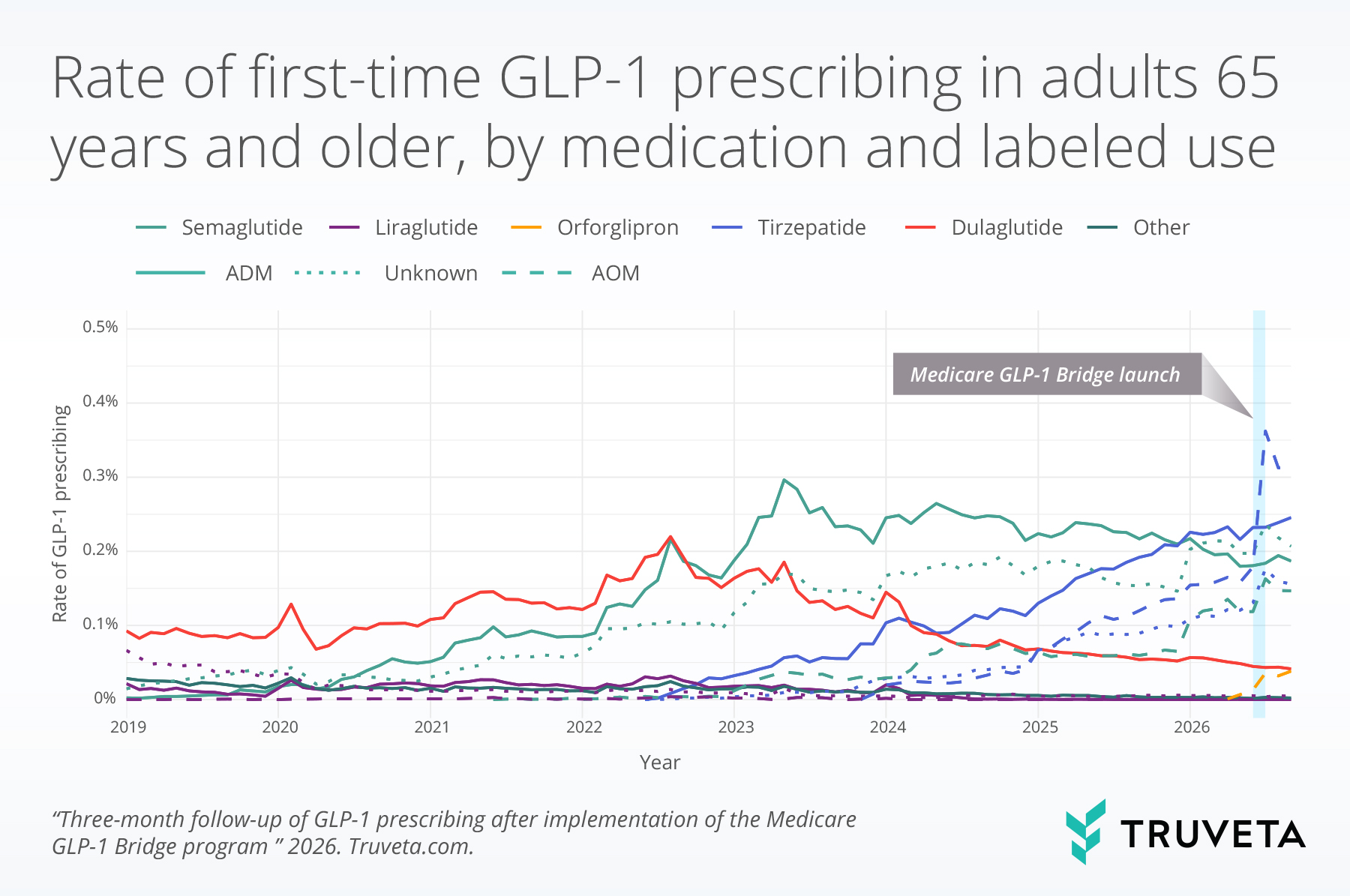
Patterns in first-time GLP-1 prescribing among adults 65 years and older were similar to overall prescribing patterns. Between June and September 2026, first-time prescribing of AOM tirzepatide increased 74.8%, while AOM semaglutide increased 23.6%. First-time prescribing of ADM tirzepatide and ADM semaglutide were relatively stable during the same period (+5.8% and +3.4%, respectively).
Discussion
In this follow up analysis, we found GLP-1 prescribing among adults aged 65 years and older rose sharply in the first month after the Medicare GLP-1 Bridge launched but remained stable in subsequent months. In the population over the age of 65, both overall GLP-1 prescribing and first-time GLP-1 prescribing rates remained above June 2026 levels through September 2026. In contrast, prescribing patterns among younger age groups changed little during the same period.
A similar pattern was observed for individual AOM medications among older adults. The largest increases occurred for the medications included in the Medicare GLP-1 Bridge program, including AOM tirzepatide and AOM semaglutide, whereas ADM formulations changed relatively little throughout the study period. Similar to the overall trends, for both AOM medications, the largest month-to-month increases occurred immediately following implementation of the program, with substantially smaller changes observed thereafter.
This early surge may reflect pent-up demand among eligible patients who had previously faced barriers to treatment. After this initial increase, month-to-month changes were substantially smaller, which may reflect that much of the immediate demand for treatment among eligible patients had already been met. The increase in first-time GLP-1 prescribing among adults aged 65 years and older further supports this interpretation, suggesting that newly eligible patients initiated treatment soon after the program became available. Although month-to-month changes slowed after July 2026, first-time GLP-1 prescribing remained above pre-implementation levels through September 2026, consistent with increased treatment initiation following the start of the program. These findings suggest that expanded coverage may have enabled more older adults to initiate GLP-1 therapy.
Several limitations should be considered when interpreting these findings. Adults aged 65 years and older were evaluated as the population most likely to be affected by Medicare coverage changes, but not all individuals in this age group are enrolled in Medicare Part D, and some Medicare beneficiaries younger than 65 years would not have been captured. Nevertheless, adults aged 65 years and older likely represent the majority of beneficiaries affected by these changes. In addition, we did not identify which patients met Medicare GLP-1 Bridge eligibility requirements or whether individual prescriptions were covered through the program. As a result, these findings describe prescribing patterns over time but cannot directly determine the reasons for changes in prescribing.
These findings provide an early look at prescribing patterns during the first three months following implementation of the Medicare GLP-1 Bridge. Continued monitoring will be important to better understand the longer-term impact of expanded GLP-1 access among older adults. The increase in first-time GLP-1 prescribing among adults aged 65 years and older suggests the program may have facilitated treatment initiation among older adults who previously lacked access to these medications.
These are preliminary research findings and not peer reviewed. Data are regularly updating. These findings are consistent with data accessed on October 23, 2026.
Citations
P. J. Rodriguez, V. Zhang, S. Gratzl, B. M. G. Cartwright, D. Do, N. Stucky, E. J. Emanuel, Access to Anti-Obesity GLP-1s for Medicare-Aged Adults. medRxiv, 2024–03 (2024).
L. Oshman, Views on Medications for Weight Management, Institute for healthcare policy and innovation (2023). https://ihpi.umich.edu/national-poll-healthy-aging/national-findings/views-medications-weight-management.
GLP-1 Costs: Semaglutide, Tirzepatide and Compounded GLP-1s Prices, Forbes Health (2026). https://www.forbes.com/health/weight-loss/glp-1-costs/.
CMS Launches Medicare GLP-1 Bridge, Expanding Access to GLP-1 Medications | CMS. https://www.cms.gov/newsroom/press-releases/cms-launches-medicare-glp-1-bridge-expanding-access-glp-1-medications.
J. Cubanski, N. Sroczynski, Nearly Four Million Medicare Beneficiaries Met the Eligibility Criteria in 2023 for the Medicare GLP-1 Bridge, KFF (2026). https://www.kff.org/medicare/nearly-four-million-medicare-beneficiaries-met-the-eligibility-criteria-in-2023-for-the-medicare-glp-1-bridge/.