



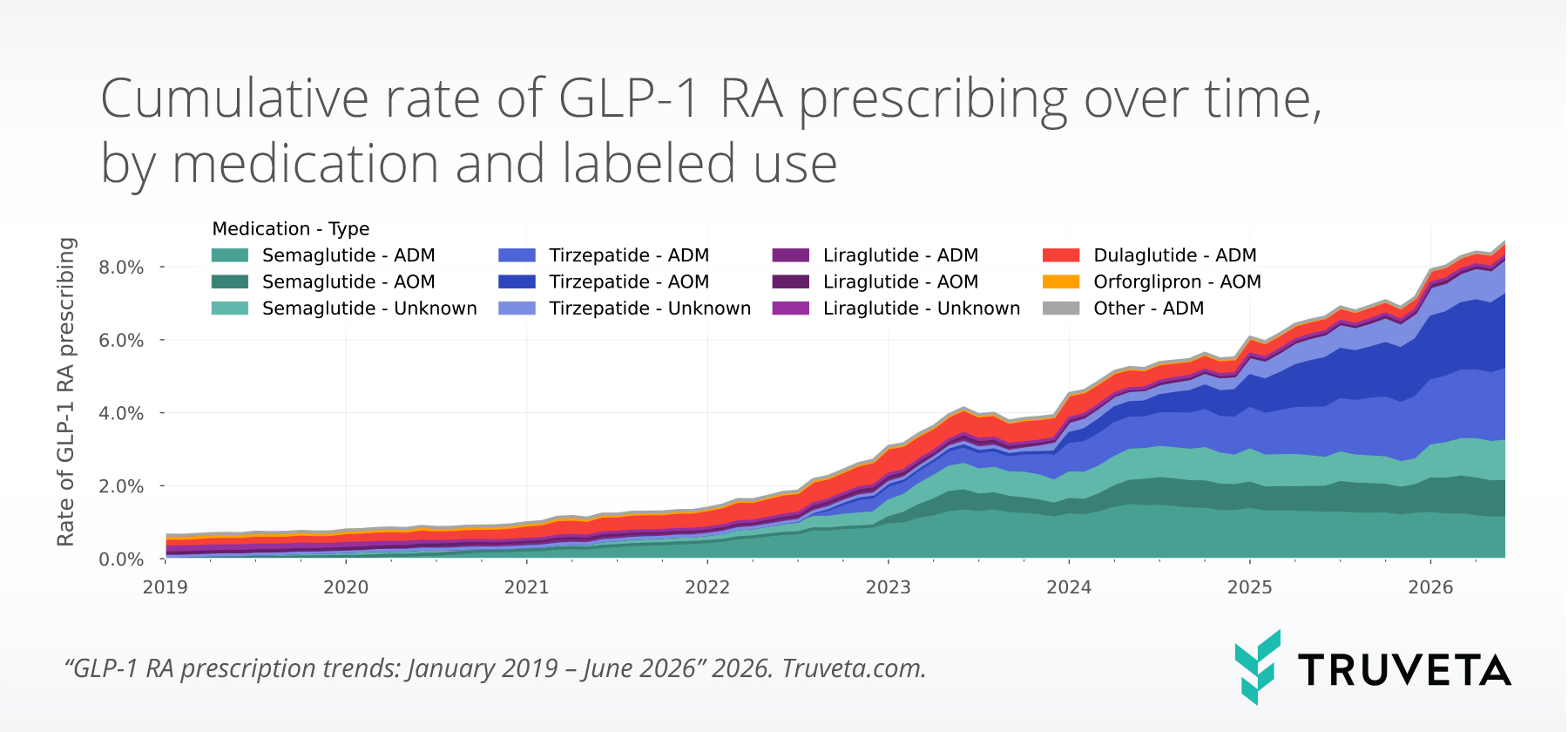
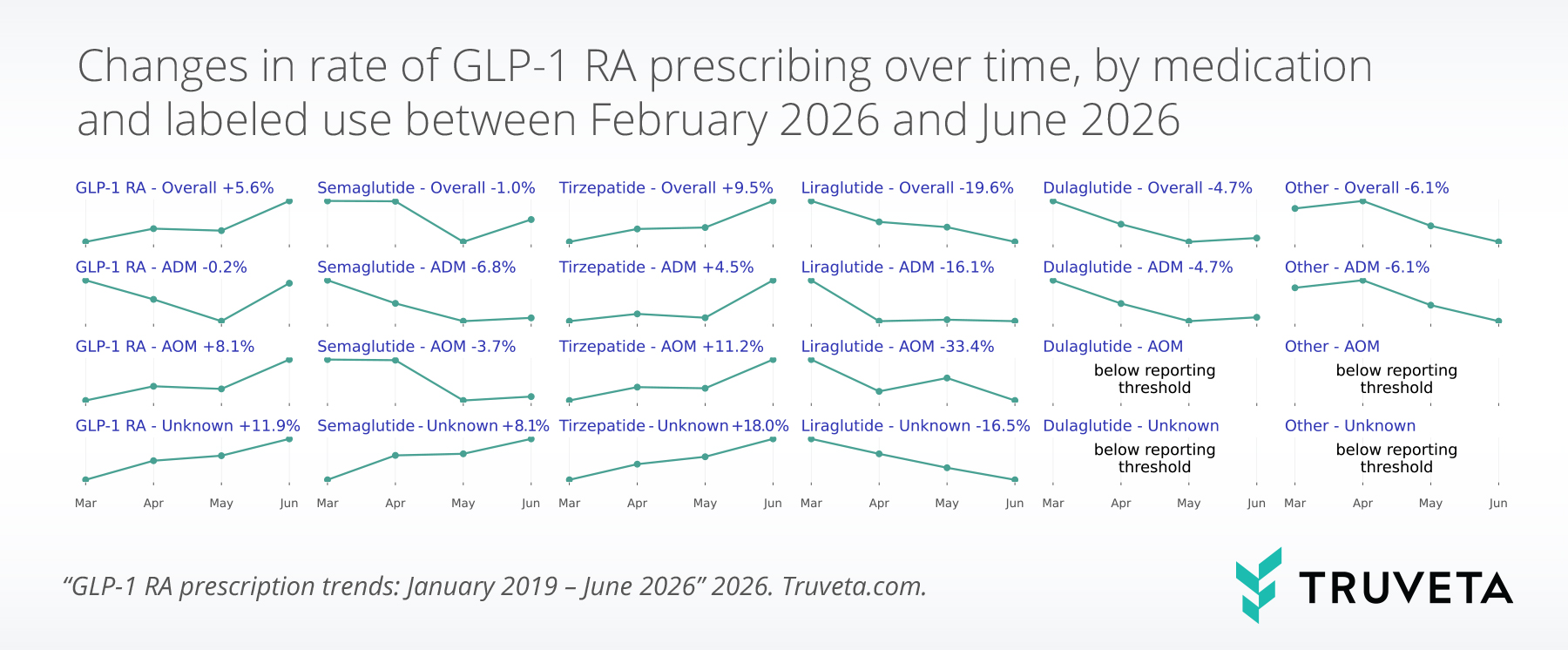
- More than 8% of all prescriptions in June 2026 were for GLP-1 RAs, increasing slightly (+5.6%) since March 2026.
- Tirzepatide remained the leading anti-obesity medication (AOM) and anti-diabetic medication (ADM) by prescription volume and showed the largest increase in total prescribing from March to June 2026.
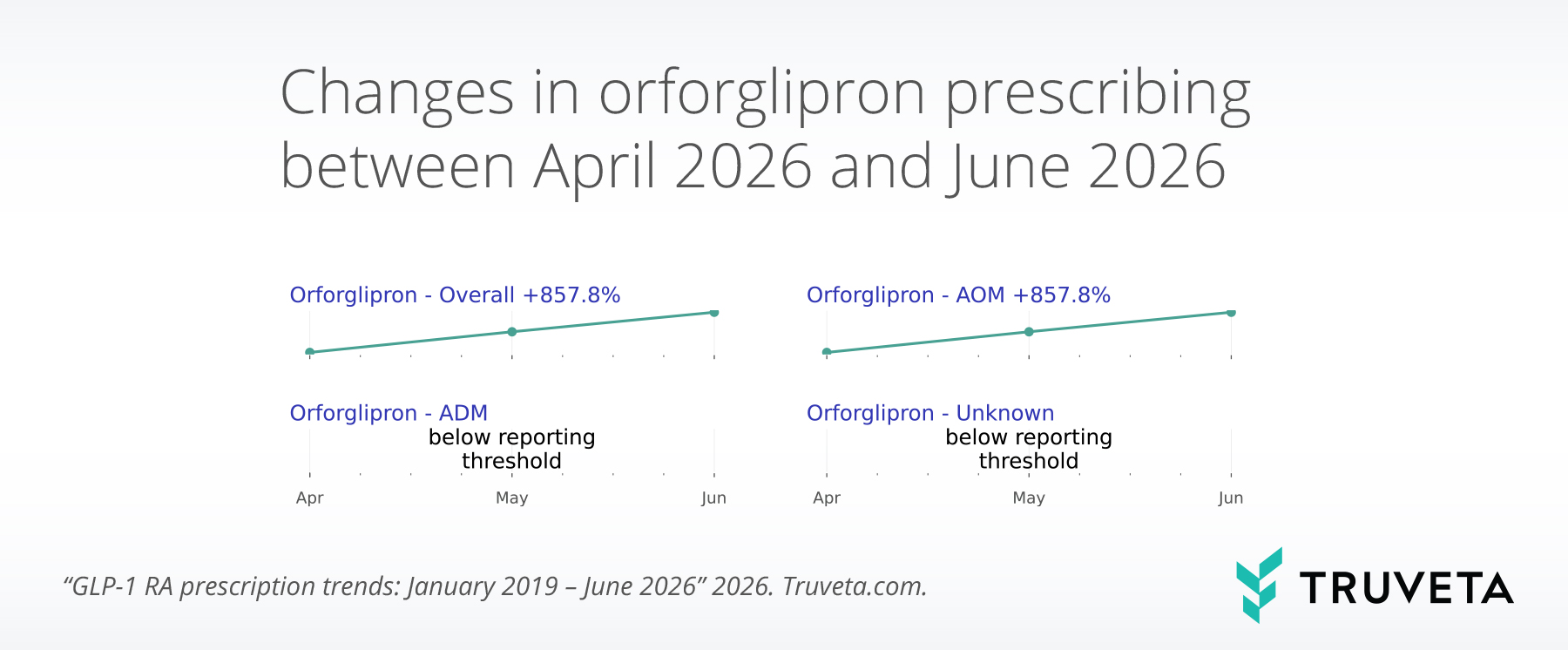
- Following FDA approval in April 2026, orforglipron (Foundayo pill) prescribing increased by 0.05 percentage points.
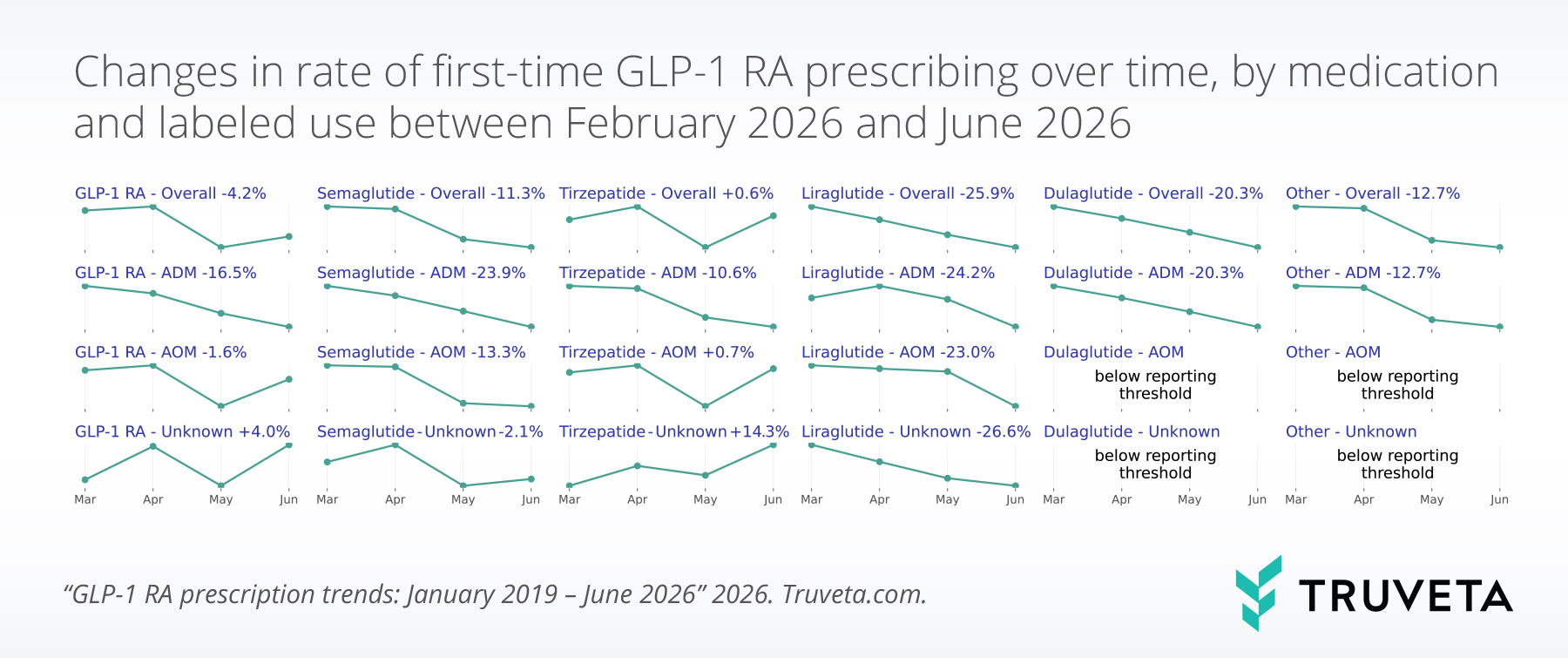
- After rising by more than 50% from December 2025 to March 2026, first-time AOM semaglutide (inclusive of Wegovy and the Wegovy pill) prescribing declined by 13.3% from March to June 2026.
Limited recent data exist on prescribing patterns and patient characteristics for GLP-1 RA medications, whether used as anti-diabetic medication (ADM) for patients with type 2 diabetes (T2D) and/or used as an anti-obesity medication (AOM) for patients with overweight or obesity. Interest in these medications has recently accelerated, although access to and use of GLP-1 RA medications may be impacted by high cost, limited insurance coverage for patients without T2D, and medication shortages.
To offer insight into the latest trends about these medications, Truveta Research has created the GLP-1 RA monitoring report, which will be updated periodically with fresh, timely data. Truveta Data provides the most representative, complete, and timely patient journey data, including full patient medical records, notes, and images, for more than 140 million patients across the US. Truveta Data is also linked with closed claims, mortality, and social drivers of health. Because Truveta Data is updated daily, we can show the latest trends in these medications.
This blog provides a snapshot of the key findings in the most recent report; including prescribing and dispensing medication (indicates whether the patient picked up the medication) trends. For the full analysis—inclusive of demographics, comorbidities, and social drivers of health data for the population, methodology, additional findings, limitations, and citations—you can view the complete report directly within Truveta.
Key findings: Prescribing trends
Using a subset of Truveta Data, Truveta Research identified people who were prescribed a GLP-1 RA between January 01, 2019 and June 30, 2026. The report describes prescribing volumes and patient characteristics over time, by medication, and by FDA-labeled use (e.g., ADM, AOM, or unknown).
Overall prescribing trends
The study found that 3,538,873 patients were prescribed a GLP-1 RA between January 2019 and June 2026, with 18,523,506 total prescriptions during this period.
Overall prescribing rates (GLP-1 RA prescriptions as a proportion of all prescriptions) increased slightly from March to June 2026 (+5.6%).
As of June 2026, more than 8 out of every 100 prescriptions were for GLP-1 RAs.
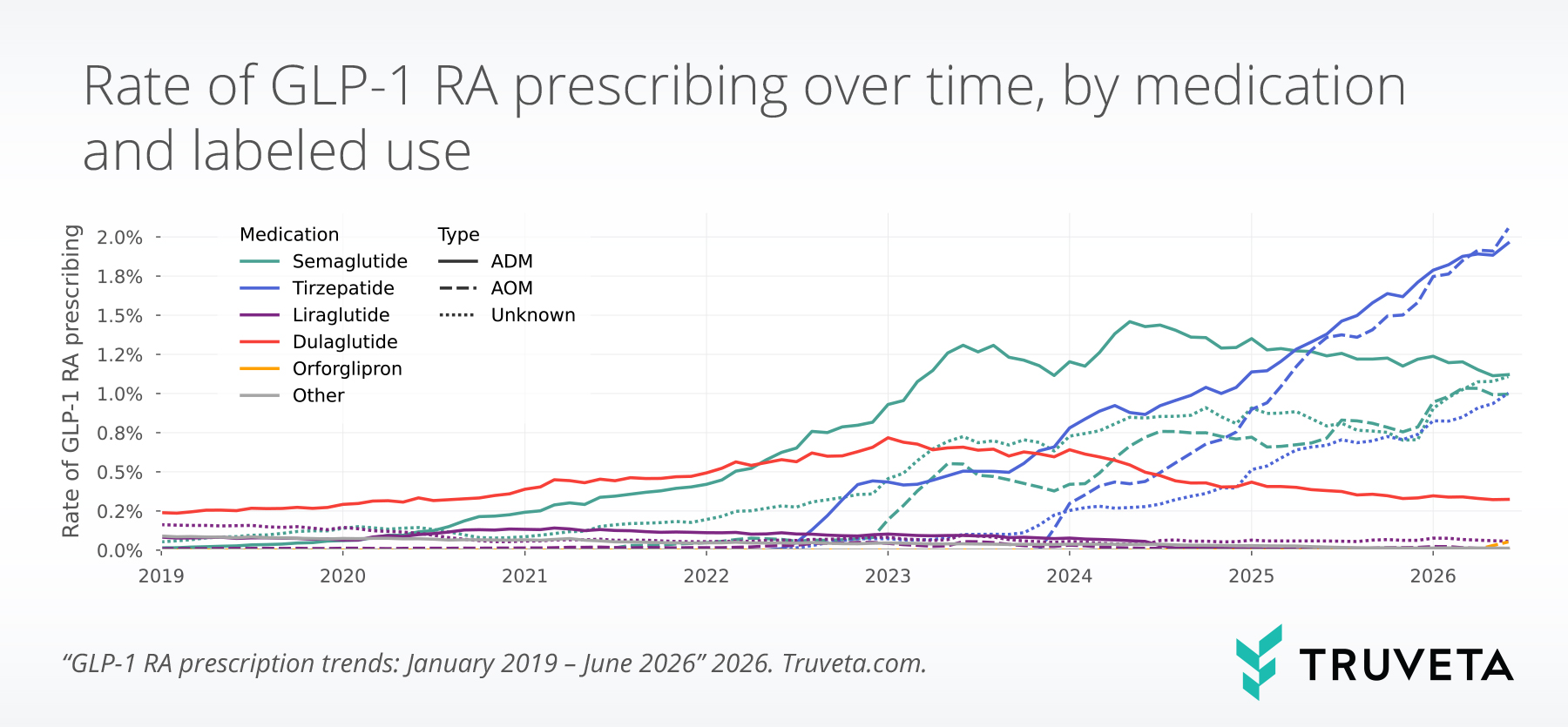
Month-over-month ADM prescribing fluctuated slightly from March through June 2026 and remained about the same overall (-0.2%).
Month-over-month AOM prescribing increased in April, decreased slightly in May, then increased again in June 2026. AOM prescribing increased slightly in June 2026 compared to March 2026 (+8.1%).
Tirzepatide remained the leading AOM and ADM by prescription volume and showed the largest increase in total prescribing from March to June 2026 (+9.5%).
Following FDA approval in April 2026, new class GLP-1 RA orforglipron (sold as Foundayo) prescribing increased by 0.05 percentage points.
Trends in first-time prescribing
First-time prescribing rates (first-time GLP-1 RA prescriptions per total prescriptions) in June 2026 are similar to March 2026 (-4.2%).
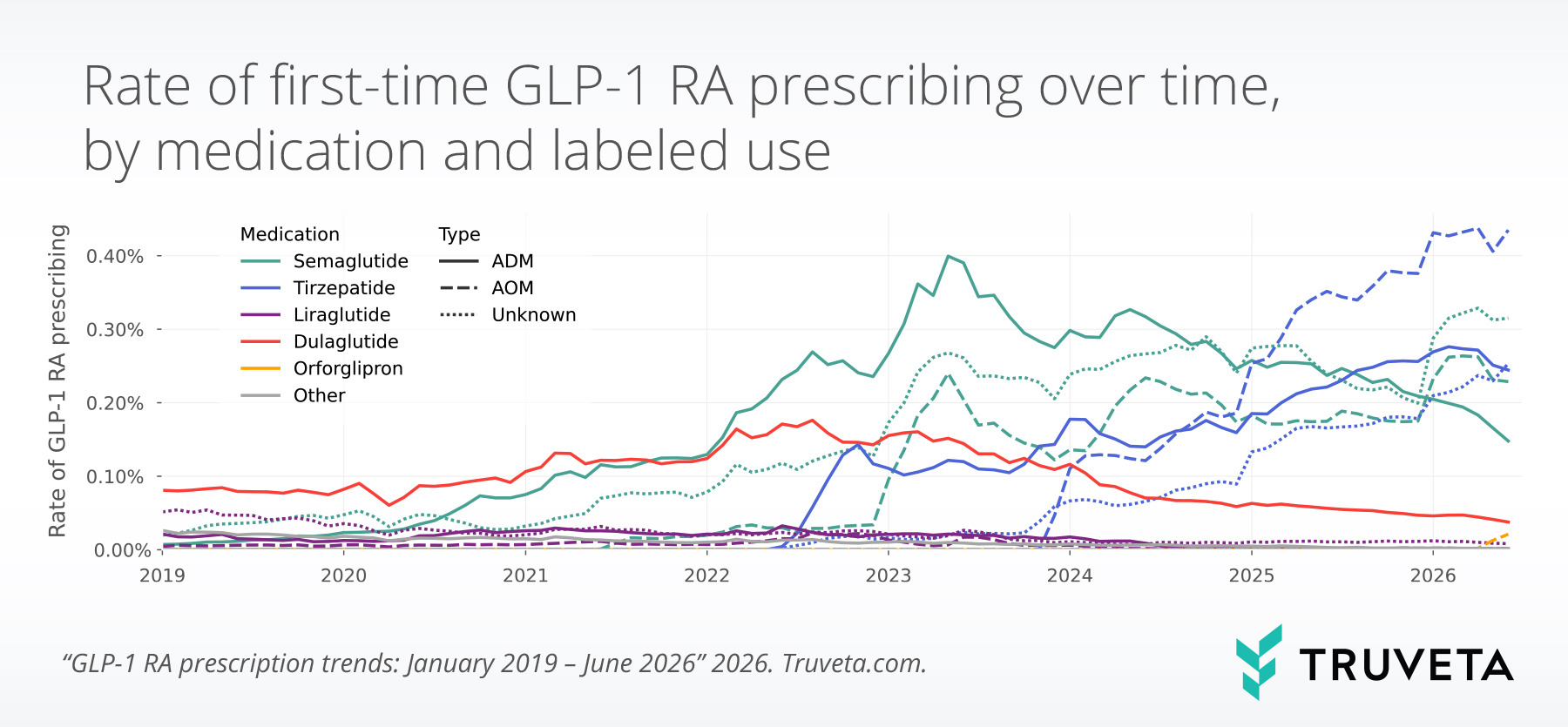
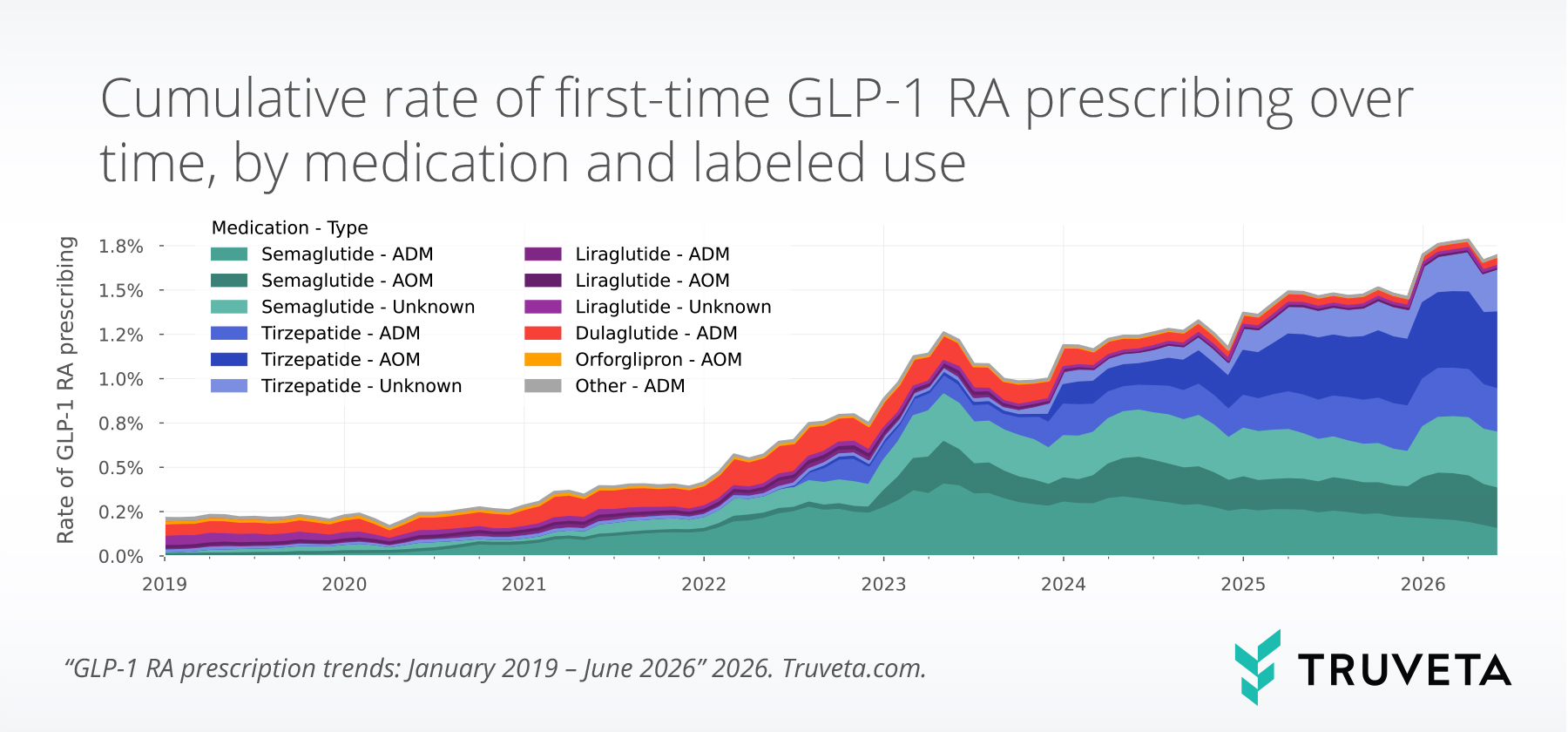
First-time prescribing of ADMs decreased in June 2026 relative to March 2026 (-16.5%), while first-time prescribing of AOMs stayed roughly the same (-1.6%).
Discussion
The latest report highlights the continued popularity of GLP-1 medications, now including the new class GLP-1 RA orforglipron (sold as Foundayo).
With the popularity of GLP-1 RA medications and challenges in access and insurance coverage, we will continue to monitor prescribing over time.
The GLP-1 RA monitoring report describes more detailed information about the overall population of patients being prescribed these medications (including demographics and comorbidities), and the proportion and characteristics of patients who filled a GLP-1 RA prescription over time using dispenses. Methodologies, limitations, and citations are also available in the full report accessible directly in Truveta.
These are preliminary research findings and not peer reviewed. All data are preliminary and may change as additional data are obtained. These findings are consistent with data accessed July 15, 2026. Data presented in this analysis represent raw counts and/or rates, and post-stratification methods have not been conducted.