


Authors: Vidya Venkataraman, PhD ⊕, Truveta, Inc, Bellevue, WA, Jared Kern ⊕, Truveta, Inc, Bellevue, WA, Joud Roufael, MPH ⊕, Truveta, Inc, Bellevue, WA, Puja Rao, MPH ⊕, Truveta, Inc, Bellevue, WA, Joseph Engeda, PhD ⊕, Truveta, Inc, Bellevue, WA, Esther Kim, PhD ⊕, Truveta, Inc, Bellevue, WA, Nadia Tabatabaeepour, MPH ⊕, Truveta, Inc, Bellevue, WA, Amy Sullivan, MS ⊕, Truveta, Inc, Bellevue, WA, Sarah Eng, MPH ⊕, Truveta, Inc, Bellevue, WA, Amy Wu ⊕Truveta, Inc, Bellevue, WA,

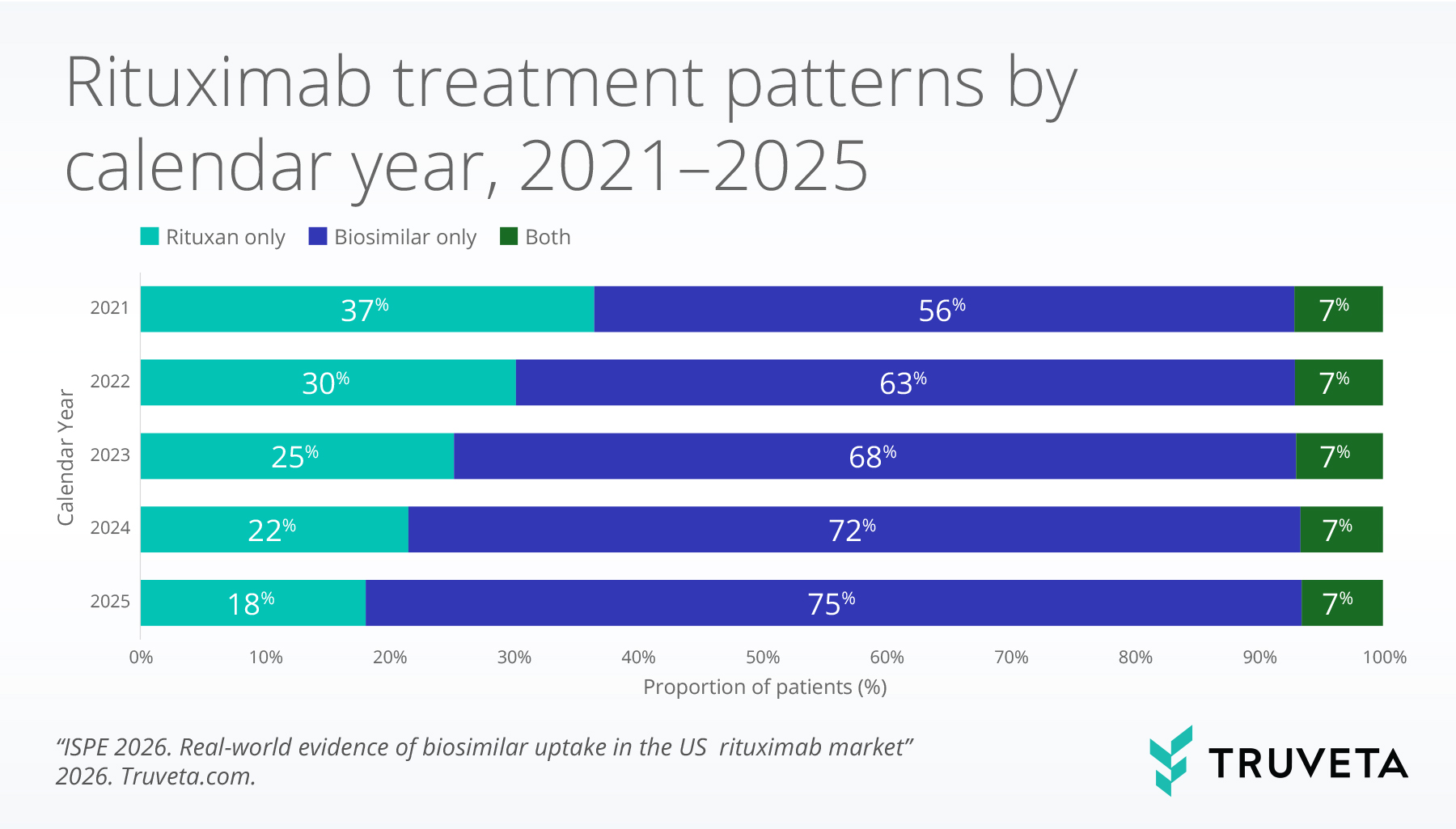
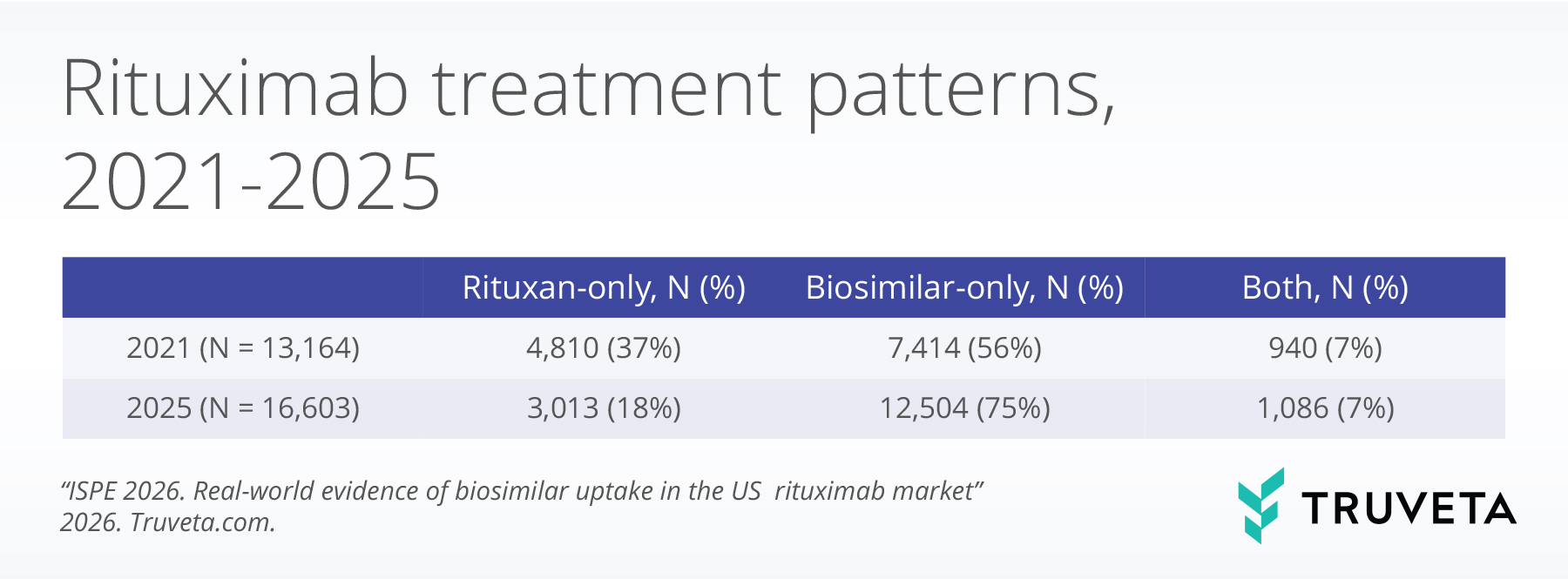
- Biosimilar-only use increased from 56% of patients in 2021 to 75% in 2025, while Rituxan-only use declined from 37% to 18%.
- Biosimilar adoption increased across demographic and urbanicity subgroups, with similar patterns among female and male patients and among rural and urban populations.
- Geographic differences persisted: by 2025, biosimilar-only use reached 82% in the Midwest and West compared with 55% in the Northeast.
This report summarizes our poster presented at ISPE 2026, titled Real-world evidence of biosimilar uptake in the US rituximab market.
Biosimilars are FDA-approved biologic products that are highly similar to an approved reference product, with no clinically meaningful differences in safety or effectiveness (1). By introducing competition for biologic therapies, biosimilars have the potential to expand treatment options and influence health care costs. Rituximab (Rituxan), which is used to treat hematologic cancers and autoimmune conditions, first faced biosimilar competition in the United States in 2018.
Three rituximab biosimilars were approved by the FDA between 2018 and 2020: Truxima (rituximab-abbs), Ruxience (rituximab-pvvr), and Riabni (rituximab-arrx). As these products became available in routine clinical practice, real-world data provide an opportunity to examine how quickly biosimilars were adopted and whether uptake differed across patient populations and regions.
Using a subset of Truveta Data, we characterized rituximab biosimilar adoption between 2021 and 2025, examining overall utilization, product-level trends, and variation across demographic and geographic groups.
Methods
We conducted a retrospective observational study using a subset of Truveta Data, which includes aggregated, normalized, and de-identified EHR data from US health care systems. Data used in this analysis included medication administrations, procedures, and demographics.
We identified 53,080 adults aged 18 years or older with at least one administration of Rituxan or a rituximab biosimilar between 2021 and 2025. The study began in 2021, the first full calendar year in which all three rituximab biosimilars were available in the US. Medications were identified using National Drug Codes (NDC), RxNorm, and Healthcare Common Procedure Coding System (HCPCS) codes.
For each calendar year, patients were categorized into mutually exclusive groups: Rituxan-only, biosimilar-only, or both, indicating exposure to both product types within the year. Patients could contribute to multiple calendar years and were classified independently each year. Utilization was summarized descriptively by year and subgroup, with percentage-point changes calculated between 2021 and 2025.
Results
Biosimilar-only use increased from 56% to 75%
Rituximab treatment patterns shifted substantially between 2021 and 2025. Biosimilar-only use increased from 56% to 75%, a 19 percentage-point increase. Over the same period, Rituxan-only use declined from 37% to 18%. The proportion of patients receiving both Rituxan and a biosimilar within the same calendar year remained stable at approximately 7%.
Biosimilar adoption increased broadly, but geographic differences persisted
Biosimilar-only use increased across demographic, urbanicity, and geographic subgroups between 2021 and 2025. Among female patients, use increased from 51% to 72% (+21 percentage points), while among male patients it increased from 63% to 80% (+17 percentage points).
Uptake also increased in both rural and urban populations. Biosimilar-only use rose from 50% to 72% among rural patients and from 56% to 76% among urban patients.
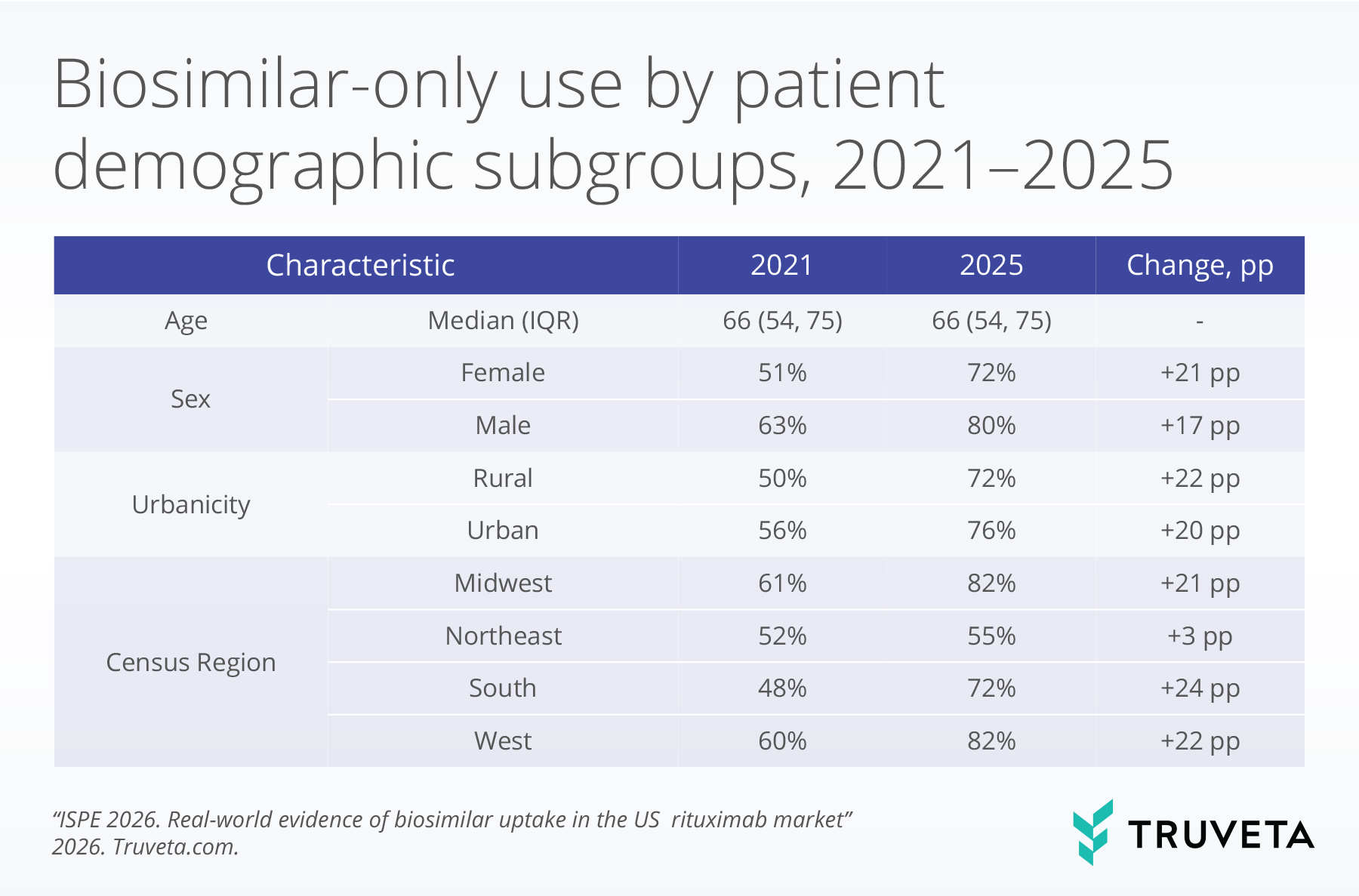
Geographic differences were more pronounced. By 2025, biosimilar-only use was highest in the Midwest and West, at 82%, and lowest in the Northeast, at 55%. The South experienced the largest increase, rising 24 percentage points from 48% in 2021 to 72% in 2025, while the Northeast increased by only 3 percentage points.
Multiple biosimilars contributed to changing utilization
Product-level utilization began changing soon after the first rituximab biosimilar became available. Biosimilars surpassed Rituxan by share of product utilization by early 2021 and remained predominant thereafter.
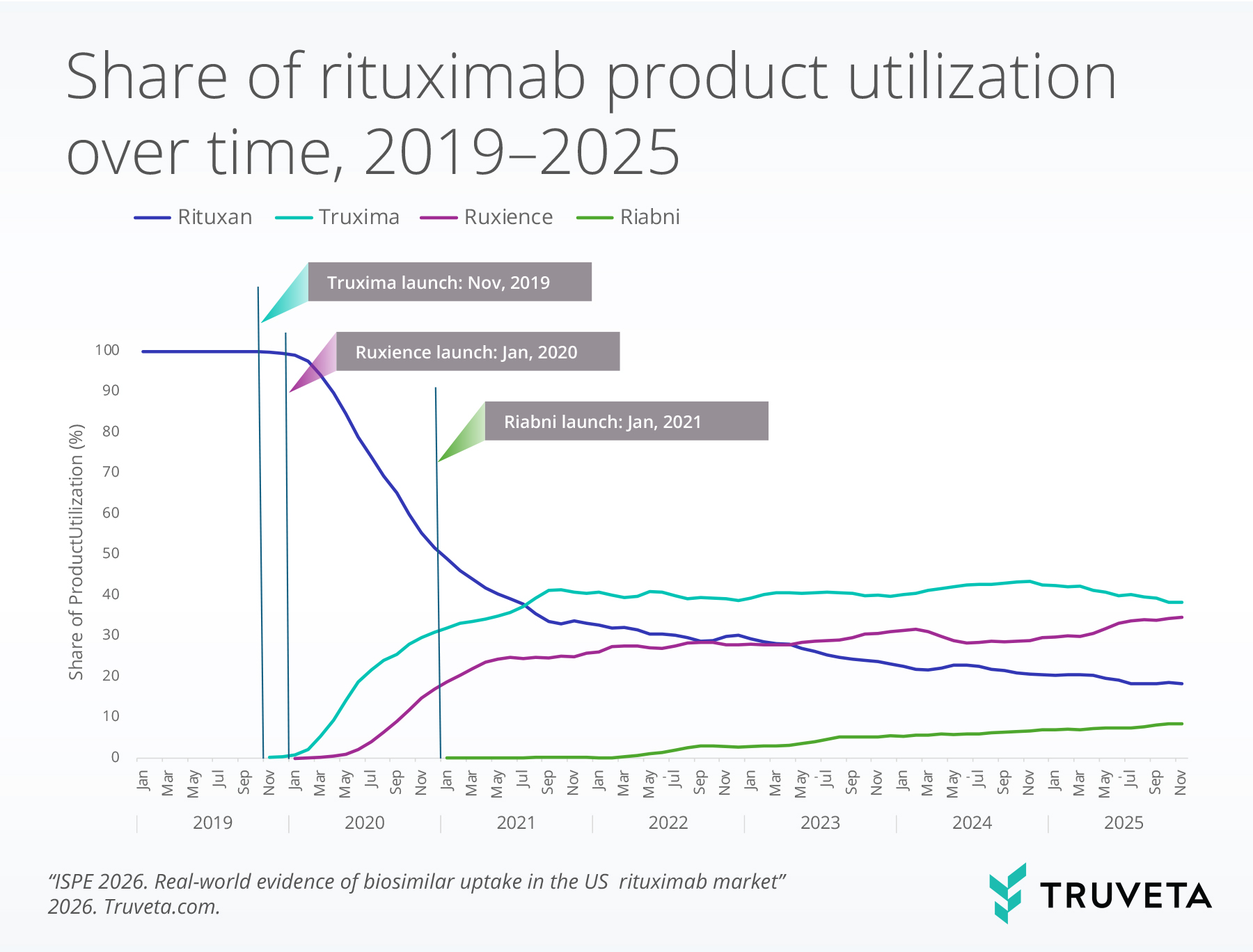
Growth was distributed across multiple biosimilar products. By 2025, Truxima and Ruxience had the greatest utilization among the biosimilars, while Rituxan continued to account for a substantial share of utilization.
Discussion
In this study of more than 53,000 adults, rituximab biosimilar adoption increased substantially between 2021 and 2025. By 2025, three in four patients received biosimilars exclusively, compared with just over half in 2021. At the same time, Rituxan-only use fell by approximately half, while the proportion receiving both product types within a calendar year remained stable.
Biosimilar adoption increased broadly across demographic and urbanicity groups, suggesting that increasing uptake was not limited to a particular patient population. Geographic patterns were less uniform. Biosimilar-only use reached 82% in both the Midwest and West by 2025 but remained at 55% in the Northeast. The reasons for these differences were not evaluated in this study, but they highlight an opportunity to examine whether payer policies, health system practices, market characteristics, or other factors contribute to regional variation.
This analysis has several limitations. Treatment patterns reflect medication administrations observable in Truveta Data and may not capture treatment received outside participating health systems. Annual treatment categories also do not capture all of the clinical or administrative factors underlying product selection. Finally, this descriptive analysis did not evaluate the causes of changing utilization or geographic differences.
Together, these findings show substantial real-world adoption of rituximab biosimilars following their commercial introduction, with growth occurring across multiple products and patient subgroups. Future research can examine the factors associated with regional differences in adoption and whether changing biosimilar utilization is associated with differences in treatment access and health care costs.
Data are constantly changing and updating. These findings are consistent with data analyzed for the ISPE 2026 study.
Citations
- U.S. Food and Drug Administration, Review and Approval: Biosimilars.