



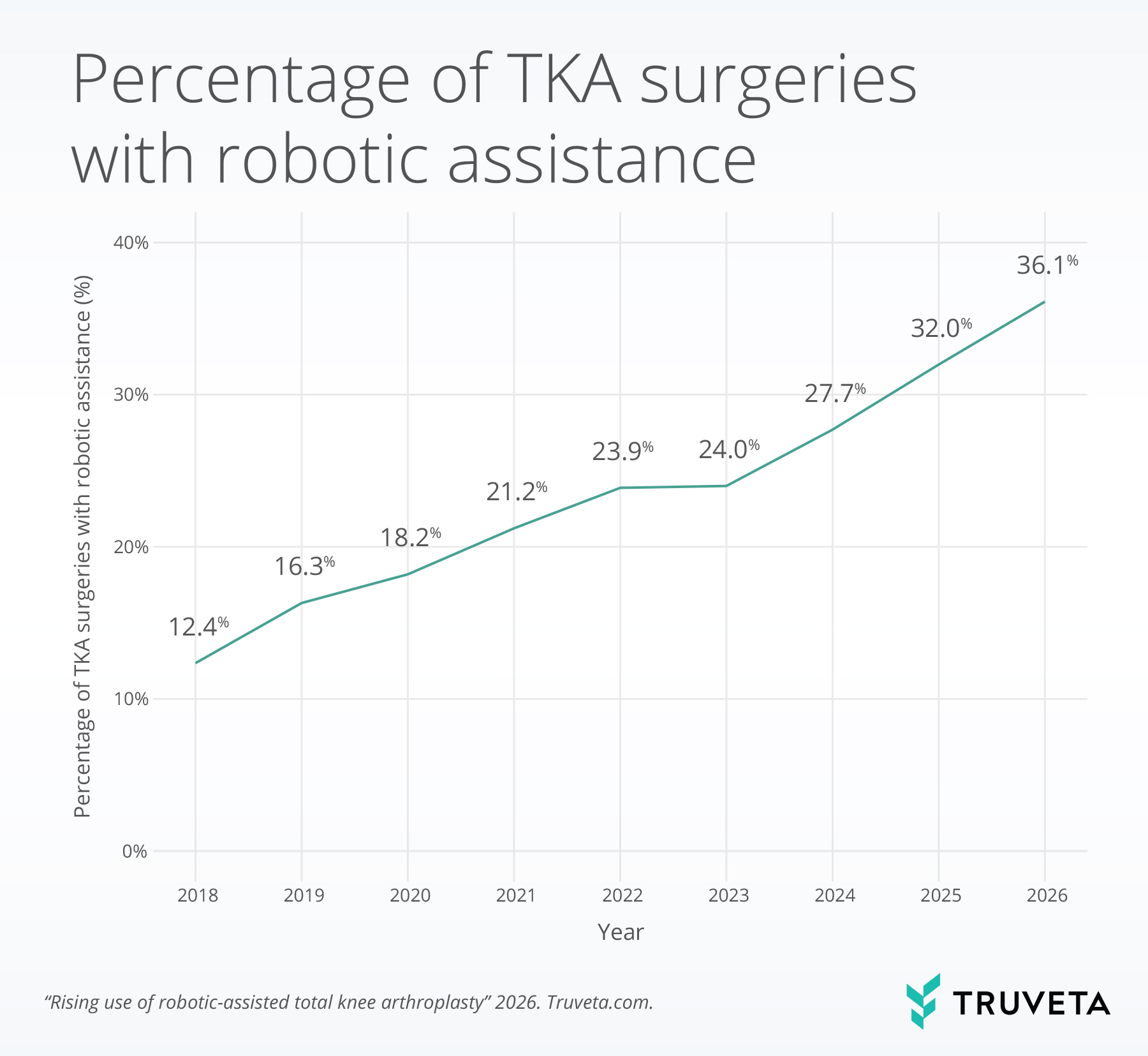
- Use of robotic assistance during total knee arthroplasty (TKA) nearly tripled between 2018 and 2026, increasing from 12.4% of procedures to 36.1%.
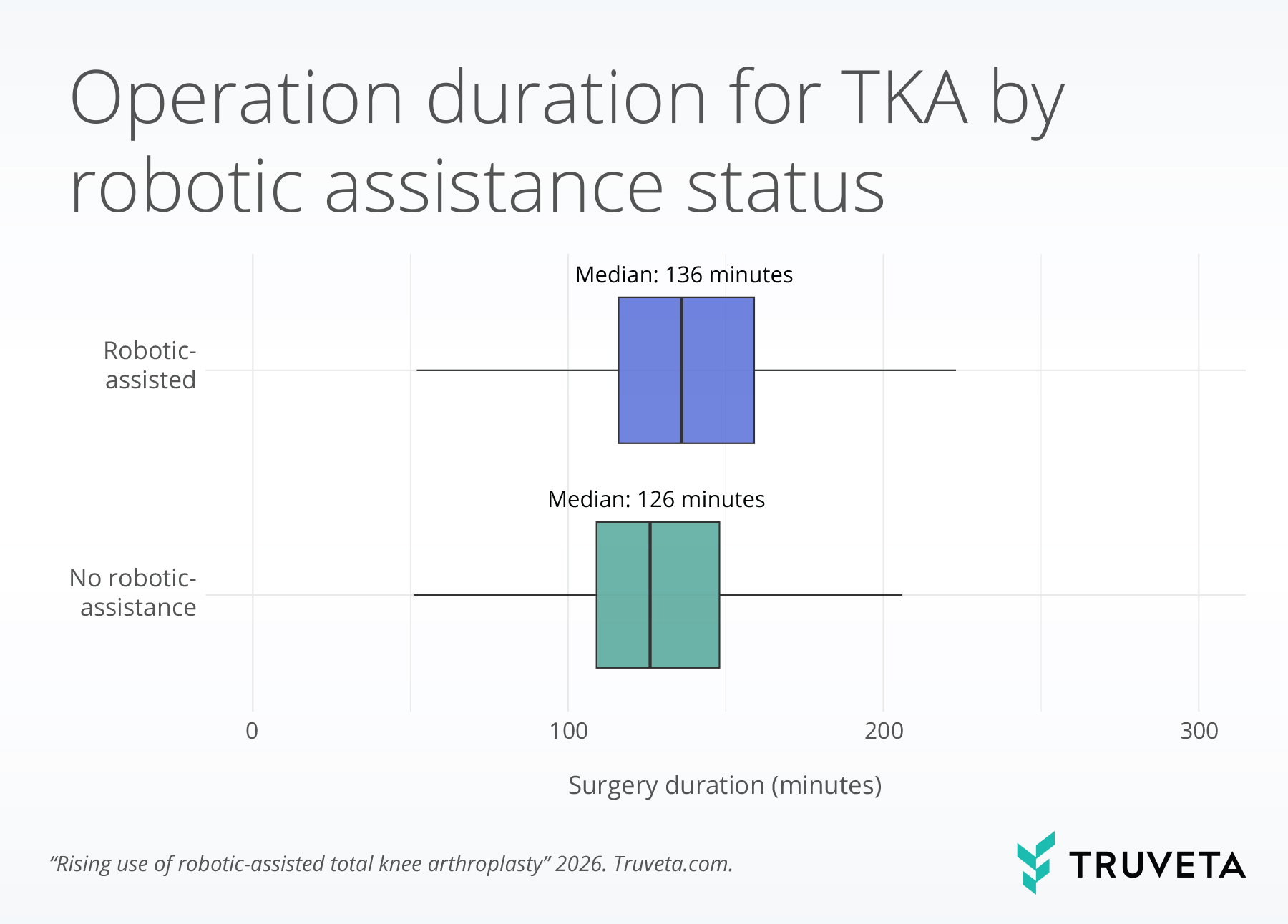
- Robotic-assisted TKA procedures had longer operation durations than procedures performed without robotic assistance.
- Robotic-assisted TKA was associated with lower rates of several short- and long-term postoperative complications after adjustment for patient and clinical characteristics.
Total knee arthroplasty (TKA), commonly known as knee replacement surgery, is a procedure used to reduce pain and improve function in patients with advanced knee osteoarthritis (1, 2). By replacing damaged parts of the knee joint with artificial components, TKA can help restore function and improve quality of life when other treatments are no longer effective (1, 3). As populations age, obesity rates remain high, and surgical indications continue to expand, demand for TKA is expected to rise in the coming decades (4, 5).
With the growing volume of knee replacement procedures, surgeons and health systems are increasingly focused on technologies that may improve surgical accuracy, implant longevity, and patient outcomes (2). One such innovation is robotic-assisted surgery, which uses advanced planning software and real-time guidance during surgery to help surgeons perform bone cuts, position implants, and balance the knee with greater precision (6, 7). Although robotic systems have demonstrated improvements in component alignment and surgical accuracy, questions remain regarding whether these technical advantages translate into improved patient outcomes in routine clinical practice (6, 8). Given the higher costs associated with robotic-assisted TKA, it is important to determine whether these technical advantages result in meaningful clinical benefits in real-world practice (8).
Prior studies have documented increasing use of robotic-assisted TKA (9, 10). While robotic systems have consistently demonstrated improvements in implant positioning and alignment, whether these technical advantages lead to meaningful improvements in patient outcomes and long-term implant survivorship remains uncertain (6, 10–12). Existing real-world evidence is limited because many analyses rely on procedure codes to identify robotic-assisted surgeries (9, 10). Consequently, the effectiveness and value of robotic-assisted TKA in routine clinical practice remain important areas of investigation.
Using Truveta Data, we examined trends in robotic-assisted TKA between January 2018 and August 2026. We also evaluated operation duration and postoperative outcomes among patients undergoing robotic-assisted and non-robotic TKA procedures.
Methods
Using a subset of Truveta Data, we identified patients who underwent total knee arthroplasty between January 2018 and August 2026.
Robotic-assisted procedures were identified through procedure add-on codes indicating robotic surgical assistance or documentation of robotic device use during surgery. Those that did not have documentation of robotic assistance through either source were classified as procedures without robotic assistance.
Outcomes
Operation duration was measured as the time between anesthesia start and anesthesia stop.
Blood transfusions were assessed within two days of surgery to capture perioperative transfusions related to the index procedure.
Postoperative complications assessed within 90 days included:
- Infection
- Revision surgery
- Venous thromboembolism (VTE)
- Wound dehiscence
- Periprosthetic fracture
Longer-term complications assessed between 90 days and one year after surgery included:
- Pain-related diagnoses
- Revision surgery
- Prosthetic loosening
- Stiff knee
- Wear or osteolysis
Analyses
We examined annual trends in robotic-assisted TKA utilization by calculating the percentage of TKA procedures performed with robotic assistance each year.
Operation duration was summarized using median and interquartile range (IQR) and compared between robotic-assisted and non-robotic procedures.
To ensure outcomes could be reliably captured, analyses were restricted to patients with complete follow-up for the outcome window of interest. For example, analyses of outcomes occurring between 90 days and one year after surgery included only patients who had at least one year of potential follow-up after surgery and a documented healthcare encounter after that follow-up period.
Multivariable logistic regression models were used to evaluate whether postoperative outcomes differed between robotic-assisted and non-robotic procedures. Models adjusted for sex, age, race, ethnicity, rural versus urban residence, obesity, year of surgery, and Elixhauser Comorbidity Index.
When describing results, we use the term significantly only for associations that remained statistically significant after adjustment for patient and clinical characteristics. Outcomes that were not statistically different after adjustment are described as similar or comparable between groups.
Results
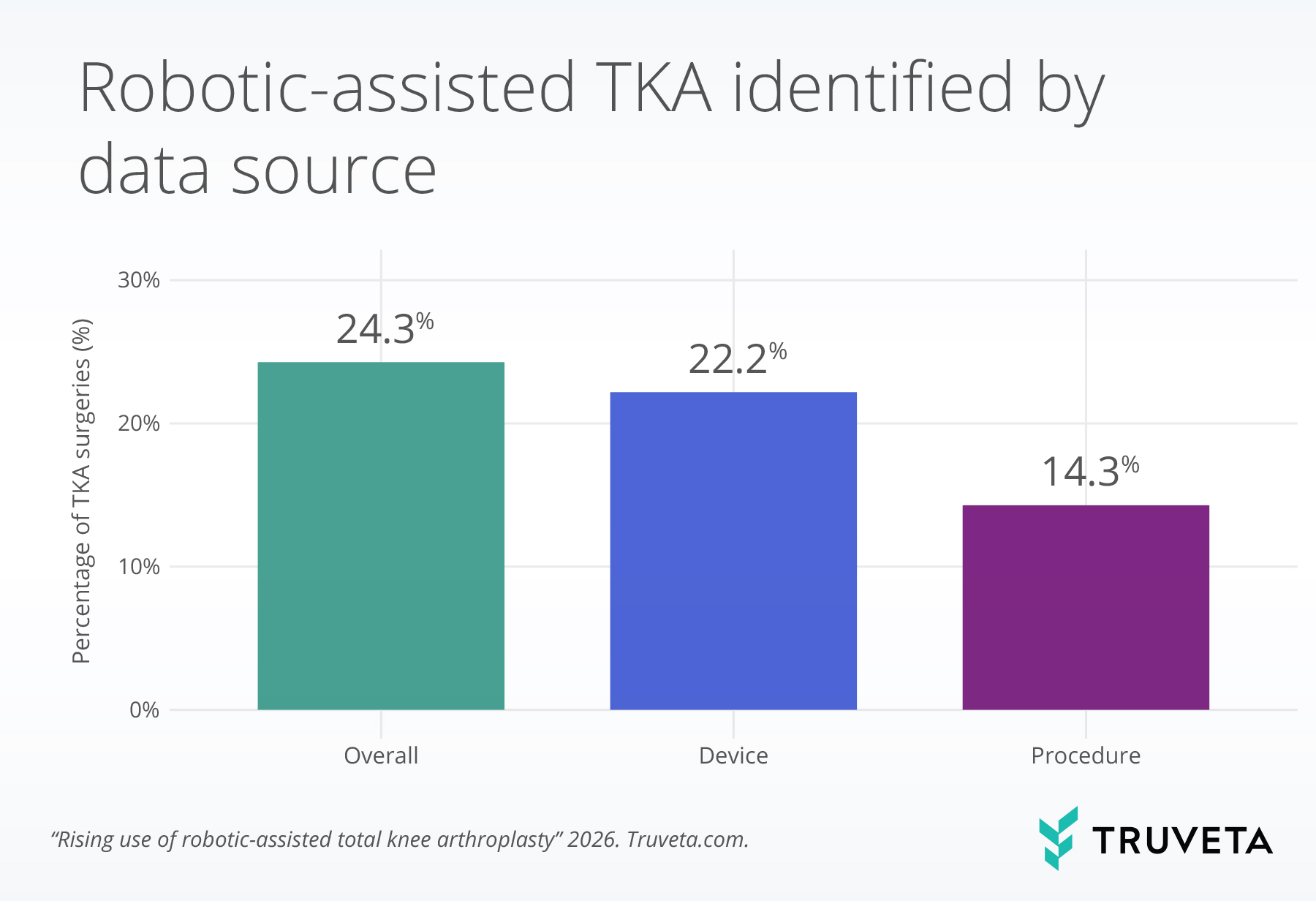
A total of 362,667 TKA procedures were included in the analysis. The median patient age was 69 years, 60.1% of patients were female, and 82.2% were White. Most patients lived in urban areas (69.5%), and 74.8% had obesity documented in their medical record. Robotic assistance was used in 24.3% of procedures overall.
Rates of robotic assistance over time
Use of robotic assistance during TKA increased substantially between 2018 and 2026. The proportion of procedures performed with robotic assistance rose from 12.4% in 2018 to 36.1% in 2026, representing a 191% relative increase over the study period.
Identification of robotic-assisted TKA
Robotic-assisted procedures were identified using either procedure codes indicating robotic surgical assistance or documentation of robotic device use during surgery. Overall, 24.3% of TKA procedures were identified as robotic-assisted. Documentation of robotic device use identified 22.2% of procedures as robotic-assisted, compared with 14.3% identified through procedure coding alone.
Operation time
Median operation duration was 126 minutes (IQR 109-149) for procedures without robotic assistance and 136 minutes (IQR 116-160) for robotic-assisted procedures.
Complications after a TKA
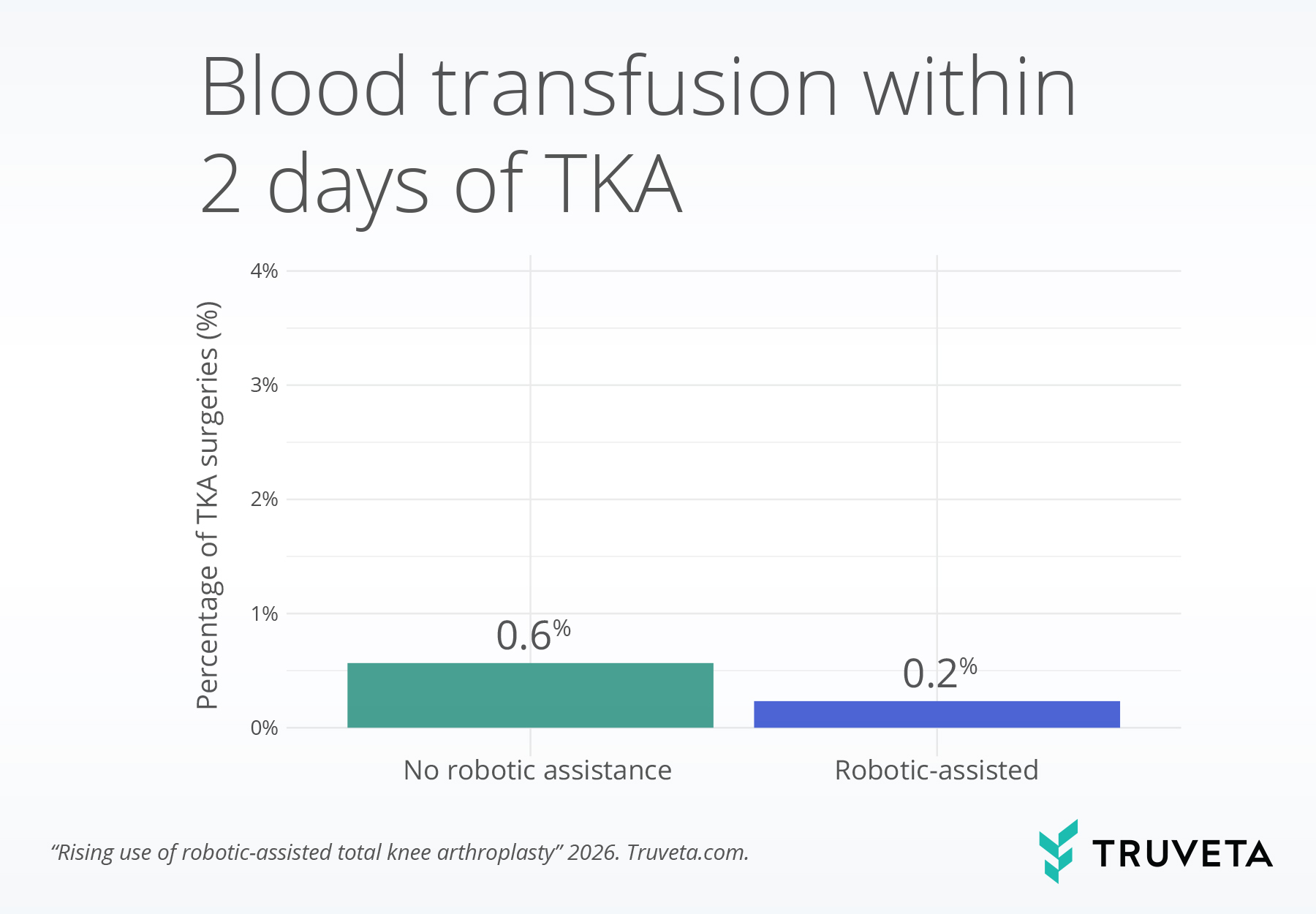
Blood transfusions were less common among robotic-assisted procedures than among procedures without robotic assistance.
Within two days of surgery, blood transfusion occurred in approximately 0.2% of robotic-assisted procedures compared with 0.6% of procedures without robotic assistance.
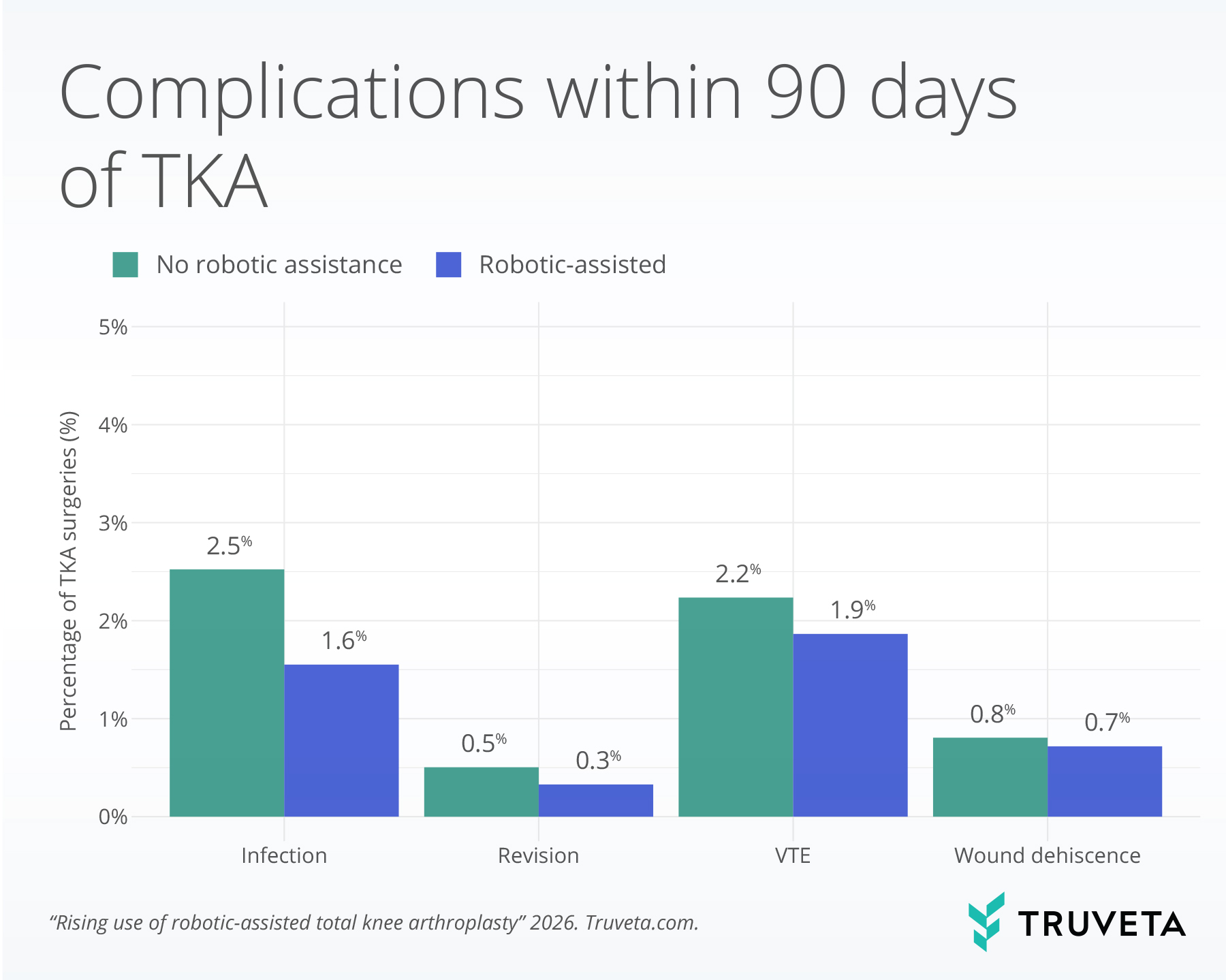
Patients undergoing robotic-assisted TKA experienced lower rates of several postoperative complications within 90 days of surgery. Compared with patients undergoing TKA without robotic assistance, patients undergoing robotic-assisted TKA had lower rates of infection (1.6% vs. 2.5%), revision surgery (0.3% vs. 0.5%), venous thromboembolism (VTE; 1.9% vs. 2.2%), and wound dehiscence (0.7% vs. 0.8%). Although wound dehiscence was significantly less common among robotic-assisted procedures after adjustment, the absolute difference between groups was small.
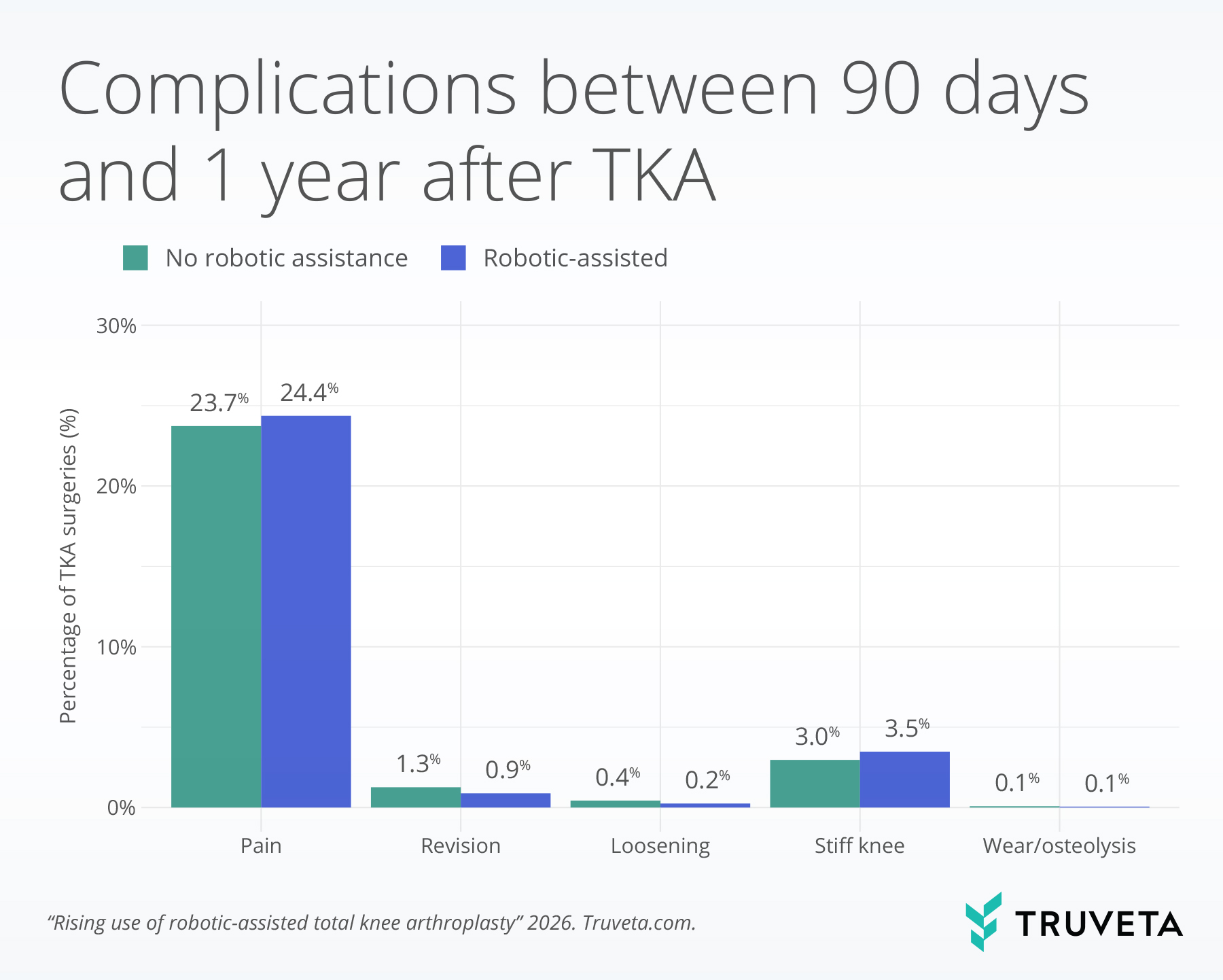
Several differences in postoperative outcomes remained apparent during follow-up from 90 days to one year after surgery. Compared with procedures without robotic assistance, robotic-assisted procedures had lower rates of revision surgery (0.9% vs. 1.3%), prosthetic loosening (0.2% vs. 0.4%), and wear or osteolysis (0.1% vs. 0.1%). Rates of pain-related diagnoses were similar between groups (24.4% vs. 23.7%). Diagnoses of stiff knee were more common among robotic-assisted procedures (3.5% vs. 3.0%). Despite the low absolute rates, robotic-assisted procedures remained significantly less likely to experience revision surgery, prosthetic loosening, and wear or osteolysis after adjustment for patient and clinical characteristics. Stiff knee diagnoses remained significantly more common among robotic-assisted procedures after adjustment.
Discussion
In this analysis of more than 362,000 total knee arthroplasty procedures, use of robotic assistance nearly tripled between 2018 and 2026, demonstrating rapid adoption of robotic technologies in orthopedic surgery.
We observed that robotic-assisted procedures were associated with longer operative duration but lower rates of several postoperative complications, including blood transfusion, infection, revision surgery, venous thromboembolism, and prosthetic loosening after adjustment for patient and clinical characteristics. Previous studies have similarly reported longer operative times associated with robotic-assisted TKA, reflecting the additional planning, setup, and intraoperative workflow requirements of robotic systems (12, 13).
Our findings are broadly consistent with prior studies of robotic-assisted TKA, which have reported lower rates of several postoperative complications and revision procedures among patients undergoing robotic-assisted surgery (6, 7, 11). Published studies have generally found that robotic assistance improves implant alignment and component positioning, which may contribute to reductions in revision, loosening, and other postoperative complications (6, 7, 11). However, evidence regarding short-term complications remains incomplete. While several large real-world studies have reported lower rates of venous thromboembolism, transfusion, and other perioperative complications following robotic-assisted TKA, findings for infection and other outcomes have been less consistent, highlighting the need for continued evaluation in large, real-world populations (10, 14, 15).
Our estimates of robotic-assisted TKA identified through procedure documentation alone were broadly consistent with previously published estimates of robotic-assisted TKA utilization (9). However, when robotic device documentation was also incorporated, a substantially larger proportion of procedures were identified as robotic-assisted. While procedure codes identified 14.3% of TKA procedures as robotic-assisted, incorporating device documentation increased that estimate to 22.2%. These findings suggest that studies relying exclusively on robotic add-on procedure codes may underestimate robotic surgery utilization in routine clinical practice (16). One possible explanation is that robotic assistance is often documented through device records captured during the procedure, whereas use of procedure add-on codes may vary across health systems and over time (16). Incorporating both procedure and device documentation may therefore provide a more comprehensive assessment of robotic surgery utilization in real-world clinical practice.
Several limitations should be considered. This was an observational study and therefore cannot establish causality. Although analyses adjusted for demographics, comorbidity burden, geographic factors, and year of surgery, residual confounding and differences in surgeon experience, hospital characteristics, implant selection, and patient selection may remain. Robotic-assisted procedures were identified using either robotic procedure codes or documentation of robotic device use during the procedure. While this approach may capture robotic utilization more comprehensively than procedure codes alone, robotic-assisted procedures may still have been missed if neither a robotic procedure code nor device documentation was recorded. Finally, outcomes were limited to those captured within the available follow-up period.
As robotic-assisted TKA continues to expand, ongoing evaluation of utilization and outcomes will be important for understanding the real-world impact of these technologies. Incorporating both procedure and device documentation may provide a more complete picture of robotic surgery adoption than either source alone.
These are preliminary research findings and not peer reviewed. Data are regularly updating. These findings are consistent with data accessed on September 15, 2026.
Citations
- C. W. Hunter, T. R. Deer, M. R. Jones, G. Chiang Chien, R. S. D’Souza, T. Davis, E. R. Eldon, M. F. Esposito, J. H. Goree, L. Hewan-Lowe, J. A. Maloney, A. J. Mazzola, J. S. Michels, A. Layno-Moses, S. Patel, J. Tari, J. S. Weisbein, K. A. Goulding, A. Chhabra, J. Hassebrock, C. Wie, D. Beall, D. Sayed, N. Strand, Consensus Guidelines on Interventional Therapies for Knee Pain (STEP Guidelines) from the American Society of Pain and Neuroscience. JPR Volume 15, 2683–2745 (2022).
- J. Zimnoch, P. Syrówka, B. Tarnacka, Advancements in Total Knee Arthroplasty over the Last Two Decades. Journal of Clinical Medicine 14 (2025).
- D. Lee, Total Knee Arthroplasty. JOMI 2024 (2024).
- C. M. Jones, A. S. Potluri, V. P. Federico, J. W. Nie, E. M. Forlenza, J. Serino, C. J. Della Valle, Trends in Medicare Arthroplasty Procedure Volume: Projecting From 2025 to 2040. The Journal of Arthroplasty 40, 2781-2790.e1 (2025).
- B. G. Stubnya, M. Schulz, S. Váncsa, G. S. Szilágyi, A. Szatmári, Z. Bejek, Global Trends in Joint Arthroplasty: A Systematic Review and Future Projections. Journal of Clinical Medicine 14 (2025).
- V. Klincke, R. Huyghe, H. Vermue, M. Martens, J. Victor, Robot‐assisted total knee arthroplasty demonstrates superior radiological but comparable clinical outcomes compared to conventional techniques: A meta‐analysis of prospective studies. Knee surg. sports traumatol. arthrosc. 34, 618–632 (2026).
- F. Mancino, G. Cacciola, M.-A. Malahias, R. De Filippis, D. De Marco, V. Di Matteo, G. A, P. K. Sculco, G. Maccauro, I. De Martino, What are the benefits of robotic-assisted total knee arthroplasty over conventional manual total knee arthroplasty? A systematic review of comparative studies. Orthop Rev (Pavia) 12, 8657 (2020).
- M. L. Tay, K. Kawaguchi, S. M. Bolam, A. Bayan, S. W. Young, Robotic arm-assisted total knee arthroplasty is associated with improved surgical and postoperative outcomes compared with imageless computer navigation: a large single-centre study. Bone Joint J 107-B, 804–812 (2025).
- A. K. Ponna, A. Giakas, A. A. Khoudary, S. N. Uggla, S. Ramtin, Y. A. Soliman, A. M. Ilyas, Increasing Utilization Trends of Robotic Assistance in Orthopaedic Surgery. J Am Acad Orthop Surg Glob Res Rev 10, e26.00028 (2026).
- D. Maman, Y. Steinfeld, Y. Berkovich, In-hospital outcomes and hospital charges after robotic-assisted versus conventional total knee arthroplasty: A 2016–2022 Nationwide Inpatient Sample study. PLOS ONE 21, e0346031 (2026).
- Y.-H. Kim, S.-H. Yoon, J.-W. Park, Does Robotic-assisted TKA Result in Better Outcome Scores or Long-Term Survivorship Than Conventional TKA? A Randomized, Controlled Trial. Clin Orthop Relat Res 478, 266–275 (2020).
- A. Bensa, A. Sangiorgio, L. Deabate, A. Illuminati, B. Pompa, G. Filardo, Robotic‐assisted mechanically aligned total knee arthroplasty does not lead to better clinical and radiological outcomes when compared to conventional TKA: a systematic review and meta‐analysis of randomized controlled trials. Knee surg. sports traumatol. arthrosc. 31, 4680–4691 (2023).
- A. Katsaras, U. Noeth, L. Rackwitz, E. Tsiridis, A. Maris, A. Maslaris, Precision analysis of robotic-assisted total knee arthroplasty. Experience from a high-volume center. Arch Orthop Trauma Surg 145, 417 (2025).
- C. Desouza, V. Shetty, Cutting through infection risk: robotic-assisted vs. conventional total knee replacement surgery – a meta-analysis. Arch Orthop Trauma Surg 145, 203 (2025).
- V. A. Aggarwal, J. Sun, S. N. Sambandam, Outcomes following robotic assisted total knee arthroplasty compared to conventional total knee arthroplasty. Arch Orthop Trauma Surg 144, 2223–2227 (2024).
- E. Wall-Wieler, S.-H. Lee, Y. Liu, F. Zheng, Sensitivity of insurance claims codes in identifying robotic assisted surgery. Annals of Surgery, 10–1097 (2026).