


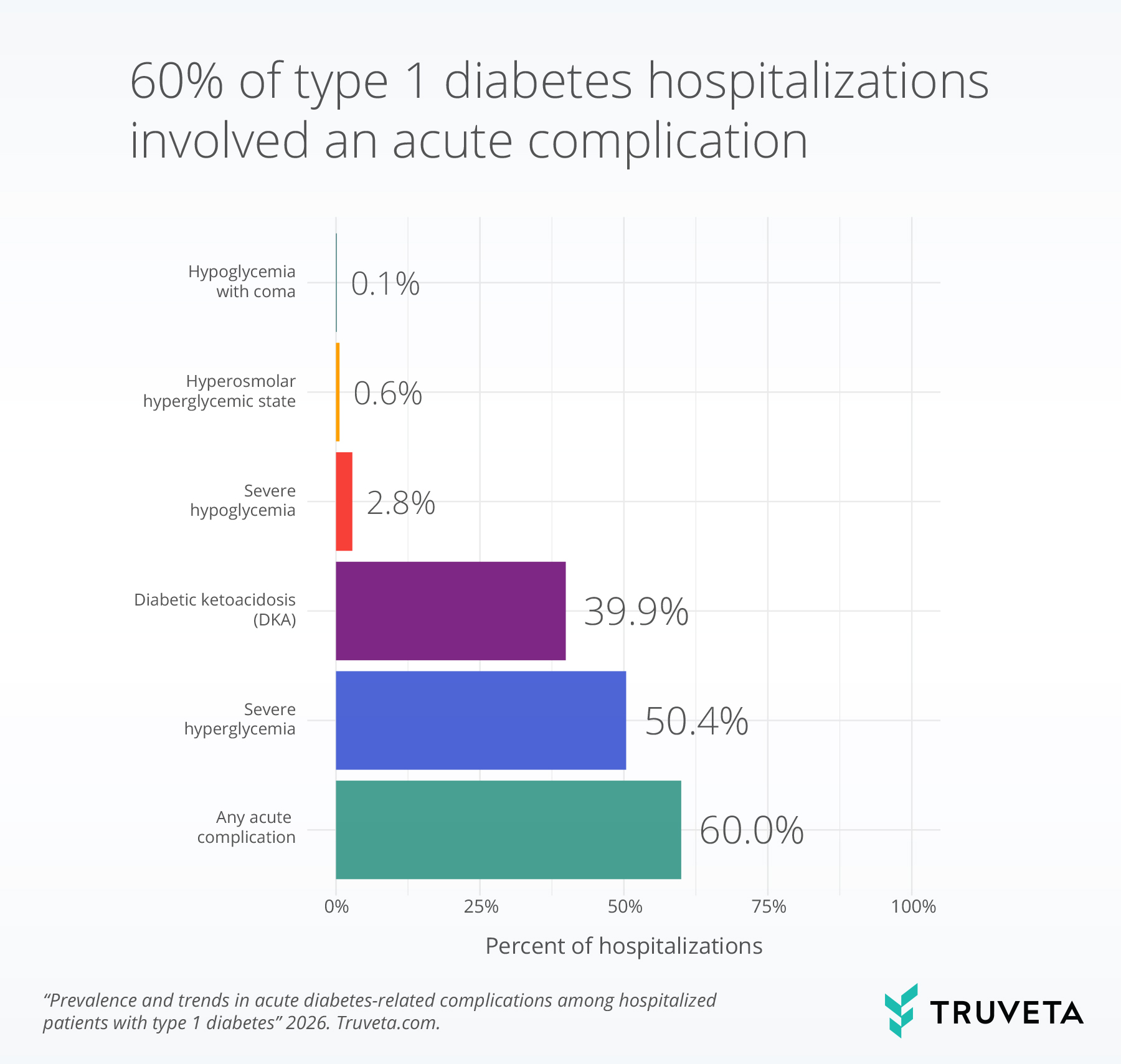
- Nearly two-thirds (60.0%) of hospitalizations among patients with type 1 diabetes involved at least one acute diabetes-related complication.
- Severe hyperglycemia (50.4%) and diabetic ketoacidosis (39.9%) were the most common acute diabetes-related complications, though DKA declined moderately between 2018 and 2026.
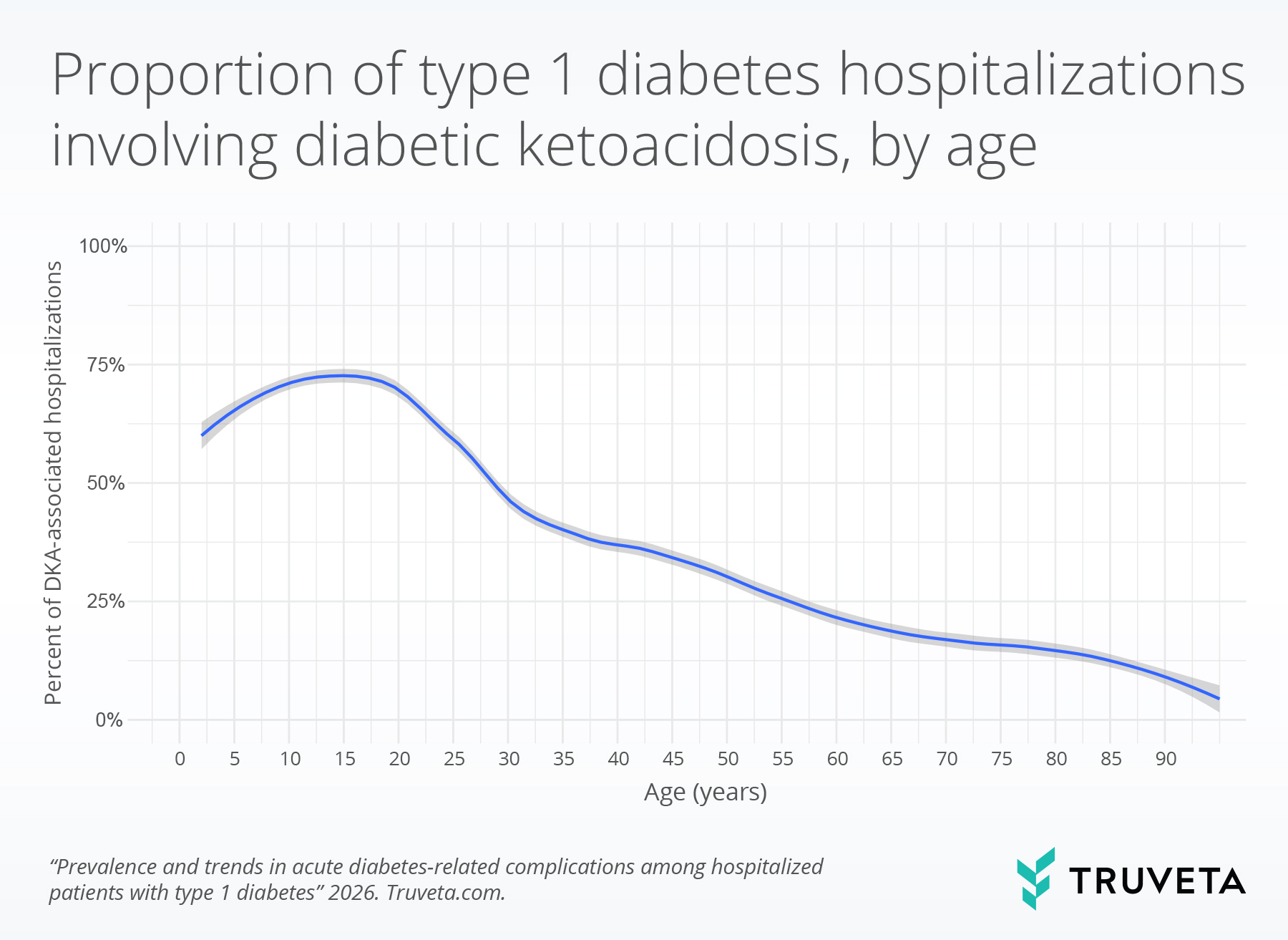
- DKA-associated hospitalizations were common across pediatric and adolescent ages, exceeding 60.0% in childhood and adolescence, but fell substantially through young adulthood and later life.
Type 1 diabetes (T1D) is a chronic condition in which the pancreas produces little or no insulin, the hormone required to regulate blood glucose levels (1, 2). As a result, people with T1D must rely on lifelong insulin therapy to keep glucose within a safe range. Even short disruptions in insulin delivery, such as missed doses, illness, or pump malfunction, can lead to rapid and sometimes severe changes in blood glucose (3, 4).
When insulin is insufficient, glucose levels can rise sharply, leading to hyperglycemia and related acute complications. One of the most serious is diabetic ketoacidosis (DKA), a life-threatening condition that often requires hospitalization (5). At the opposite extreme, excess insulin relative to glucose availability can cause severe hypoglycemia, which may lead to loss of consciousness or coma (6). Together, hyperglycemia- and hypoglycemia-related complications are common in T1D and can lead to hospitalization (7, 8).
Although there have been significant advances in insulin delivery systems and continuous glucose monitoring that have improved diabetes management (9–11), relatively little real-world evidence describes how often acute diabetes-related complications occur during hospitalizations in recent years. Using electronic health record (EHR) data from Truveta, we sought to quantify the prevalence of acute diabetes-related complications among hospitalizations for patients with type 1 diabetes between 2018 and 2026. We also examined trends over time, variation by age, and differences in hospital length of stay by complication type.
Methods
Study population
Using a subset of Truveta Data, we identified hospitalizations among patients with type 1 diabetes between January 2018 and August 2026. Type 1 diabetes was defined using the Klompas algorithm, a validated approach for identifying patients with type 1 diabetes in EHR data (12, 13). Specifically, patients were classified as having type 1 diabetes if more than 50% of their recorded diabetes diagnosis codes were type 1 diabetes codes and there was no evidence of prescriptions or dispensing for non-insulin antidiabetic medications, excluding metformin and GLP-1 receptor agonists.
Hospitalizations were included if they occurred within the study period and were associated with either (1) at least two documented diagnoses of type 1 diabetes prior to the hospitalization or (2) a type 1 diabetes diagnosis recorded during the hospitalization encounter (13).
Acute diabetes-related complications
For each hospitalization, we assessed the presence of acute diabetes-related complications using laboratory values and diagnosis data. Complications of interest included:
- Severe hyperglycemia, defined as glucose >300 mg/dL
- Diabetic ketoacidosis (DKA)
- Hyperosmolar hyperglycemic state
- Severe hypoglycemia, defined as glucose <40 mg/dL
- Hypoglycemia with coma
Outcomes
We calculated the proportion of hospitalizations involving each acute complication, examined trends over time from 2018 through August 2026, and evaluated differences in median length of stay by complication type. We also assessed age-specific patterns in DKA-associated hospitalizations.
Results
Prevalence of acute diabetes-related complications
Among 250,036 hospitalizations for patients with type 1 diabetes, acute diabetes-related complications were common. Overall, 60.0% of hospitalizations involved at least one acute complication.
The most prevalent complication was severe hyperglycemia, which occurred in 50.4% of hospitalizations. DKA was also frequent, which occurred in 39.9% of hospitalizations. In contrast, severe hypoglycemia occurred in 2.8% of hospitalizations, while hyperosmolar hyperglycemic state (0.6%) and hypoglycemia with coma (0.1%) were rare.
Trends over time
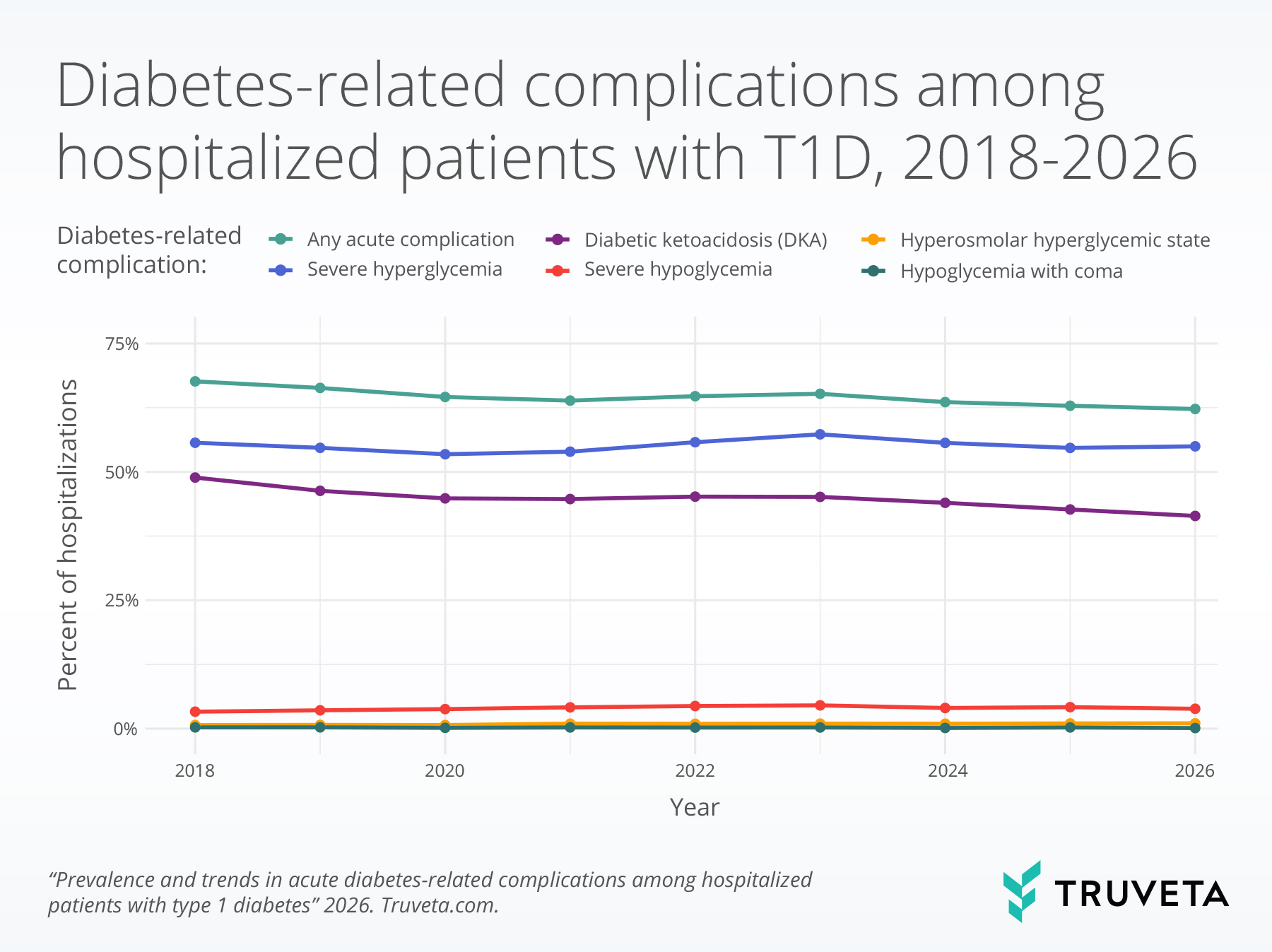
Between 2018 and 2026, the proportion of hospitalizations involved any acute diabetes-related complication declined modestly, from 67.6% to 62.2%. Severe hyperglycemia remained the most common complication across all years and remained relatively stable from 2018 (55.7%) to 2026 (55.0%). In contrast, the proportion of DKA-associated hospitalizations declined from 48.9% to 41.4% over the study period, a 15.3% relative decrease.
Length of stay by complication type
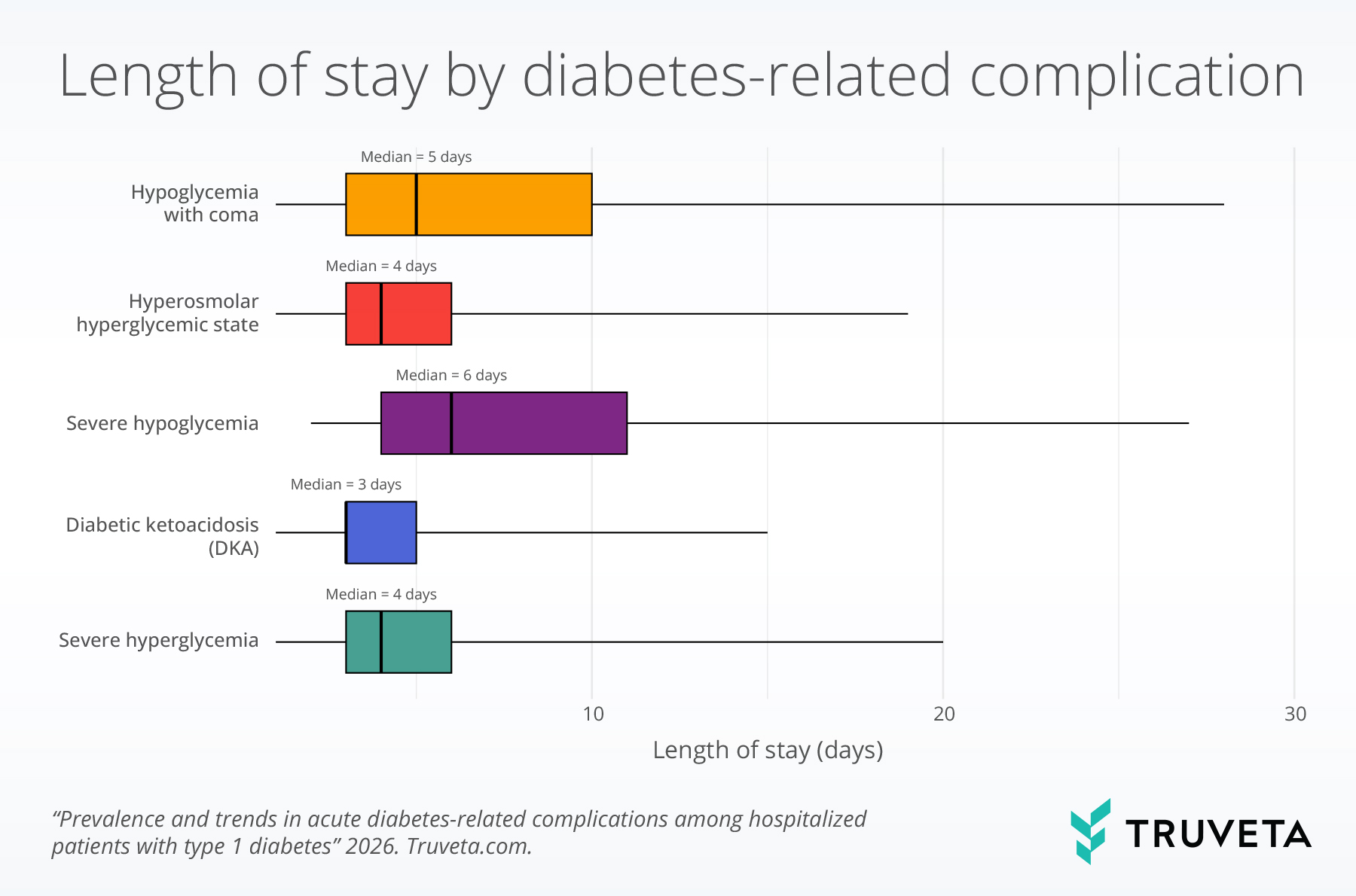
Length of stay varied meaningfully by complication-type. Median length of stay was shortest for DKA-associated hospitalizations, at 3 days (IQR 3 to 5 days), and for severe hyperglycemia, at 4 days (IQR 3 to 6 days). Hyperosmolar hyperglycemic state-associated hospitalizations also had a median length of stay of 4 days (IQR 3 to 6 days).
In contrast, hypoglycemia-associated hospitalizations were associated with longer stays. Median length of stay was 6 days for severe hypoglycemia (IQR 4 to 11 days) and 5 days for hypoglycemia with coma (IQR 3 to 10 days).
Age-specific patterns in DKA
Among hospitalizations for patients with type 1 diabetes, the proportion of DKA-associated hospitalizations increased from early childhood and peaked during adolescence and young adulthood, before declining steadily with advancing age. DKA-associated hospitalizations accounted for 60.3% of hospitalizations among children aged 5 years and 68.1% among adolescents aged 15 years, reaching a peak of 75.7% among young adults aged 20 years. The proportion then declined markedly, falling to 45.6% by age 30 years.
Discussion
In this large, real-world analysis of more than 250,000 hospitalizations among patients with type 1 diabetes, we found that acute diabetes-related complications remain highly prevalent, documented in nearly two-thirds of hospitalizations. These findings are consistent with prior work showing that the majority of pediatric hospitalizations among patients with type 1 diabetes, 65.7% were attributable to diabetes-related causes, though that analysis did not examine specific acute complications (8). In our analysis, severe hyperglycemia and DKA accounted for the majority of these events, underscoring the persistent clinical burden of glycemic instability despite advances in diabetes management.
Encouragingly, we observed modest declines in the overall prevalence of DKA between 2018 and 2026, extending findings from prior work showing a slight downturn in 2019 after years of increasing hospitalizations among type 1 diabetes patients (13, 14). In contrast, severe hyperglycemia remained relatively stable over the study period. These trends may reflect improvements in outpatient diabetes care, increased use of continuous glucose monitoring, and broader adoption of advanced insulin delivery technologies (11, 15, 16). However, the continued high prevalence of complications highlights ongoing gaps in prevention, access, and transition of care.
Differences in length of stay by complication type further illustrate the heterogeneity of acute diabetes-related hospitalizations. Hospitalizations involving diabetic ketoacidosis or severe hyperglycemia were associated with relatively short stays, while hypoglycemia-related events, though less frequent, were associated with longer admissions, consistent with prior studies (17–19). Hypoglycemia in the inpatient setting is often a marker of greater medical complexity, which may contribute to longer hospital stays (20).
The pronounced age gradient in DKA-associated hospitalizations is consistent with prior research showing an inverted U-shaped pattern, with risk rising from childhood, peaking in adolescence and young adulthood, and declining with older age (21). Elevated risk during adolescence and young adulthood has been linked to increased responsibility for self-management, transitions from pediatric to adult care, and higher rates of insulin nonadherence (21–23).
This study has limitations. Identification of type 1 diabetes relied on a validated algorithm applied to EHR data, which may misclassify a small number of patients. Additionally, acute diabetes-related complications were identified based on laboratory and diagnosis data documented during a hospitalization. As such, hospitalizations were classified as having a complication if it was documented at any point during the inpatient stay, regardless of the reason for hospitalization, and more than one complication could be recorded for a single hospitalization. Our analysis focused on hospitalizations captured within Truveta member health systems and may not reflect care received elsewhere. Additionally, we did not assess downstream outcomes such as readmissions or mortality.
Despite these limitations, this study leverages rich laboratory data and a large, diverse patient population to provide a detailed, contemporary picture of acute diabetes-related complications in hospitalized patients with type 1 diabetes. These findings highlight both encouraging trends and persistent challenges, emphasizing the need for continued investment in preventive care, early intervention, and age-tailored support to reduce the burden of acute complications. These are preliminary research findings and not peer reviewed. Data are regularly updating. These findings are consistent with data accessed on September 4, 2026.
Citations
- P. Lambert, P. J. Bingley, What is Type 1 Diabetes? Medicine 30, 1–5 (2002).
- Type 1 diabetes – Symptoms and causes – Mayo Clinic. https://www.mayoclinic.org/diseases-conditions/type-1-diabetes/symptoms-causes/syc-20353011.
- P. Bjornstad, J. K. Snell-Bergeon, K. J. Nadeau, D. M. Maahs, Insulin sensitivity and complications in type 1 diabetes: New insights. World J Diabetes 6, 8–16 (2015).
- E. R. Hankosky, M. L. Katz, L. Fan, D. Liu, C. Chinthammit, A. J. M. Brnabic, E. L. Eby, Predictors of insulin pump initiation among people with type 2 diabetes from a US claims database using machine learning. Current Medical Research and Opinion 39, 843–853 (2023).
- L. Castellanos, M. Tuffaha, D. Koren, L. L. Levitsky, Management of Diabetic Ketoacidosis in Children and Adolescents with Type 1 Diabetes Mellitus. Pediatr Drugs 22, 357–367 (2020).
- R. J. McCrimmon, R. S. Sherwin, Hypoglycemia in Type 1 Diabetes. Diabetes 59, 2333–2339 (2010).
- A. Rewers, H. P. Chase, T. Mackenzie, P. Walravens, M. Roback, M. Rewers, R. F. Hamman, G. Klingensmith, Predictors of Acute Complications in Children With Type 1 Diabetes. JAMA 287, 2511–2518 (2002).
- M. Auzanneau, J. Rosenbauer, A. Icks, B. Karges, A. Neu, R. Ziegler, W. Marg, T. Kapellen, P.-M. Holterhus, R. W. Holl, Hospitalization in Pediatric Diabetes: A Nationwide Analysis of all Admission Causes for Germany in 2015. Exp Clin Endocrinol Diabetes 128, 615–623 (2020).
- D. M. Maahs, L. A. Horton, H. P. Chase, The Use of Insulin Pumps in Youth with Type 1 Diabetes. Diabetes Technol Ther 12, S-59-S-65 (2010).
- I. Dicembrini, C. Cosentino, M. Monami, E. Mannucci, L. Pala, Effects of real-time continuous glucose monitoring in type 1 diabetes: a meta-analysis of randomized controlled trials. Acta Diabetol 58, 401–410 (2021).
- L. M. Laffel, L. G. Kanapka, R. W. Beck, K. Bergamo, M. A. Clements, A. Criego, D. J. DeSalvo, R. Goland, K. Hood, D. Liljenquist, L. H. Messer, R. Monzavi, T. J. Mouse, P. Prahalad, J. Sherr, J. H. Simmons, R. P. Wadwa, R. S. Weinstock, S. M. Willi, K. M. Miller, CGM Intervention in Teens and Young Adults with T1D (CITY) Study Group, Effect of Continuous Glucose Monitoring on Glycemic Control in Adolescents and Young Adults With Type 1 Diabetes: A Randomized Clinical Trial. JAMA 323, 2388–2396 (2020).
- E. B. Schroeder, W. T. Donahoo, G. K. Goodrich, M. A. Raebel, Validation of an algorithm for identifying type 1 diabetes in adults based on electronic health record data. Pharmacoepidemiology and Drug Safety 27, 1053–1059 (2018).
- L. Li, E. B. Andrews, X. Li, Z. Doder, E. Zalmover, K. Sharma, J. H. Oliveira, J. Juhaeri, C. Wu, Incidence of diabetic ketoacidosis and its trends in patients with type 1 diabetes mellitus identified using a U.S. claims database, 2007–2019. Journal of Diabetes and its Complications 35, 107932 (2021).
- A. T. Zimmermann, S. Lanzinger, S. J. Kummernes, N. A. Lund-Blix, R. W. Holl, E. Fröhlich-Reiterer, D. M. Maahs, O. Ebekozien, S. Rompicherla, J. T. Warner, Treatment regimens and glycaemic outcomes in more than 100 000 children with type 1 diabetes (2013–22): a longitudinal analysis of data from paediatric diabetes registries. The lancet Diabetes & endocrinology 13, 47–56 (2025).
- A. Tsur, A. Cahn, M. Israel, I. Feldhamer, A. Hammerman, R. Pollack, Impact of flash glucose monitoring on glucose control and hospitalization in type 1 diabetes: A nationwide cohort study. Diabetes/Metabolism Research and Reviews 37, e3355 (2021).
- T. S. Yu, S. Song, J. Yea, K.-I. Jang, Diabetes Management in Transition: Market Insights and Technological Advancements in CGM and Insulin Delivery. Advanced Sensor Research 3, 2400048 (2024).
- H. Shaka, M. Aguilera, M. Aucar, Z. El-Amir, F. Wani, C. C. Muojieje, A. Kichloo, Rate and Predictors of 30-day Readmission Following Diabetic Ketoacidosis in Type 1 Diabetes Mellitus: A US Analysis. J Clin Endocrinol Metab 106, 2592–2599 (2021).
- M. Rubens, V. Ramamoorthy, A. Saxena, P. McGranaghan, E. McCormack-Granja, Recent Trends in Diabetes-Associated Hospitalizations in the United States. Journal of Clinical Medicine 11 (2022).
- K. G. Brodovicz, V. Mehta, Q. Zhang, C. Zhao, M. J. Davies, J. Chen, L. Radican, S. S. Engel, Association between hypoglycemia and inpatient mortality and length of hospital stay in hospitalized, insulin-treated patients. Current Medical Research and Opinion 29, 101–107 (2013).
- A. Lake, A. Arthur, C. Byrne, K. Davenport, J. M. Yamamoto, H. R. Murphy, The effect of hypoglycaemia during hospital admission on health‐related outcomes for people with diabetes: a systematic review and meta‐analysis. Diabet. Med. 36, 1349–1359 (2019).
- N. Holman, E. Woch, C. Dayan, J. Warner, H. Robinson, B. Young, J. Elliott, National Trends in Hyperglycemia and Diabetic Ketoacidosis in Children, Adolescents, and Young Adults With Type 1 Diabetes: A Challenge Due to Age or Stage of Development, or Is New Thinking About Service Provision Needed? Diabetes Care 46, 1404–1408 (2023).
- A. Peters, L. Laffel, A. D. A. T. W. Group, Diabetes care for emerging adults: recommendations for transition from pediatric to adult diabetes care systems: a position statement of the American diabetes association, with representation by the American College of osteopathic family physicians, the American Academy of pediatrics, the American association of clinical endocrinologists, the American osteopathic association, the centers for disease control and prevention, children with diabetes, the endocrine Society, the International Society for pediatric and adolescent diabetes, juvenile diabetes research Foundation international, the National diabetes education program, and the pediatric endocrine Society (formerly Lawson Wilkins pediatric endocrine Society). Diabetes care 34, 2477–2485 (2011).
- D. Ehrmann, B. Kulzer, T. Roos, T. Haak, M. Al-Khatib, N. Hermanns, Risk factors and prevention strategies for diabetic ketoacidosis in people with established type 1 diabetes. The Lancet Diabetes & Endocrinology 8, 436–446 (2020).