



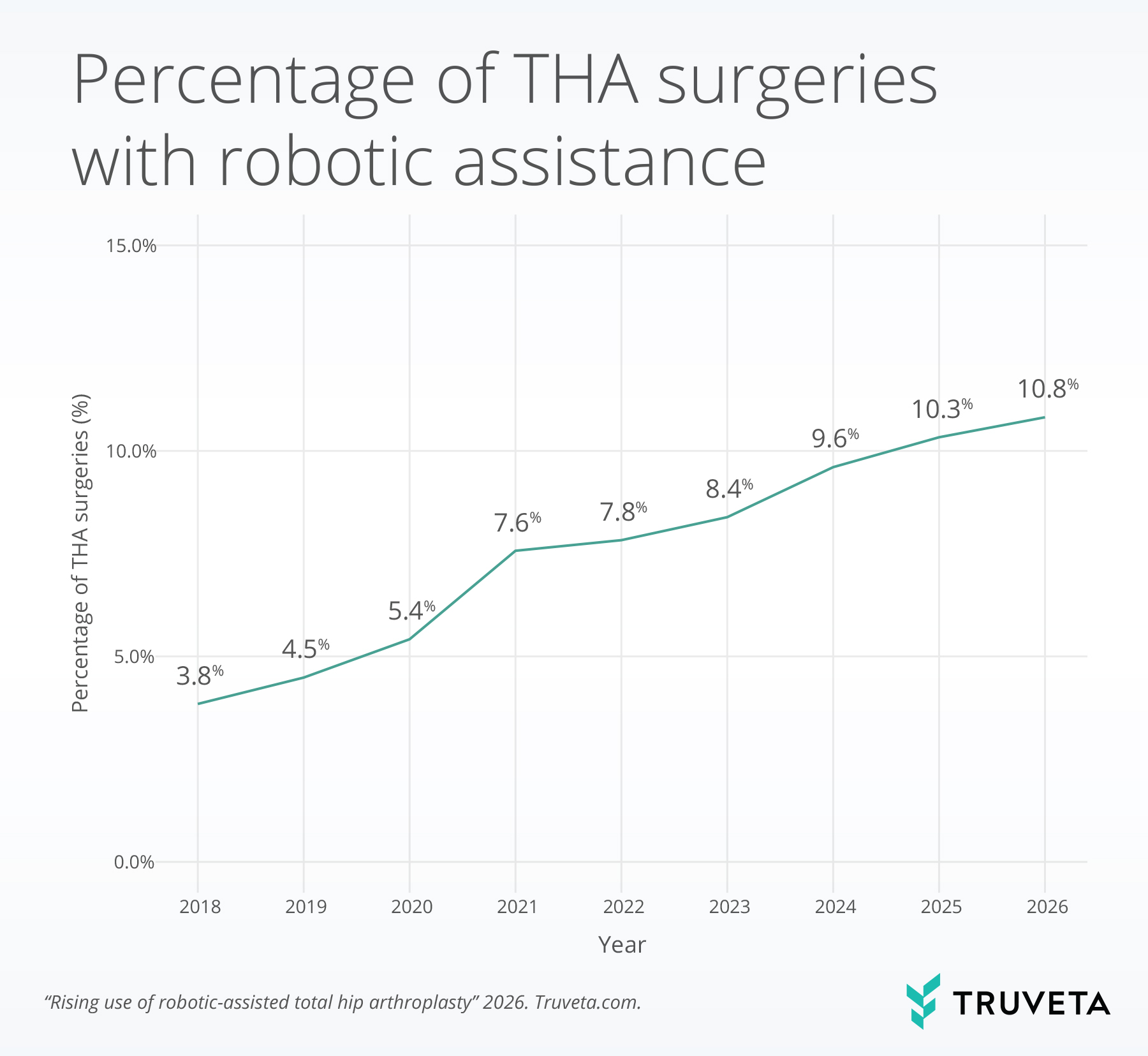
- Use of robotic assistance during total hip arthroplasty (THA) nearly tripled between 2018 and 2026, accounting for 10.8% of THA procedures by 2026.
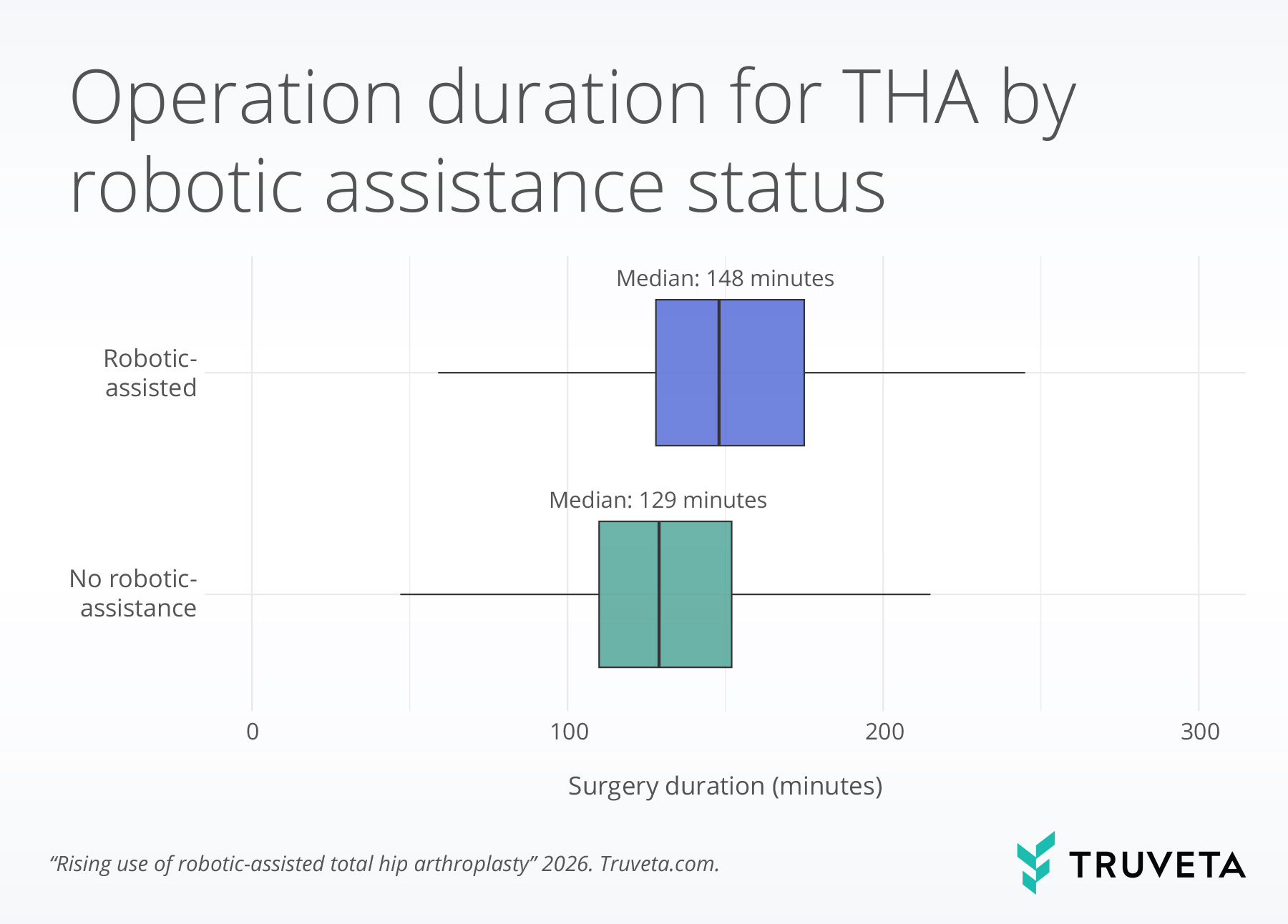
- Robotic-assisted procedures had longer operation durations than procedures without robotic assistance.
- Robotic-assisted THA was associated with lower rates of several postoperative complications after adjustment for patient and clinical characteristics.
Total hip arthroplasty (THA), commonly known as hip replacement surgery, is one of the most successful procedures in orthopedic surgery, providing durable pain relief and improved function for many patients (1–3). THA replaces damaged portions of the hip joint with prosthetic components to relieve pain, improve mobility, and restore function in patients with conditions such as osteoarthritis, hip fractures, and avascular necrosis (1, 4).
As the number of hip replacements performed each year continues to grow, surgeons and health systems are increasingly evaluating technologies that may improve procedural precision and patient outcomes (4–6). One such innovation is robotic-assisted surgery, which uses advanced planning software and real-time guidance during surgery to help surgeons position implants and perform the procedure with greater precision (4, 7, 8). However, questions remain regarding whether these technical advantages translate into improved patient outcomes in routine clinical practice (9–11).
Prior studies have documented increasing use of robotic-assisted THA and have suggested potential differences in surgical outcomes compared with conventional approaches (8). However, these studies have generally relied on data through the early 2020s, identified robotic-assisted procedures using procedural add-on codes, or were conducted within academic medical centers, potentially limiting insight into contemporary utilization and outcomes across broader clinical practice settings (6, 12).
Using Truveta Data, we examined trends in the use of robotic assistance during THA through August 2026. We also evaluated operation duration and postoperative outcomes among patients undergoing robotic-assisted procedures and those without robotic assistance.
Methods
Using a subset of Truveta Data, we identified patients who underwent total hip arthroplasty between January 2018 and August 2026.
Robotic-assisted procedures were identified through procedure add-on codes indicating robotic surgical assistance or documentation of robotic device use during surgery. Those that did not have documentation of robotic assistance through either source were classified as procedures without robotic assistance.
Outcomes
We evaluated operation duration and several postoperative outcomes among patients undergoing THA. Operation duration was measured as the time between anesthesia start and anesthesia stop.
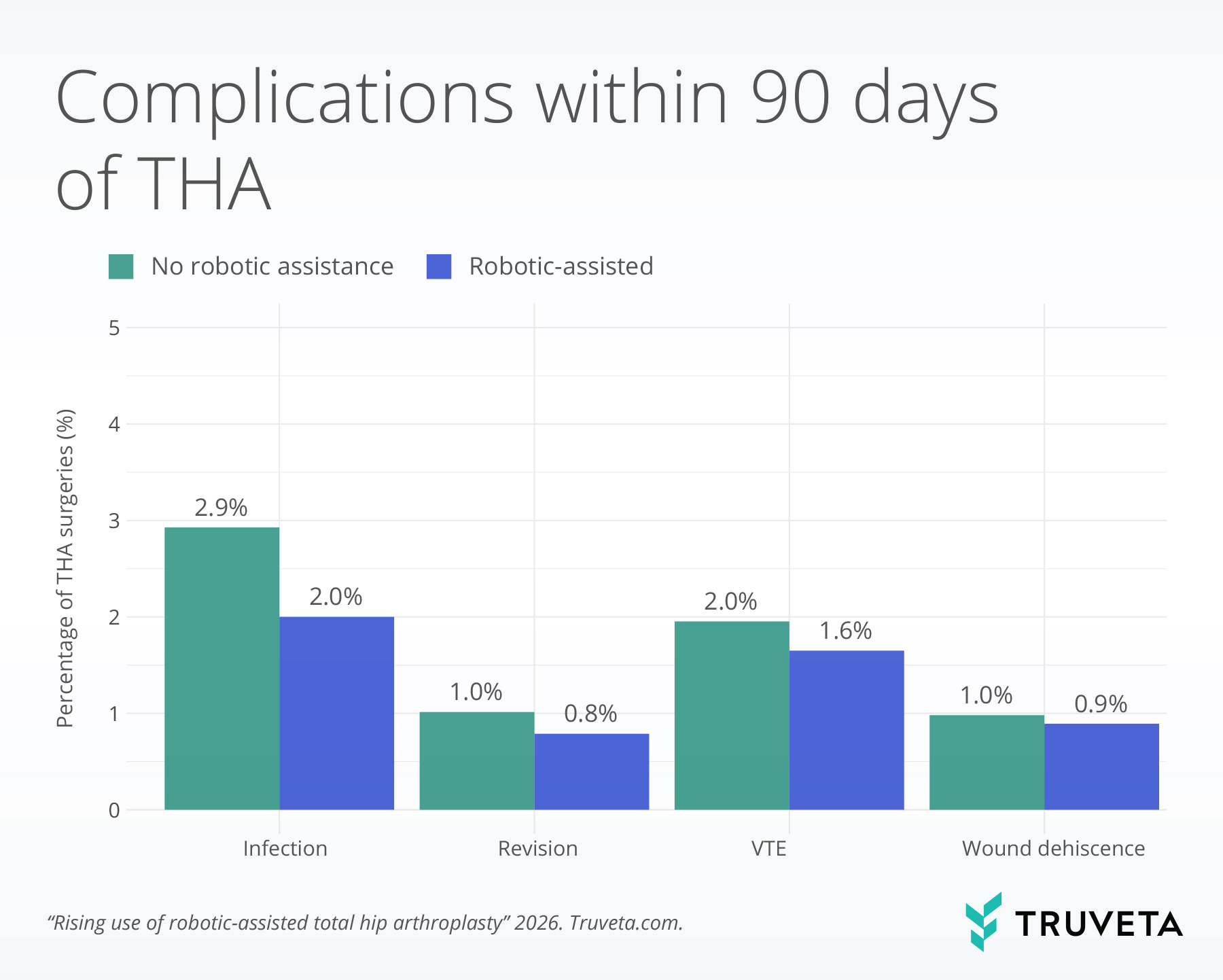
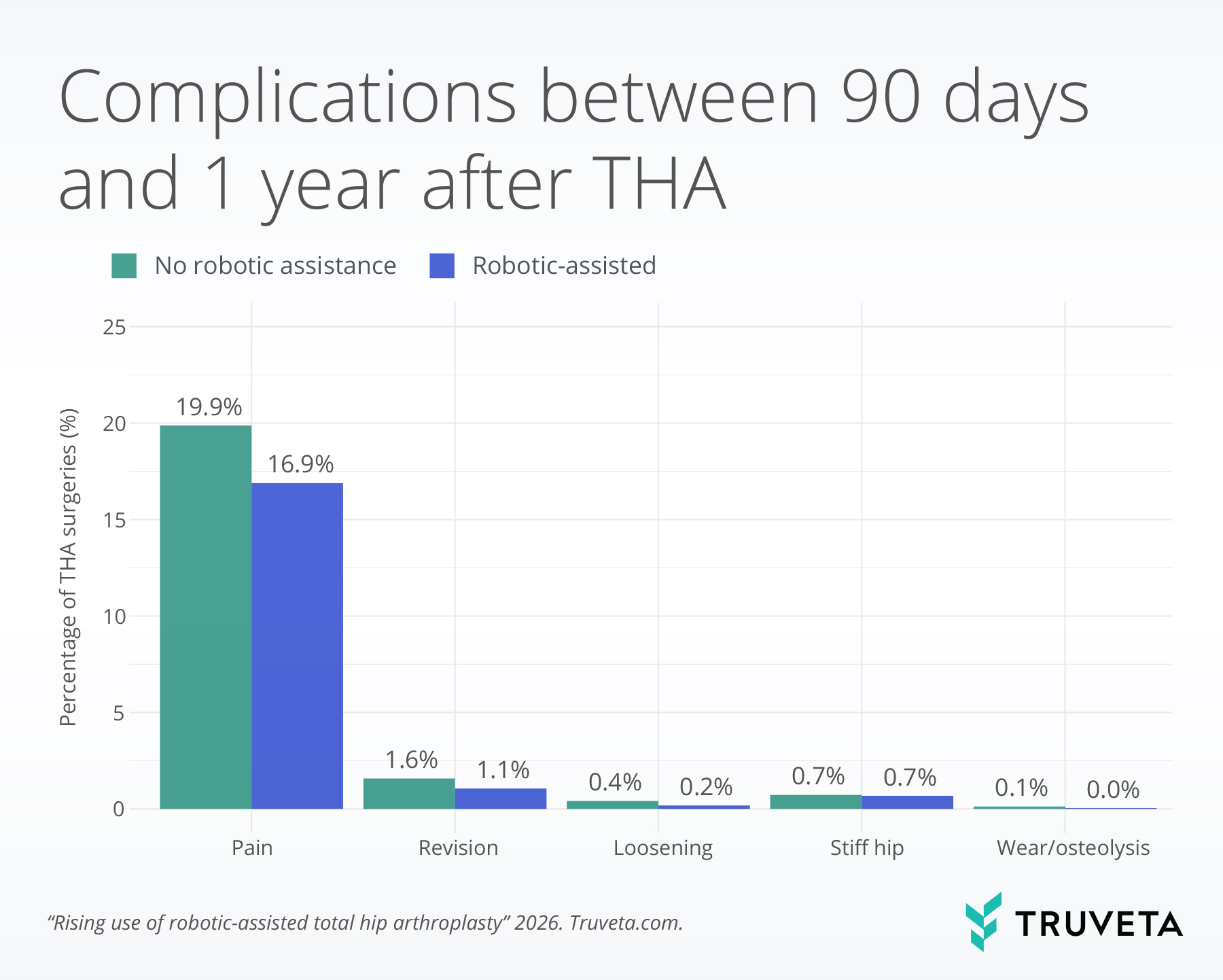
Blood transfusion was assessed within two days of surgery to capture perioperative transfusions related to the index procedure. Early postoperative complications, including infection, revision surgery, venous thromboembolism (VTE), and wound dehiscence, were assessed within 90 days of surgery. Longer-term complications, including pain-related diagnoses, revision surgery, prosthetic loosening, stiff hip, and wear or osteolysis, were assessed between 90 days and one year after surgery.
Analyses
We examined trends in the use of robotic-assisted THA over time by calculating the percentage of THA procedures performed with robotic assistance each year.
Operation duration was summarized using the median and interquartile range (IQR) and compared between robotic-assisted procedures and procedures without robotic assistance.
To ensure outcomes could be reliably captured, analyses were restricted to patients with complete follow-up for the outcome window of interest. For example, analyses of outcomes occurring between 90 days and one year after surgery included only patients who had at least one year of potential follow-up after surgery and a documented healthcare encounter after that follow-up period.We used multivariable logistic regression to evaluate whether postoperative outcomes differed between robotic-assisted procedures and procedures without robotic assistance. Models adjusted for factors that may influence both treatment selection and outcomes, including sex, age, race, ethnicity, rural or urban residence, obesity, year of surgery, and Elixhauser Comorbidity Index.
When describing results, we use the term significantly only for associations that remained statistically significant after adjustment for patient and clinical characteristics. Outcomes that were not statistically different after adjustment are described as similar or comparable between groups.
Results
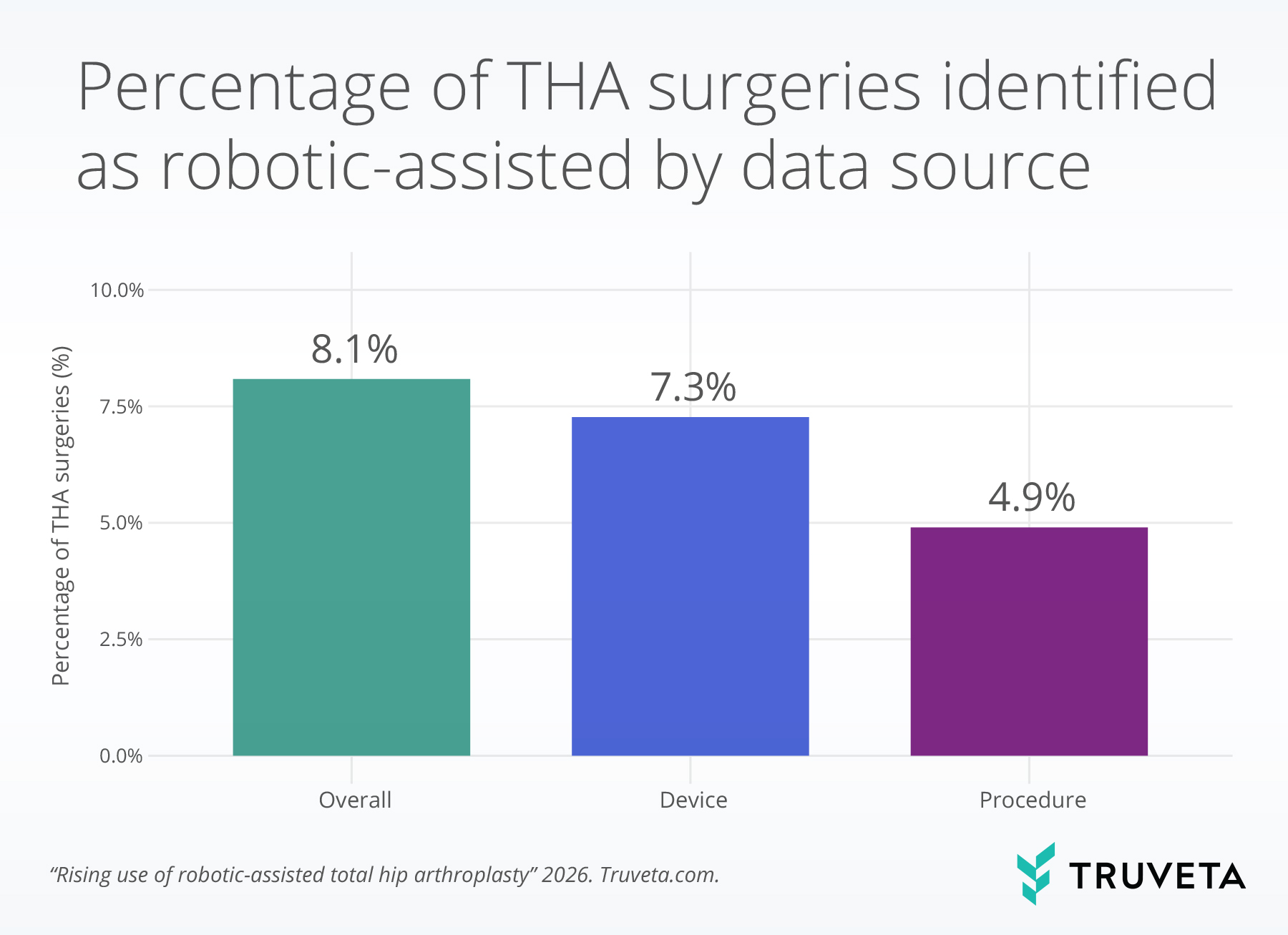
A total of 259,134 THA procedures were included in the analysis. The median patient age was 69 years (SD 11), and 57.7% of patients were female. Most patients were White (85.7%), non-Hispanic (92.6%), and lived in urban areas (69.9%). Robotic assistance was used in 8.1% of THA procedures.
Rates of robotic assistance over time
Use of robotic assistance during THA nearly tripled between 2018 and 2026, increasing from approximately 3.8% of procedures in 2018 to 10.8% by 2026, a 181.5% increase over 8 years.
Identification of robotic-assisted THA
Robotic-assisted procedures were identified using either procedure codes indicating robotic surgical assistance or documentation of robotic device use during surgery. Overall, 8.1% of THA surgeries were identified as robotic-assisted. Documentation of robotic device use identified 7.3% of THA surgeries as robotic-assisted, compared with 4.9% identified through procedure coding alone.
Operation time
Median operation duration was 129 minutes (IQR: 110-153) for procedures without robotic assistance and 148 minutes (IQR: 128-176) for robotic-assisted procedures.
Complications after a THA
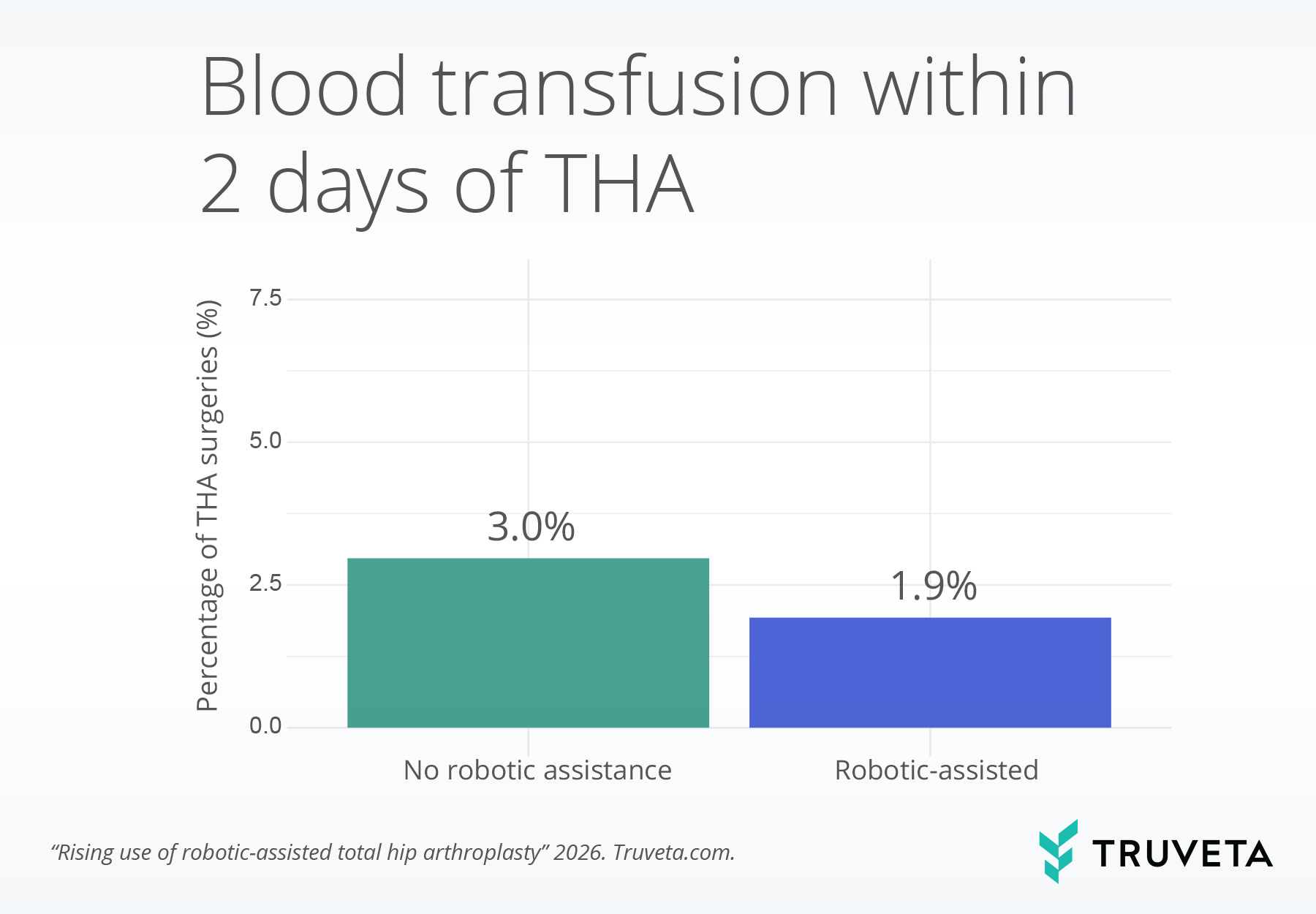
We assessed blood transfusions occurring within two days of THA. Blood transfusions were less common among patients undergoing robotic-assisted THA than among patients undergoing THA without robotic assistance (1.9% vs. 3.0%).
Patients undergoing robotic-assisted THA experienced lower rates of several postoperative complications within 90 days of surgery. Compared with patients undergoing THA without robotic assistance, patients undergoing robotic-assisted THA had lower rates of infection (2.0% vs. 2.9%), revision surgery (0.8% vs. 1.0%), venous thromboembolism (VTE; 1.6% vs. 2.0%), and wound dehiscence (0.9% vs. 1.0%). Although wound dehiscence was significantly less common among robotic-assisted procedures after adjustment, the absolute difference between groups was small.
Several differences in postoperative outcomes remained apparent during follow-up from 90 days to one year after surgery. Compared with procedures without robotic assistance, robotic-assisted procedures were associated with lower rates of pain-related diagnoses (16.9% vs. 19.9%), revision surgery (1.1% vs. 1.6%), and prosthetic loosening (0.2% vs. 0.4%). Rates of stiff hip diagnoses were similar between groups (0.7% vs. 0.7%). Wear or osteolysis was uncommon in both groups (0.0% vs. 0.1%). Despite the low absolute rates, robotic-assisted procedures remained significantly less likely to have a diagnosis of wear or osteolysis after adjustment for patient and clinical characteristics.
Discussion
In this analysis of more than 259,000 total hip arthroplasty procedures, use of robotic assistance increased nearly threefold between 2018 and 2026, demonstrating continued adoption of robotic technology in orthopedic surgery.
We observed that robotic-assisted procedures were associated with longer operative duration but lower rates of several postoperative complications, including blood transfusion, infection, revision surgery, venous thromboembolism, wound dehiscence, pain-related diagnoses, and prosthetic loosening after adjustment for patient and clinical characteristics. Previous studies have similarly reported longer operative duration and higher costs associated with robotic-assisted THA, highlighting the importance of continued evaluation of both clinical outcomes and resource utilization as robotic technologies become more widely adopted (10, 13).
Our findings are broadly consistent with previous studies of robotic-assisted THA, which have reported lower rates of several complications among patients undergoing robotic-assisted procedures (9, 10, 14). Prior analyses have reported increasing adoption of robotic-assisted THA and have generally found lower rates of certain complications, particularly dislocation and instability, while evidence for differences in infection, venous thromboembolism, and revision surgery has been more mixed (9–11, 13).
Our estimates of robotic-assisted THA identified through procedure documentation alone were broadly consistent with recently published national analyses of robotic-assisted THA utilization (6). However, when robotic device documentation was also incorporated, a larger proportion of procedures were identified as robotic-assisted. These findings suggest that studies relying exclusively on procedure coding may not capture all robot-assisted procedures performed in routine clinical practice. One possible explanation is that robotic assistance is often documented using supplementary add-on codes, and coding practices may vary across health systems and over time (15). Incorporating both procedure and device documentation may therefore provide a more comprehensive assessment of robotic surgery utilization in real-world clinical practice.
Several limitations should be considered. This was an observational study and therefore cannot establish causality. Although analyses adjusted for demographics, comorbidity burden, geographic factors, and year of surgery, residual confounding and differences in surgeon experience, hospital characteristics, implant selection, and patient selection may remain. Robotic-assisted procedures were identified using either robotic procedure codes or documentation of robotic device use during the procedure. While this approach may capture robotic utilization more comprehensively than procedure codes alone, robotic-assisted procedures may still have been missed if neither a robotic procedure code nor device documentation was recorded. Finally, outcomes were limited to those captured within the available follow-up period.
As robotic-assisted THA continues to expand, ongoing evaluation of utilization and outcomes will be important for understanding the real-world impact of these technologies. Incorporating both procedure and device documentation may provide a more complete picture of robotic surgery adoption than either source alone.
These are preliminary research findings and not peer reviewed. Data are regularly updating. These findings are consistent with data accessed on September 15, 2026.
Citations
- R. J. Ferguson, A. J. Palmer, A. Taylor, M. L. Porter, H. Malchau, S. Glyn-Jones, Hip replacement. The Lancet 392, 1662–1671 (2018).
- V. Pentland, Z. Thompson, A. Dayimu, N. Demiris, E. Bohm, D. Campbell, E. Lenguerrand, A. M. Fenstad, O. N. Furnes, N. Hailer, Survivorship of modern total hip replacement to 30 years: systematic review, meta-analysis, and extrapolation of global joint registry data. The Lancet 407, 855–866 (2026).
- M. Singh, A. P. McAnena, J. Harary, P. L. Schilling, W. E. Moschetti, Patient Satisfaction Following Total Hip Arthroplasty May Be As High As 95%. JAAOS-Journal of the American Academy of Orthopaedic Surgeons, 10–5435 (2022).
- A. Fontalis, J.-A. Epinette, M. Thaler, L. Zagra, V. Khanduja, F. S. Haddad, Advances and innovations in total hip arthroplasty. SICOT J 7, 26.
- H. Maradit Kremers, D. R. Larson, C. S. Crowson, W. K. Kremers, R. E. Washington, C. A. Steiner, W. A. Jiranek, D. J. Berry, Prevalence of Total Hip and Knee Replacement in the United States. J Bone Joint Surg Am 97, 1386–1397 (2015).
- A. K. Ponna, A. Giakas, A. A. Khoudary, S. N. Uggla, S. Ramtin, Y. A. Soliman, A. M. Ilyas, Increasing Utilization Trends of Robotic Assistance in Orthopaedic Surgery. J Am Acad Orthop Surg Glob Res Rev 10, e26.00028 (2026).
- P. Subramanian, T. W. Wainwright, S. Bahadori, R. G. Middleton, A review of the evolution of robotic-assisted total hip arthroplasty. HIP International 29, 232–238 (2019).
- X. Chen, J. Xiong, P. Wang, S. Zhu, W. Qi, H. Peng, L. Yu, W. Qian, Robotic-assisted compared with conventional total hip arthroplasty: systematic review and meta-analysis. Postgraduate Medical Journal 94, 335–341 (2018).
- N. Ng, P. Gaston, P. M. Simpson, G. J. Macpherson, J. T. Patton, N. D. Clement, Robotic arm-assisted versus manual total hip arthroplasty: a systematic review and meta-analysis. The Bone & Joint Journal 103-B, 1009–1020 (2021).
- A. Bensa, G. Pagliazzi, A. Miele, G. Schiavon, M. Cuzzolin, G. Filardo, Robotic-assisted total hip arthroplasty provides greater implant placement accuracy and lower complication rates, but not superior clinical results compared to the conventional manual approach: a systematic review and meta-analysis. The Journal of Arthroplasty 40, 1921–1931 (2025).
- G. J. Kirchner, C. Riley, E. Jimenez, J. B. Stambough, L. E. Nikkel, Is Robotic-assisted THA Associated With Decreased Risk of All-cause Revision or Revision for Dislocation? An Analysis of the American Joint Replacement Registry. Clinical Orthopaedics and Related Research®, 10–1097 (2022).
- A. M. Gordon, P. Nian, J. Baidya, M. A. Mont, Trends of robotic total joint arthroplasty utilization in the United States from 2010 to 2022: a nationwide assessment. J Robotic Surg 19, 155 (2025).
- D. S. Constantinescu, J. P. Costello II, R. R. Yakkanti, D. J. Vanden Berge, J. A. C. Alba, V. H. Hernandez, M. R. D’Apuzzo, Varying complication rates and increased costs in technology-assisted total hip arthroplasty versus conventional instrumentation in 1,372,300 primary total hips. The Journal of arthroplasty 39, 1771–1776 (2024).
- D. Maman, Y. Steinfeld, Y. Berkovich, Robotic-assisted total hip arthroplasty in the United States: a nationwide propensity-matched analysis of adoption, outcomes, and complications. Langenbecks Arch Surg 411, 65 (2026).
- E. Wall-Wieler, S.-H. Lee, Y. Liu, F. Zheng, Sensitivity of insurance claims codes in identifying robotic assisted surgery. Annals of Surgery, 10–1097 (2026).