


- Compared with adults who started a non-GLP-1 anti-obesity medication, GLP-1 initiators were older, less likely to be female, and had more cardiometabolic conditions.
- Mental health, psychiatric medication use, healthcare access, and social determinants of health (SDOH) were largely similar in patients with available data between groups. GLP-1 initiation increased from 2022 to 2024, while non-GLP-1 initiation stayed relatively stable.
This report summarizes our poster presented at ISPOR Europe 2026, titled Differences in patient profiles among adults with obesity treated with GLP-1 vs. non-GLP-1 anti-obesity medications using real-world data.
Clinicians prescribe both GLP-1 and non-GLP-1 medications to manage obesity (1), and GLP-1 prescribing has risen sharply in recent years (2). People who start GLP-1s may differ from people who start non-GLP-1 options in demographic, mental health, and clinical characteristics. Prior research has found differences in clinical and demographic variables (3, 4). Real-world electronic health record (EHR) data can help describe these differences in large, diverse populations seen in routine care.
Using a subset of Truveta Data, we compared adults who started GLP-1 versus non-GLP-1 anti-obesity medications between 2022 and 2024. We looked at demographic, SDOH, healthcare access, mental health, and clinical characteristics.
Methods
Study population
We identified adults (18 years or older) with obesity who started a GLP-1 or non-GLP-1 anti-obesity medication between 2022 and 2024. The date the patient started the medication was the index date. Obesity was defined by a BMI of at least 30 kg/m² or an obesity diagnosis within 180 days before index. We identified these using ICD-10-CM and SNOMED CT diagnosis codes and LOINC and SNOMED CT codes for BMI.
Medications compared
- GLP-1: semaglutide, tirzepatide, and liraglutide
- Non-GLP-1: orlistat, phentermine, naltrexone-bupropion, and phentermine-topiramate
Eligibility
Patients needed at least one electronic health record (EHR) record in the year before index. We excluded patients with prior use of either medication class, diabetes, or pregnancy during the 365 days before index.
Baseline windows
We assessed baseline diagnoses during the 365 days before index. PHQ-9 scores and psychotropic medication fills were assessed during the 90 days before index.
Analysis
We compared groups using Welch’s t-tests and chi-square tests (p < 0.05). We measured how large each difference was using effect sizes: Hedges’ g for continuous variables and Cramér’s V for categorical variables. Because the sample was large, many comparisons were statistically significant. We therefore treated effect sizes of 0.10 or greater as meaningful.
Results
GLP-1 initiators were older and less likely to be female
We identified 511,097 patients: 289,359 GLP-1 initiators and 221,738 non-GLP-1 initiators.
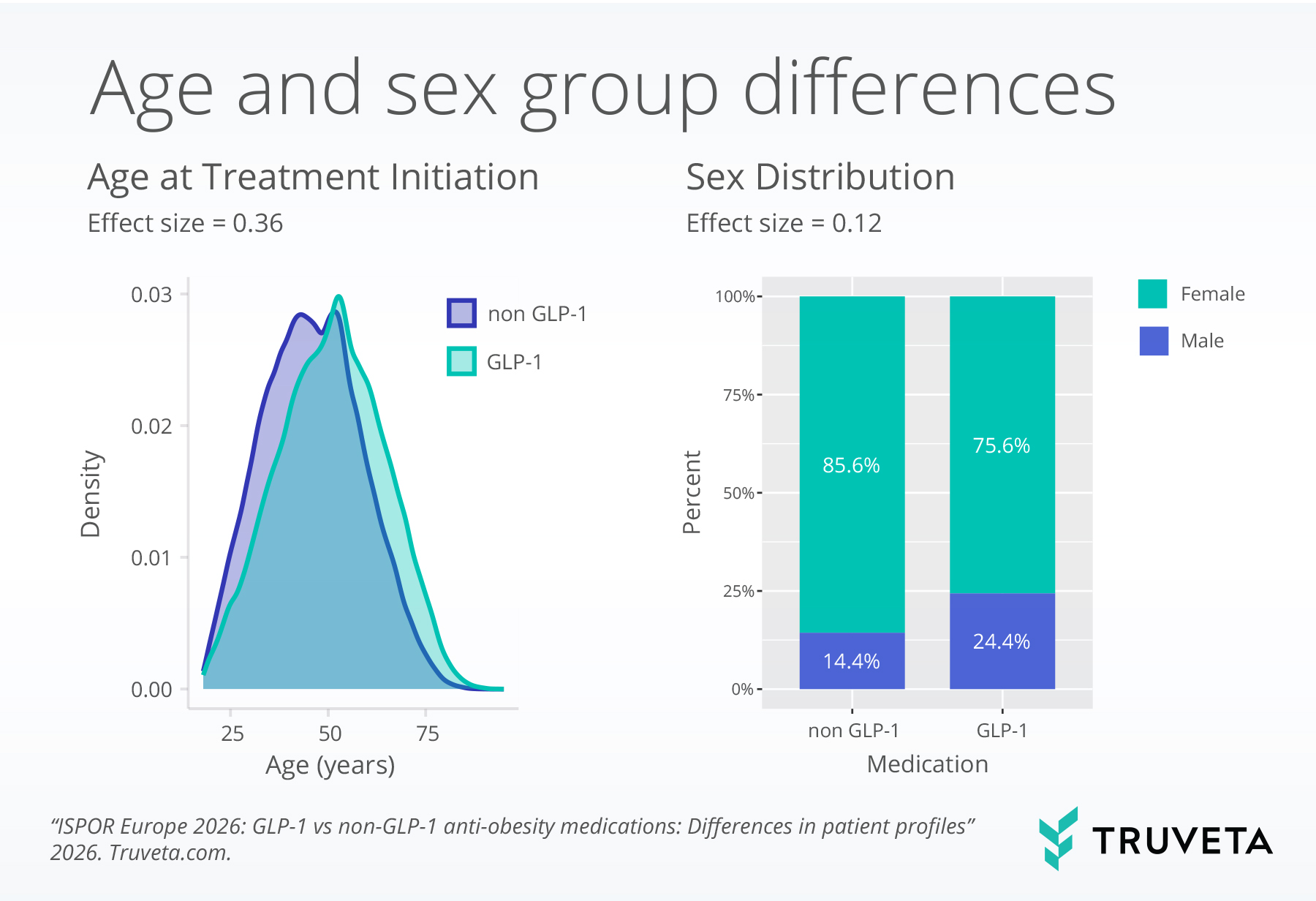
- Age: Mean age was 51 years among GLP-1 initiators and 46 years among non-GLP-1 initiators (effect size = 0.36).
- Sex: 6% of GLP-1 initiators were female, compared with 85.6% of non-GLP-1 initiators (effect size = 0.12). Most patients in both groups were female.
GLP-1 initiators had greater cardiometabolic burden
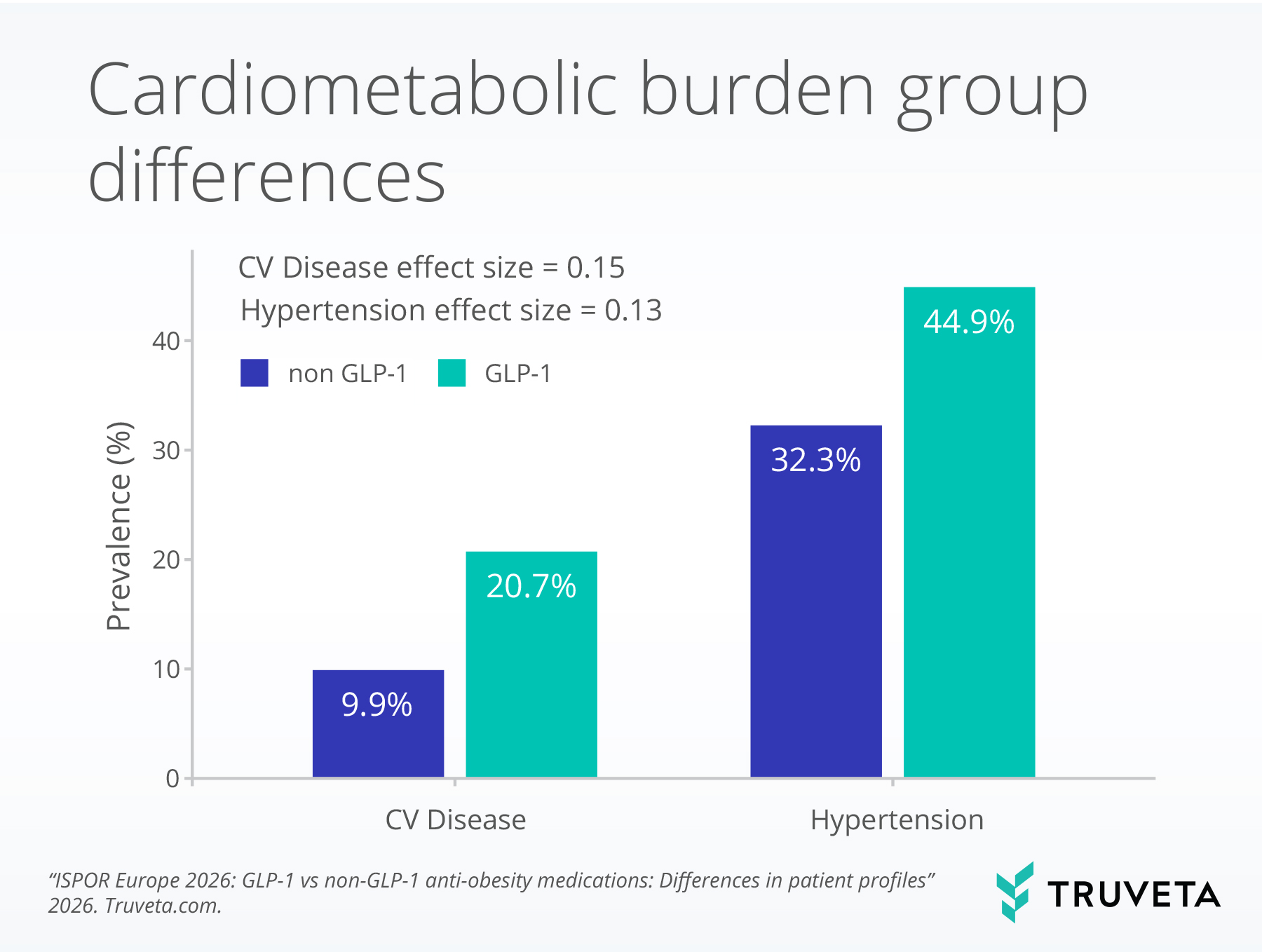
GLP-1 initiators had more cardiometabolic conditions, as shown in Figure 3 of the poster:
- Cardiovascular disease: 7% vs. 9.9% (effect size = 0.15)
- Hypertension: 9% of GLP-1 initiators vs. 32.3% of non-GLP-1 initiators (effect size = 0.13)
GLP-1 initiation increased over time
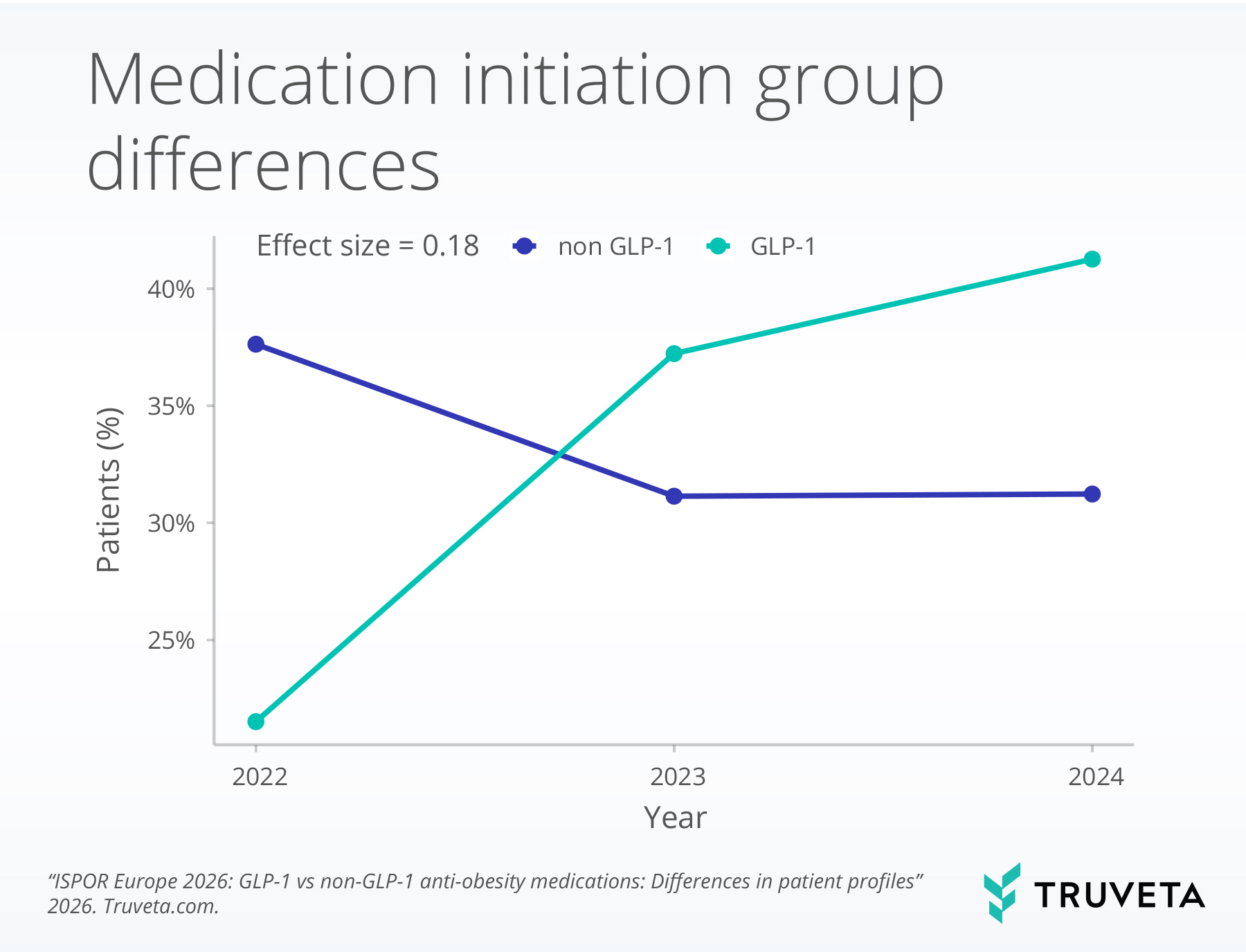
The year of initiation differed between groups (effect size = 0.18). In the GLP-1 group, the share of patients who started treatment each year rose from roughly 22% in 2022 to roughly 41% in 2024. In the non-GLP-1 group, the share stayed relatively stable after 2022 (Figure 4 of the poster).
Other characteristics were largely similar
Among patients with available data, groups differed little across mental health, psychiatric medication use, healthcare access, SDOH, and other clinical characteristics. Most statistically significant differences had effect sizes below 0.10.
Discussion
In this large real-world cohort of adults with obesity starting anti-obesity medication, GLP-1 initiators were older, less often female, and had greater cardiometabolic burden than non-GLP-1 initiators. These differences were modest. Most other characteristics were largely similar between groups, including mental health, psychiatric medication use, healthcare access, and SDOH. GLP-1 initiation also grew steadily from 2022 to 2024, consistent with broader trends in GLP-1 prescribing (2).
Future research should better capture variables that are sparsely documented in EHR data. It should also examine how baseline characteristics affect which medication people start, how long they stay on it, and their longer-term outcomes. Understanding these patient profiles is also important for designing comparative studies of these medications in real-world data.
Data are constantly changing and updating. These findings are consistent with data analyzed for the ISPOR 2026 study.
A note on terminology: We use the term “obesity” because it is the field’s standard clinical term, applied in person-first form per NIH guidelines; we acknowledge that this language can be experienced as stigmatizing and that terminology around body weight continues to evolve (5).
Citations
- Grunvald, R. Shah, R. Hernaez, et al., AGA clinical practice guideline on pharmacological interventions for adults with obesity. Gastroenterology 163, 1198–1225 (2022).
- Ukhanova, J. S. Wozny, C. N. Truong, L. Ghosh, T. M. Krause, Trends in glucagon-like peptide 1 receptor agonist prescribing patterns. Am J Manag Care 31, e228–e234 (2025).
- C. Ofili, H. Chen, Beyond glycemic control: sex differences shaping glucagon-like peptide-1 receptor agonist utilization in the United States. J Manag Care Spec Pharm. 32, 166–175 (2026).
- N. Huang, K. W. Liu, P. H. Li, et al., Neuropsychiatric association of tirzepatide and semaglutide in obesity with and without type 2 diabetes. Commun Med. (2026).
- National Institutes of Health, Obesity and People with Higher Weight. NIH Style Guide (2025). https://www.nih.gov/nih-style-guide/obesity-people-higher-weight.