


We are excited to share our latest AI innovation – Truveta Tru, Truveta Studio’s research assistant powered by generative AI. Trained on the Truveta Language Model (TLM) and Truveta Data, Tru enables researchers to accelerate their research in Truveta Studio using simple, natural language questions.
Researchers can quickly identify code sets and build and modify precise population definitions using Tru, enabling them to develop, refine, and advance scientifically rigorous research faster. Tru can be used to develop hypotheses as researchers can discover trends through iterative prompts and data visualizations. Tru also provides complete transparency into the data sources and underlying code sets behind responses. Tru is available as beta technology today and will be rolled out more broadly in the coming months.
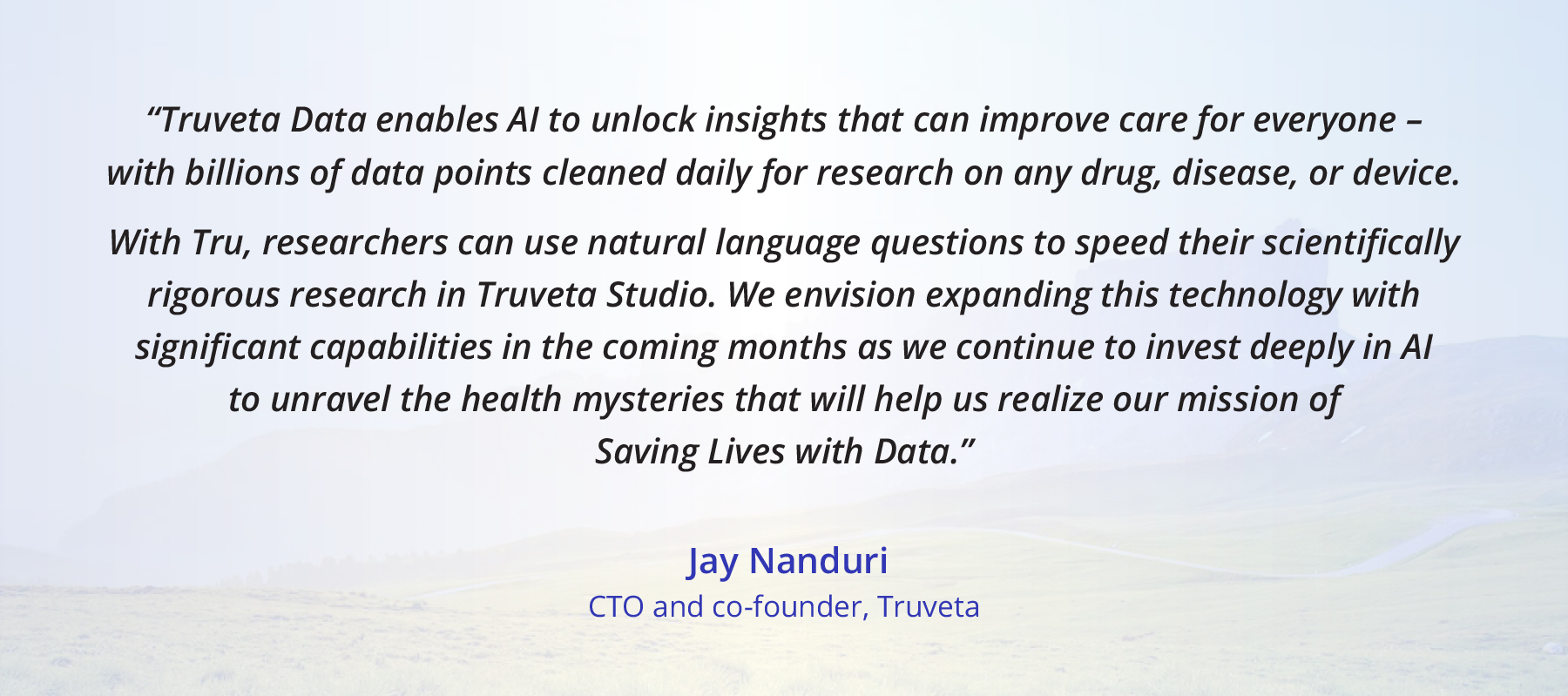
Truveta Data is powered by the Truveta Language Model (TLM), the first large-language, multi-modal model trained on the most complete, clean, and representative electronic health record (EHR) data and has achieved above 90% precision across clinical domains. TLM cleans billions of EHR data points, including concepts extracted from clinical notes, to accelerate adoption of new therapies, improve clinical trials, and enhance patient care. And today, Tru can assist the researcher in speeding time to insight.
Tru enables researchers to:
- Accelerate research. Quickly identify code sets, build and visualize patient populations quickly, and build and modify population definitions. For a researcher looking to study GLP-1 RA medications (e.g., semaglutide, tirzepatide, etc.), Tru can build the logic to find all patients prescribed or dispensed these medications and then can immediately show trends of the different medications over time to better understand prescribing patterns.
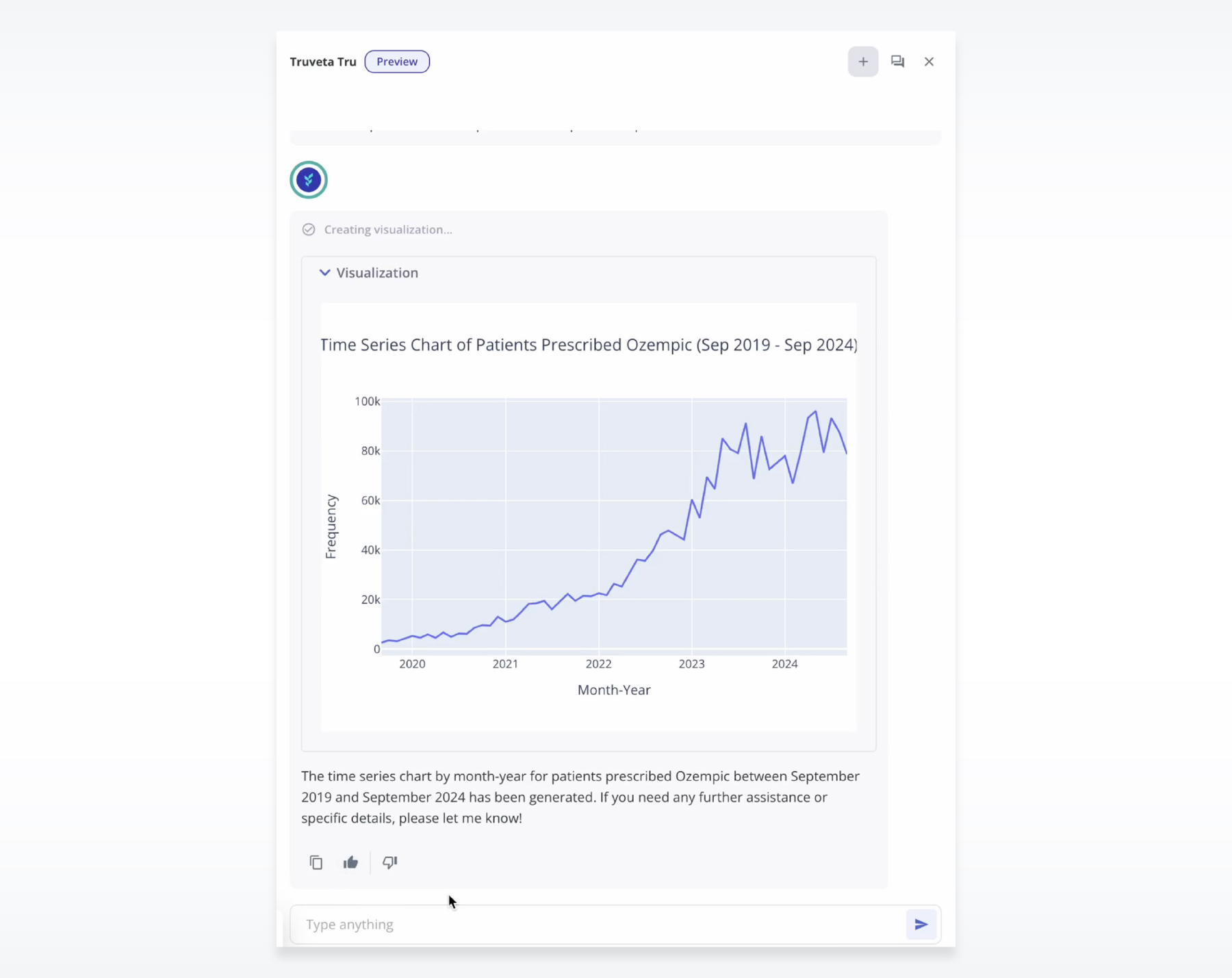
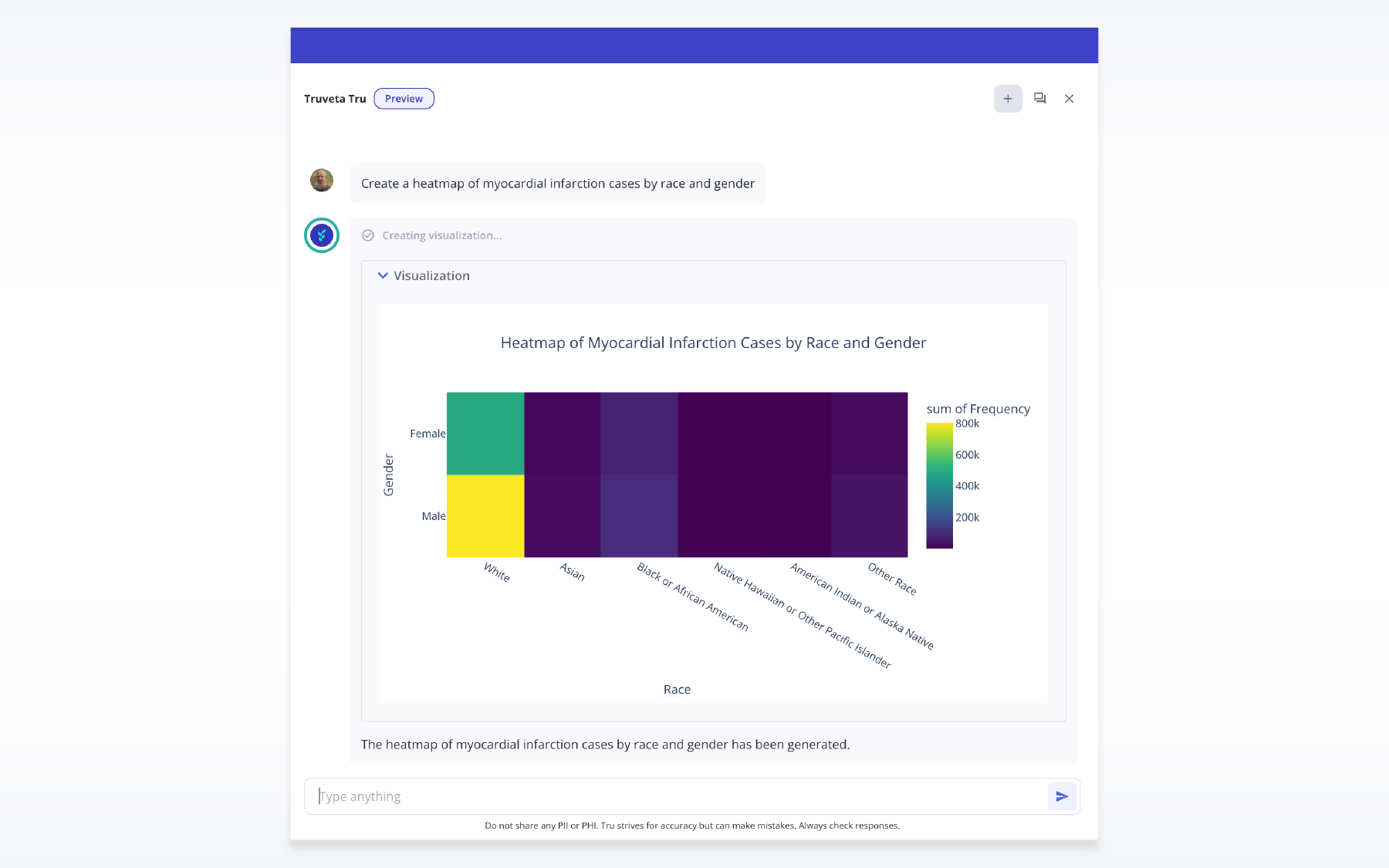
- Develop hypotheses. Discover trends through iterative prompts and data visualizations. For example, a researcher monitoring hospitalizations associated with viral gastroenteritis could simply ask Tru using natural language to create a time series visualization of viral gastroenteritis diagnoses by month-year. To quickly analyze the distribution of myocardial infarction across demographic groups, simply prompt Tru to create a heatmap of myocardial infarction cases by race and gender.
- Transparent assistance. Access source information and underlying code sets behind responses. Unlike other generative AI tools, Tru provides transparency into its process, sources, and underlying code so that researchers can be confident and informed about the responses it generates and provide feedback to further improve the model.
Over time, Tru will expand to support even more scenarios, such as creating feasibility studies and more.
You can learn more about Tru, how it was built on an agentic framework, and how researchers are already using it in Jay Nanduri’s technical blog.