



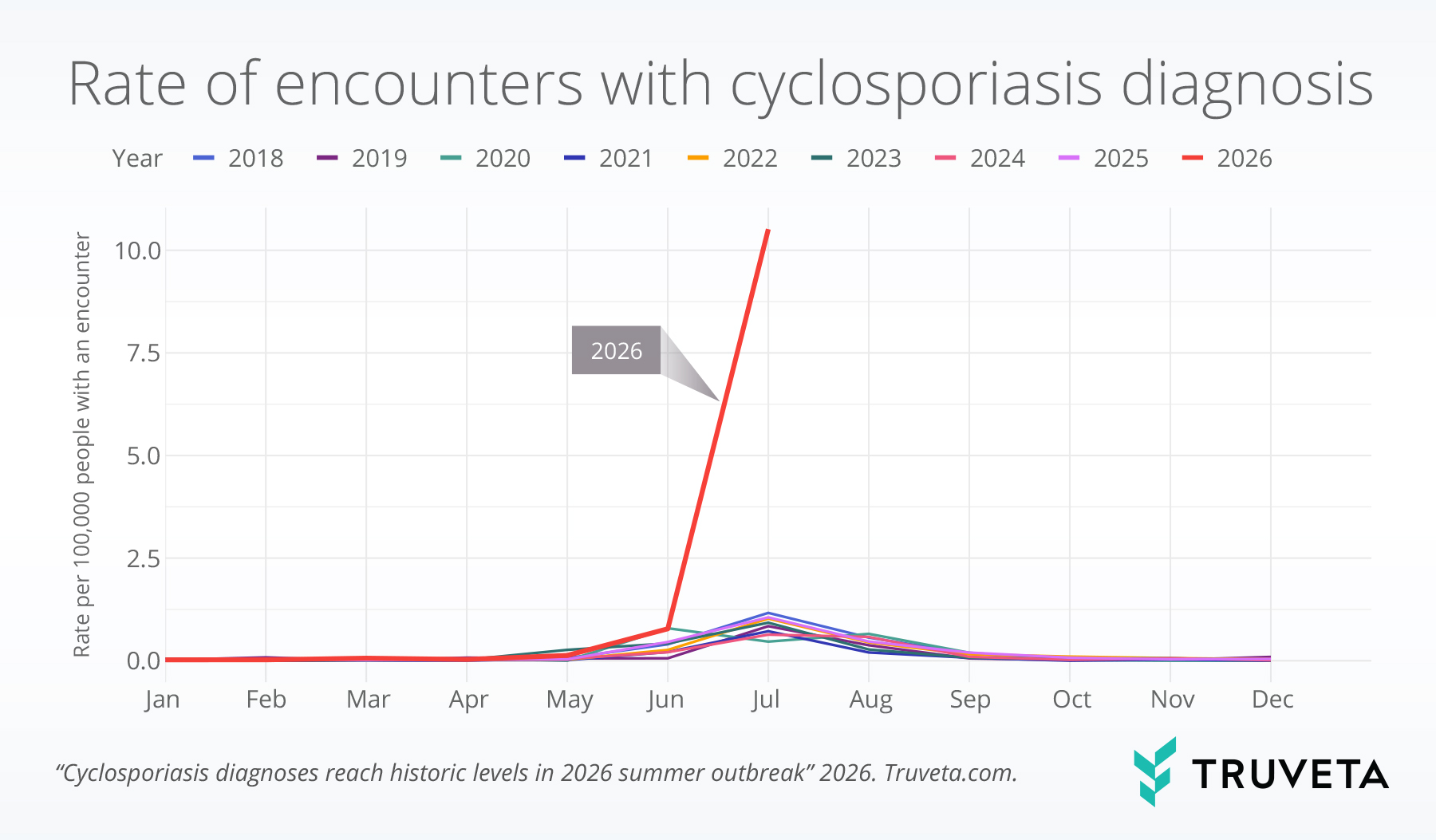
- During July 2026, the rate of cyclosporiasis diagnosis reached 10.5 per 100,000 people with a healthcare encounter, more than 11-fold higher than the average July rate observed between 2018 and 2025 (0.9 per 100,000).
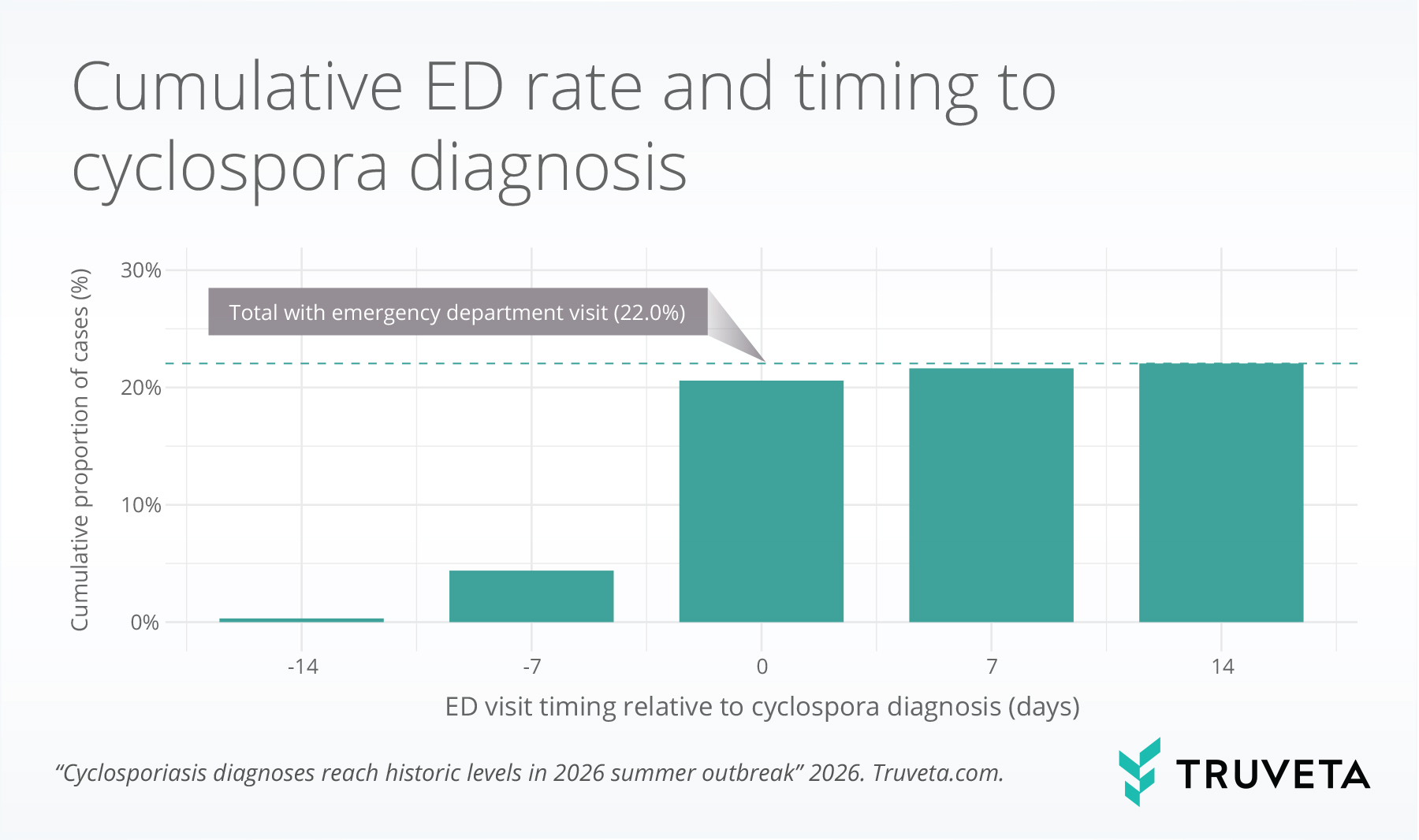
- More than 1 in 5 patients with a cyclosporiasis diagnosis (22.0%) had an emergency department visit within two weeks of diagnosis.
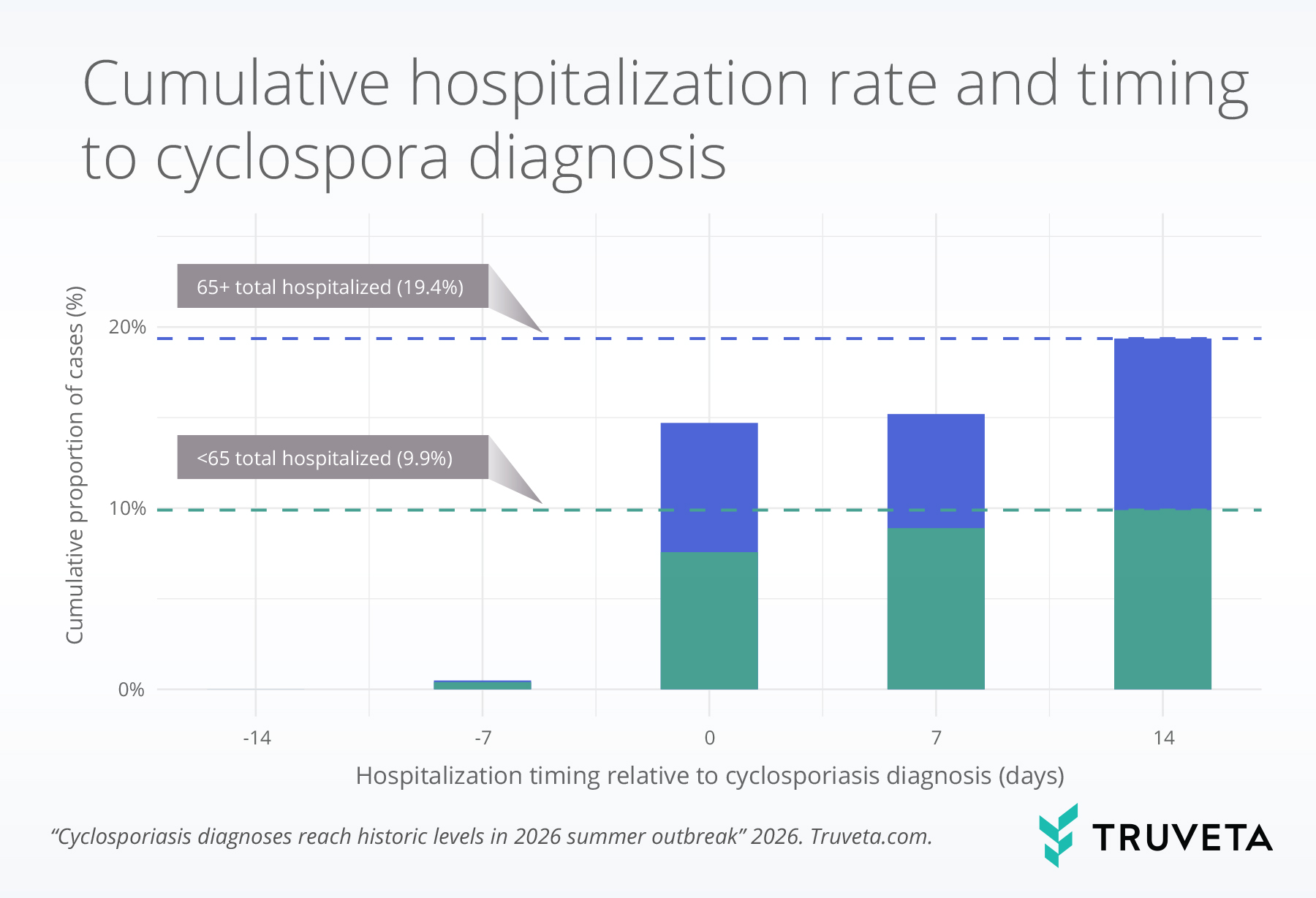
- Nearly 1 in 8 patients (11.9%) were hospitalized, and hospitalization was almost twice as common among adults aged 65 years or older (19.4%) compared with patients under 65 years old (9.9%).
Cyclosporiasis is an intestinal illness caused by the parasite Cyclospora cayetanensis, typically acquired through consumption of contaminated fresh produce or water (1, 2). Symptoms, which typically appear an average of 1 week after consuming a contaminated food or water source (range: ~2 days to ≥2 weeks), include prolonged watery diarrhea, abdominal cramping, nausea, fatigue, and weight loss, and untreated illness may persist for weeks (1–3). In the United States, cases occur seasonally, most often during the summer months, with outbreaks frequently linked to imported fresh fruits and vegetables (4, 5).
During the summer of 2026, public health agencies reported an increase in cyclosporiasis cases in multiple states, prompting investigations into potential foodborne outbreaks (6). Understanding how these outbreaks appear in real-world clinical data can provide timely insight into healthcare utilization, symptom presentation, and disease severity while public health investigations are ongoing.
Using a subset of Truveta Data, we examined trends in healthcare encounters with a diagnosis of cyclosporiasis over time. We evaluated whether encounter rates during the 2026 outbreak differed from prior years and characterized the demographics, symptoms, emergency department utilization, and hospitalization patterns among patients diagnosed with cyclosporiasis.
Methods
Using a subset of Truveta Data, we identified patients with a diagnosis of cyclosporiasis recorded during a healthcare encounter between January 1, 2018 and July 27, 2026. To avoid counting repeat visits for the same illness episode, diagnoses were required to occur at least 30 days apart.
To monitor disease activity over time, we calculated the monthly rate of encounters with a cyclosporiasis diagnosis per 100,000 people with any healthcare encounter during that month.
Among patients diagnosed with cyclosporiasis, we evaluated the presence of common gastrointestinal symptoms occurring within 14 days before or after diagnosis, including:
- Diarrhea
- Abdominal pain
- Nausea or vomiting
- Dehydration
We also examined emergency department encounters and hospitalizations occurring within the same ±14-day window surrounding diagnosis. Hospitalization analyses were further stratified by age (<65 years and ≥65 years).
You can also view the full study—including data definitions—directly in Truveta.
Results
We identified 1,914 patients with a cyclosporiasis diagnosis in the study period. Most patients were female (59.3%) and White (71.6%) and lived in urban areas (64.2%). Adults aged 18–64 years accounted for approximately three-quarters of all cases, while adults aged 65 years or older represented 21.3% of cases.
Trends in cyclosporiasis diagnoses over time
Historically, cyclosporiasis diagnoses demonstrated a consistent seasonal pattern, with modest increases during early summer and peaks occurring in July before declining through the fall.
During July 2026, however, the rate increased dramatically to 10.5 diagnoses per 100,000 people with a healthcare encounter, compared with an average July rate of 0.9 per 100,000 during 2018–2025. This represents an approximately 11-fold increase (1,130%) compared with the historical average and was more than eight times higher than the next highest July we observed during our study, of 1.2 per 100,000 in 2018.
Associated symptoms
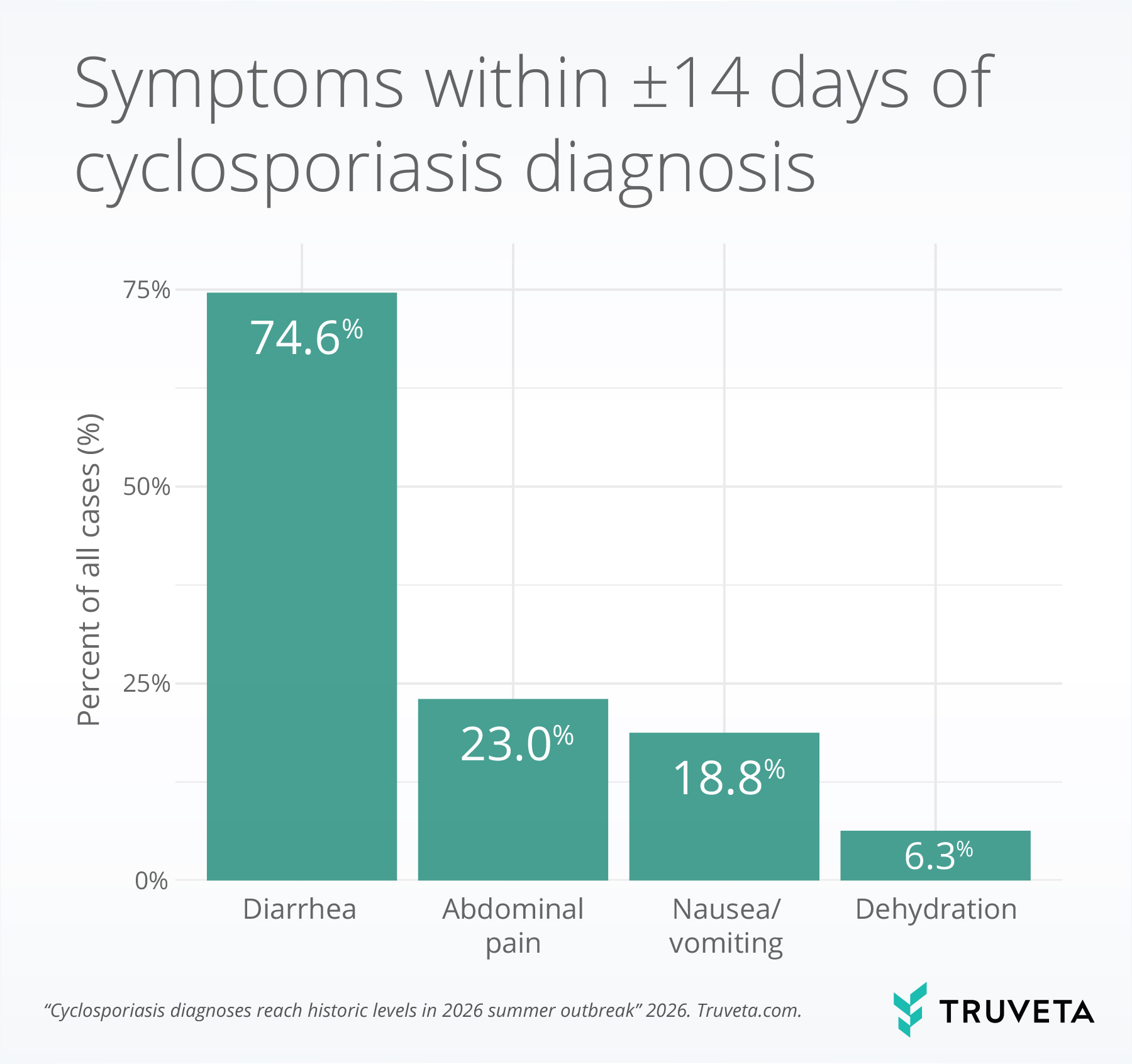
Diarrhea was the most common symptom surrounding diagnosis, affecting 74.6% of patients.
Other gastrointestinal symptoms occurred less frequently:
- Abdominal pain: 23.0%
- Nausea or vomiting: 18.8%
- Dehydration: 6.3%
Emergency department visits
Overall, 22.0% of patients had an emergency department encounter within 14 days before or after receiving a cyclosporiasis diagnosis.
The cumulative incidence curve demonstrates that most emergency department visits occurred before or on the day of diagnosis, with only modest increases during the following two weeks.
Hospitalizations
Overall, 11.9% of patients were hospitalized during the study window.
Hospitalization rates differed substantially by age. Among patients younger than 65 years, 9.9% were hospitalized within 14 days of diagnosis. In contrast, hospitalization occurred in 19.4% of adults aged 65 years and older—nearly twice the rate observed in younger patients.
Discussion
This analysis provides an early real-world view of healthcare utilization during the ongoing 2026 cyclosporiasis outbreak. Compared with seasonal patterns observed over the previous eight years, healthcare encounters with cyclosporiasis diagnoses increased dramatically during July 2026, reaching more than eleven times the historical average. Although cyclosporiasis is known to peak during the summer months, the magnitude of the increase substantially exceeded prior seasonal variation, consistent with widespread outbreak activity (5, 6). Because many previous US cyclosporiasis outbreaks have been linked to imported produce with more limited distribution, the widespread domestic distribution associated with the current outbreak may have increased the number of people potentially exposed, contributing to its unprecedented scale (5, 6).
The clinical presentation observed in this study mirrors established descriptions of cyclosporiasis (2). Nearly three-quarters of patients experienced diarrhea, while abdominal pain and nausea or vomiting were less common. Dehydration occurred in a relatively small proportion of patients, likely reflecting more severe presentation.
Healthcare utilization was substantial among patients with a diagnosis. Approximately one in five patients visited an emergency department around the time of diagnosis, and nearly 12% required hospitalization. Most acute care utilization occurred before or on the day of diagnosis, suggesting that patients sought medical attention because of symptoms before cyclosporiasis was recognized.
Older adults experienced almost twice the hospitalization rate observed among younger patients. This finding is consistent with broader observations that gastrointestinal infections often produce more severe illness among older adults, emphasizing the importance of early recognition and supportive care in this population (7, 8).
This study has several limitations. First, our analysis was limited to patients who received a diagnosis of cyclosporiasis during a healthcare encounter. As with many gastrointestinal illnesses, many Cyclospora infections are never clinically recognized or diagnosed, either because patients do not seek medical care or because testing is not performed (1, 6). As a result, our findings almost certainly underestimate the true burden of infection in the community. Because we are including patients who presented for care and obtained a diagnosis, we are likely also seeing a subset of patients with more severe disease that requires medical attention. Second, we identified cases using diagnosis codes rather than requiring laboratory confirmation of Cyclospora infection. As a result, some patients included in this analysis may not have had laboratory-confirmed infection. In contrast, CDC outbreak investigations rely on laboratory-confirmed cases to identify and characterize outbreaks (6). Because laboratory testing for Cyclospora may require specialized stool testing and results can take several days to become available, there may be delays between a patient’s healthcare encounters, assignment of a diagnosis code, laboratory confirmation, and public health reporting (2). Consequently, the timing of healthcare utilization relative to the recorded diagnosis date should be interpreted with this potential variability in mind. Lastly, data for July 2026 were not yet complete at the time of this analysis, and the outbreak remains ongoing. Consequently, the reported July rates may underestimate the final rates for the month, and healthcare utilization may continue to evolve as additional cases are identified.
Despite these limitations, this study demonstrates how real-world electronic health record data can rapidly characterize emerging infectious disease outbreaks. Monitoring encounter rates alongside symptoms and healthcare utilization provides valuable situational awareness while public health investigations are ongoing. These findings illustrate both the scale of the 2026 increase in cyclosporiasis diagnoses and the associated burden on emergency and inpatient care. As the outbreak continues, real-world EHR data can support ongoing, near real-time tracking of healthcare utilization and disease trends.
These are preliminary research findings and not peer reviewed. Data are regularly updating. These findings are consistent with data accessed on July 27, 2026.
Citations
- A. Giangaspero, R. B. Gasser, Human cyclosporiasis. The Lancet Infectious Diseases 19, e226–e236 (2019).
- B. A. Mathison, B. S. Pritt, Cyclosporiasis—Updates on Clinical Presentation, Pathology, Clinical Diagnosis, and Treatment. Microorganisms 9 (2021).
- CDC, Clinical Overview of Cyclosporiasis, Cyclosporiasis (2026). https://www.cdc.gov/cyclosporiasis/hcp/clinical-overview/index.html.
- A. O. Markon, A. Karasick, C. Punzalan, A. J. da Silva, B. Wolpert, Evaluating Foodborne Cyclosporiasis Using Foodborne Diseases Active Surveillance Network and Foodborne Disease Outbreak Surveillance System Data, 2015–2019. Am J Trop Med Hyg 112, 319–326 (2025).
- M. P. H. Shannon M. Casillas, M. P. H. Rebecca L. Hall, M. D. Barbara L. Herwaldt, Cyclosporiasis Surveillance — United States, 2011–2015. MMWR Surveill Summ 68 (2019).
- CDC, Domestically Acquired Cyclosporiasis Cases in Multiple U.S. States, 2026, Health Alert Network (HAN) (2026). https://www.cdc.gov/han/php/notices/han00531.html.
- Y. Chen, B. C. Liu, K. Glass, M. D. Kirk, High incidence of hospitalisation due to infectious gastroenteritis in older people associated with poor self-rated health. BMJ open 5, e010161 (2015).
- A. E. White, N. Ciampa, Y. Chen, M. Kirk, A. Nesbitt, B. B. Bruce, E. S. Walter, Characteristics of Campylobacter and Salmonella infections and acute gastroenteritis in older adults in Australia, Canada, and the United States. Clinical Infectious Diseases 69, 1545–1552 (2019).