


Authors: Amy Sullivan, MS ⊕,Truveta, Inc, Bellevue, WA, Sunny Guin, PhD ⊕, Truveta, Inc, Bellevue, WA, Nadia Tabatabaeepour, MPH ⊕, Truveta, Inc, Bellevue, WA, Sarah Eng, MPH ⊕, Truveta, Inc, Bellevue, WA, Joud Roufael, MPH ⊕Truveta, Inc, Bellevue, WA, Puja Rao, MPH ⊕, Truveta, Inc, Bellevue, WA, Jared Kearn ⊕, Truveta, Inc, Bellevue, WA, Amy Wu ⊕, Truveta, Inc, Bellevue, WA, Vidya Venkataraman, PhD ⊕Truveta, Inc, Bellevue, WA, Esther Kim, PhD ⊕Truveta, Inc, Bellevue, WA,
- More than half of patients had multiple observed antidepressant prescribing episodes, including 15% who had five or more.
- SSRIs were the most common class at the start of a patient’s first observed prescribing episode.
- Antidepressant prescribing varied by drug class and patient characteristics, demonstrating the value of longitudinal real-world data for understanding treatment beyond the fixed periods typically evaluated in clinical trials.
This report summarizes our poster presented at ISPE 2026, titled Beyond Short Trials: Episodic Antidepressant Prescribing in Real-World Care.
Antidepressants are widely prescribed in the United States, yet real-world prescribing patterns are not well characterized (1). Clinical trials typically evaluate antidepressants over fixed treatment periods, which may provide limited insight into how prescribing evolves over longer periods in routine care (2). Longitudinal electronic health record (EHR) and claims data provide an opportunity to examine these patterns across large, diverse patient populations.
Using Truveta Data, we characterized antidepressant prescribing episodes among more than 16 million patients. We examined the frequency and duration of observed prescribing episodes, antidepressant classes, and differences across demographic groups.
Methods
We used a subset of Truveta Data, which provides daily updated, longitudinal, de-identified EHR data and linked closed claims. We included patients with at least one antidepressant prescription recorded in the EHR or a pharmacy claim between January 1, 2024, and December 31, 2025.
We evaluated five antidepressant classes: selective serotonin reuptake inhibitors (SSRIs), serotonin–norepinephrine reuptake inhibitors (SNRIs), monoamine oxidase inhibitors (MAOIs), tricyclic antidepressants (TCAs), and atypical antidepressants.
Prescribing episodes were defined within drug class, beginning with the first observed record and continuing unless interrupted by a gap greater than 90 days or a switch to another antidepressant class. Episode duration was calculated as the time between the first and last observed records and did not incorporate days supplied. Episodes with only one observed prescribing record were assigned a duration of 0 days. Episode counts, duration distributions, and prescribing patterns were summarized descriptively across demographic groups. All analyses were exploratory.
Results
Study population
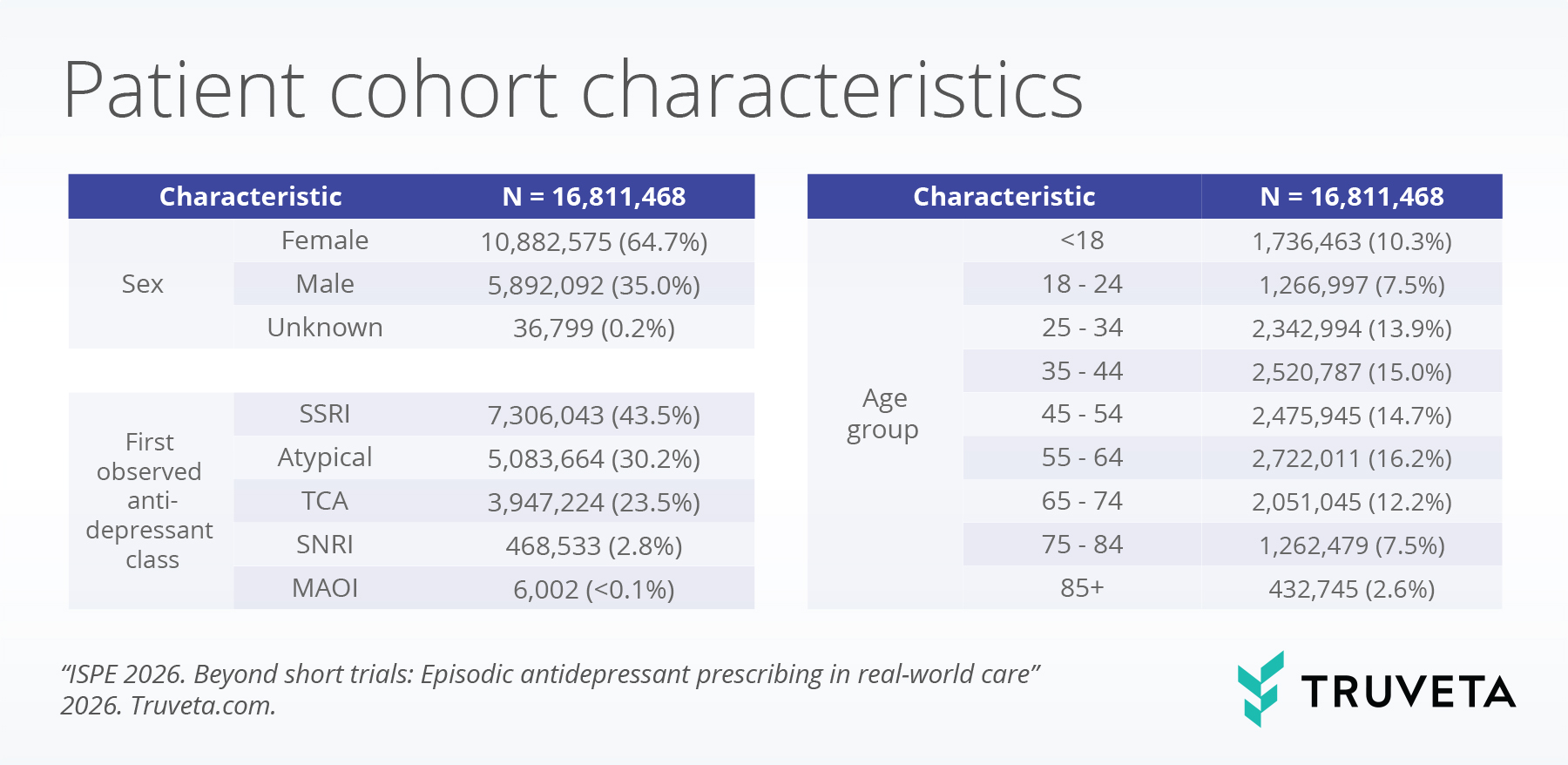
We identified 16,811,468 patients. Nearly two-thirds were female (64.7%), and the median age was 49 years (IQR: 32–63). Patients represented a broad range of ages.
More than half of patients had multiple observed prescribing episodes
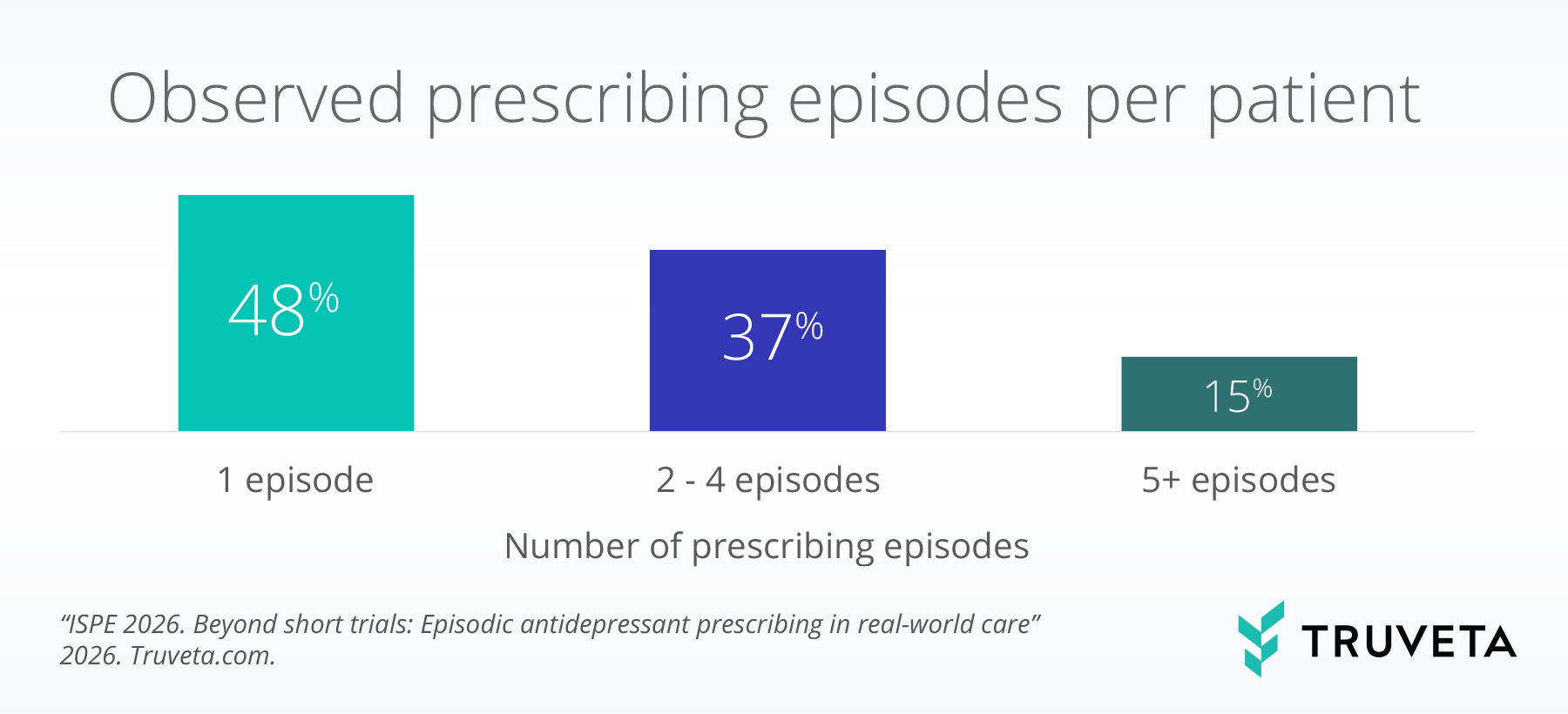
Overall, 48% of patients had one observed prescribing episode, 37% had two to four, and 15% had five or more.
Male patients were more likely than female patients to have a single observed episode (53% vs. 45%), while female patients were more likely to have five or more episodes (17% vs. 12%). Patients younger than 18 years had the highest proportion with a single observed episode (63%).
SSRIs were the most common first observed antidepressant class
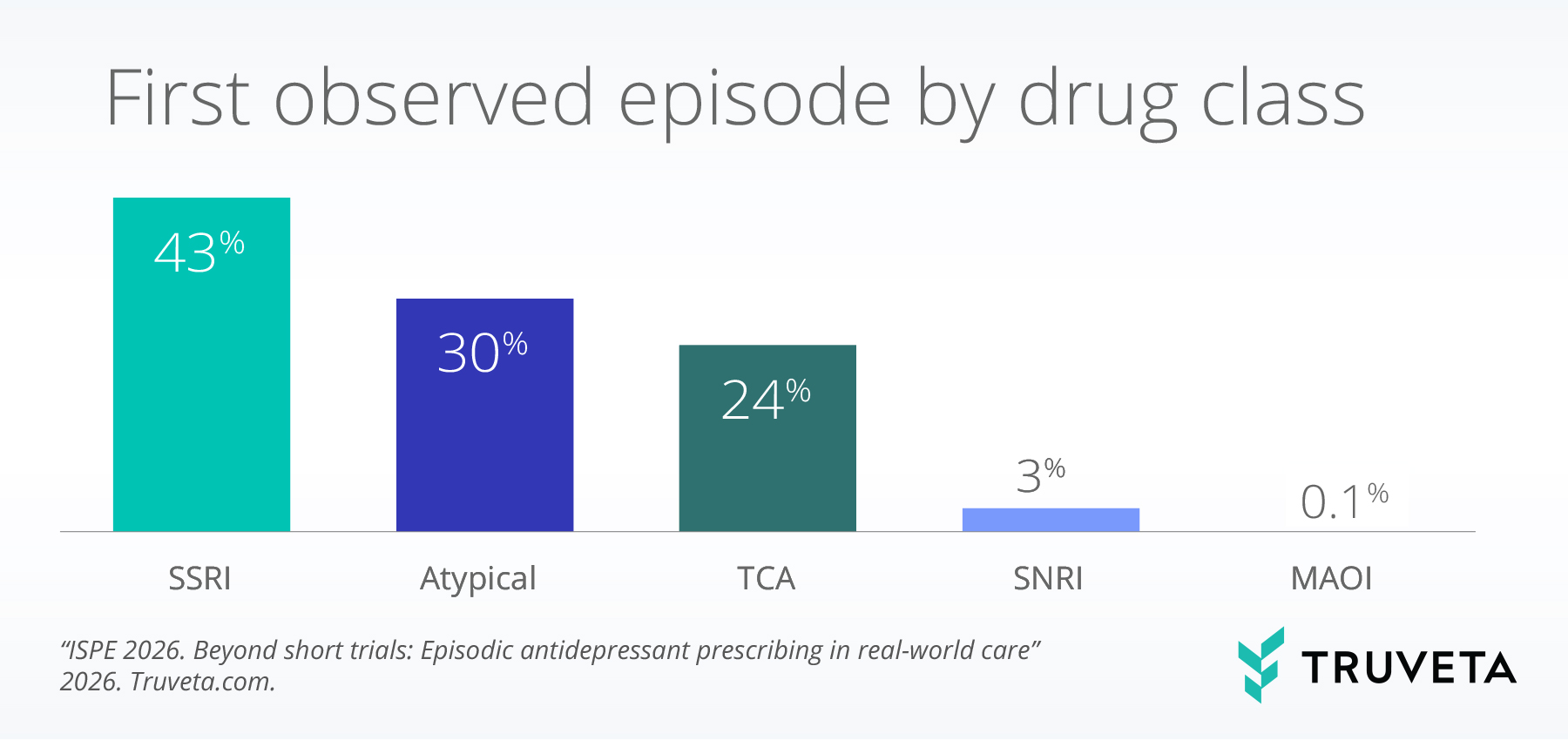
SSRIs accounted for 43% of first observed episodes, followed by atypical antidepressants (30%), TCAs (24%), SNRIs (3%), and MAOIs (<0.1%).
Episode duration varied across antidepressant classes
Among first observed episodes with a duration greater than 0 days, median episode duration was longer for SNRIs, MAOIs, and SSRIs than for TCAs. There was also substantial variation in episode duration within each antidepressant class.
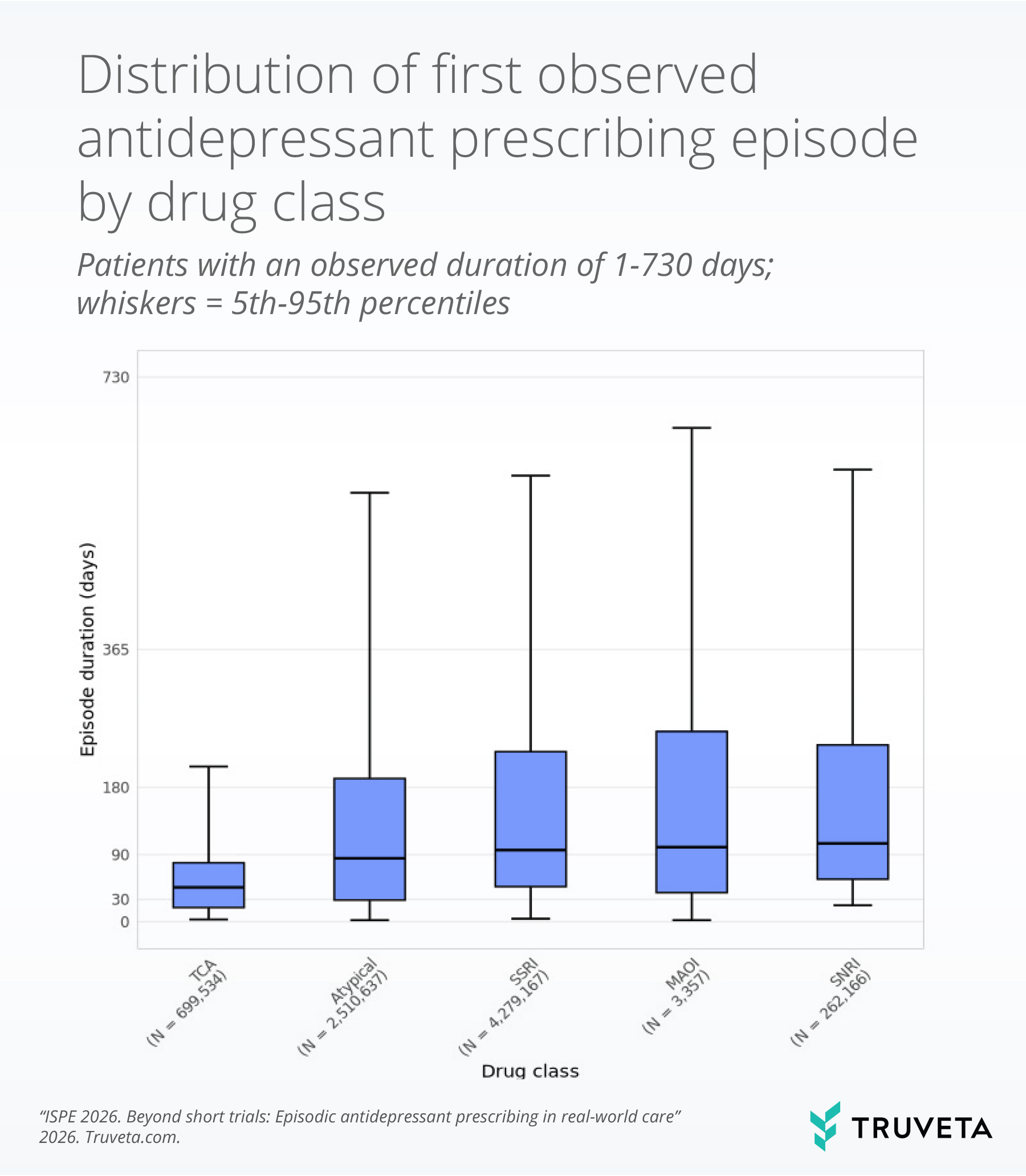
First observed episodes ranged from single-record episodes to prescribing patterns observed for more than one year, with distributions differing across drug classes.
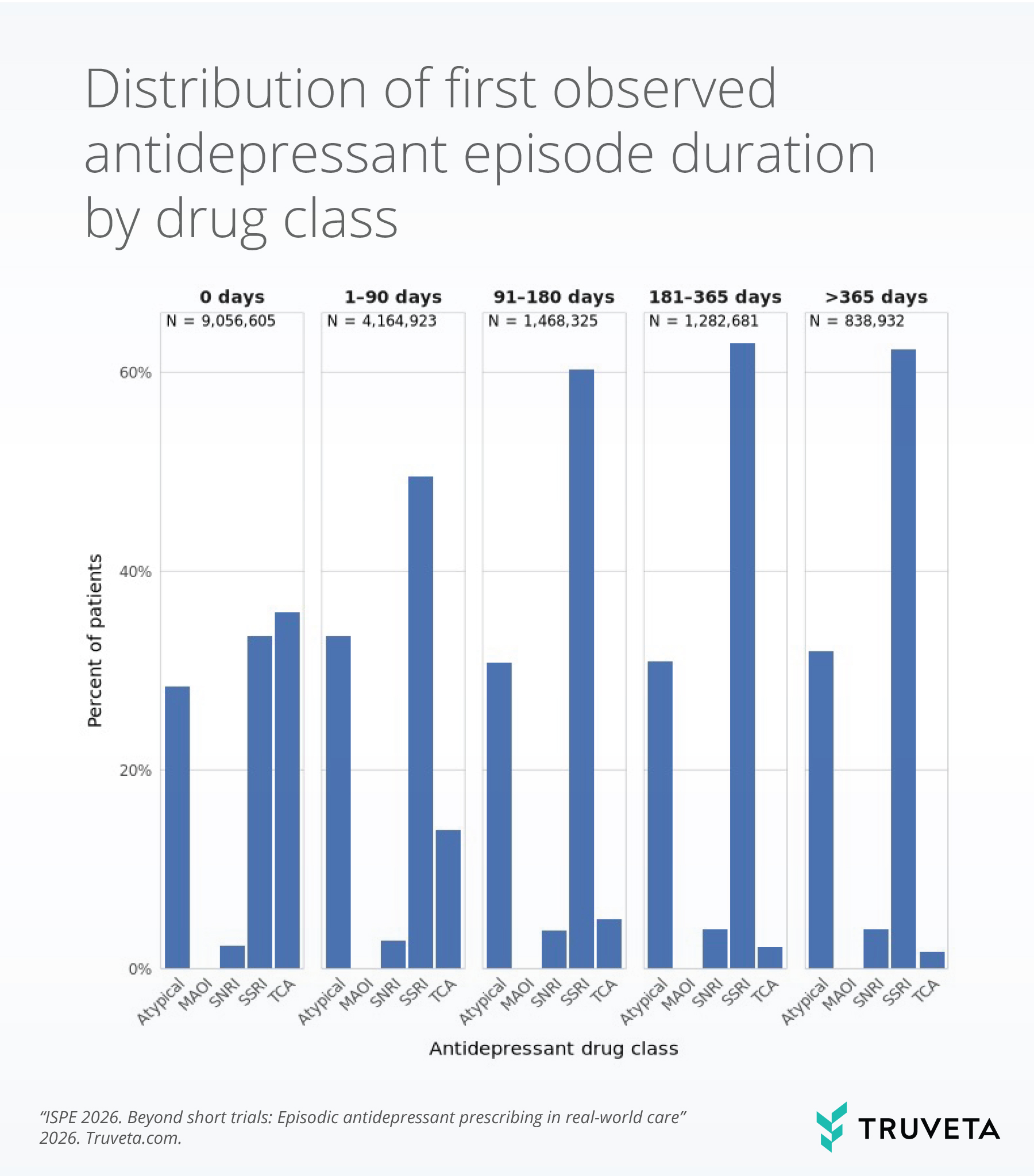
A 0-day episode represents a single observed prescribing record and does not mean that a patient took an antidepressant for zero days. Episode duration reflects the time between observed prescribing records rather than confirmed continuous medication use.
Discussion
In this study of more than 16 million patients, antidepressant prescribing was frequently episodic and recurrent. More than half of patients had multiple observed prescribing episodes, including 15% with five or more. Prescribing patterns also varied by sex, age, and antidepressant class.
These findings provide real-world context beyond the fixed treatment periods typically evaluated in clinical trials. Previous research has highlighted differences between antidepressant trial durations and duration of use in clinical practice (2). Our findings further show that duration alone may not fully characterize real-world prescribing, as many patients experienced multiple distinct observed episodes.
There are several limitations. Prescribing episodes represent patterns observed in EHR and claims data and do not confirm medication use. Episode duration did not incorporate days supplied, and the greater-than-90-day gap used to distinguish episodes was an analytic definition rather than confirmed clinical discontinuation. Prescribing activity outside the available data could also cause treatment to appear shorter or more episodic. Finally, these analyses were exploratory and descriptive, so differences across demographic groups and drug classes should not be interpreted as causal.
Despite these limitations, longitudinal EHR and claims data provide an opportunity to characterize antidepressant prescribing beyond fixed treatment periods. Defining real-world prescribing episodes can support future research examining treatment transitions, clinical outcomes, and how antidepressant use fits within broader patient care trajectories.
Data are constantly changing and updating. These findings are consistent with data analyzed for the ISPE 2026 study.
Citations
- D. J. Brody, Q. Gu, Antidepressant use among adults: United States, 2015–2018. NCHS Data Brief 377 (2020).
- W. Ward, A. Haslam, V. Prasad, Antidepressant trial duration versus duration of real-world use. Am J Med 138, 1400–1407.e10 (2025).