


Authors: Jared Kern ⊕, Truveta, Inc, Bellevue, WA, Vidya Venkataraman, PhD ⊕, Truveta, Inc, Bellevue, WA, Esther Kim, PhD ⊕, Truveta, Inc, Bellevue, WA, Joud Roufael, MPH ⊕, Truveta, Inc, Bellevue, WA, Amy Sullivan, MS ⊕, Truveta, Inc, Bellevue, WA, Amy Wu ⊕, Truveta, Inc, Bellevue, WA, Sarah Eng, MPH ⊕, Truveta, Inc, Bellevue, WA, Puja Rao, MPH ⊕, Truveta, Inc, Bellevue, WA, Mantas Dmukauskas, PhD ⊕Truveta, Inc, Bellevue, WA,

- By 2025, two-thirds of patients receiving pegfilgrastim were treated exclusively with biosimilars, while 30% received Neulasta only.
- Biosimilar uptake was similar across demographic groups, but varied geographically; from 2022 to 2025, biosimilar-only use increased 16 percentage points in the Midwest while remaining relatively flat in the South.
- Most patients remained on their initial treatment type, with 91% never switching between Neulasta and biosimilars.
This report summarizes our poster presented at ISPE 2026, titled The Changing Landscape of Pegfilgrastim: Real-World Adoption and Switching Behavior of Biosimilars.
Biosimilars are FDA-approved biologic products that are highly similar to an approved reference product, with no clinically meaningful differences in safety or effectiveness (1). By increasing competition among biologic products, biosimilars have the potential to expand treatment options and influence health care costs. Pegfilgrastim (Neulasta), which is used to prevent chemotherapy-induced neutropenia, first faced biosimilar competition in the United States in 2018.
The pegfilgrastim market has expanded considerably since then. Six biosimilars were approved between 2018 and 2022: Fulphila and Udenyca in 2018, Ziextenzo in 2019, Nyvepria in 2020, and Fylnetra and Stimufend in 2022. As these products entered clinical practice, real-world data provide an opportunity to understand not only whether biosimilars were adopted, but also how utilization shifted among individual products and whether patients transitioned between Neulasta and biosimilars.
Using a subset of Truveta Data, we evaluated real-world trends in pegfilgrastim biosimilar adoption and switching from 2018 through 2025.
Methods
We conducted a retrospective observational study using a subset of Truveta Data, which includes aggregated, normalized, and de-identified EHR data from US health systems. Data used in this study included medication administrations, procedures, and demographics.
We identified 73,860 patients with at least one administration of Neulasta or a pegfilgrastim biosimilar between 2018 and 2025. Medications were identified using National Drug Codes (NDC), RxNorm, and Healthcare Common Procedure Coding System (HCPCS) codes.
For each calendar year, patients were categorized into three mutually exclusive groups: Neulasta-only, biosimilar-only, or both, indicating exposure to both product types during that year. Patients could contribute to multiple calendar years and were classified independently each year. Medication treatments occurring less than 21 days after the last valid administration were excluded to identify distinct treatment episodes.
We also evaluated longitudinal treatment sequences to characterize switching between Neulasta and biosimilars. Utilization and uptake were summarized by year and subgroup, with percentage-point changes calculated from 2022 to 2025.
Results
Biosimilars accounted for most pegfilgrastim use by 2025
Biosimilar-only use increased rapidly after biosimilars entered the US market. In 2018, 98% of patients received Neulasta only and 1% received a biosimilar only. By 2021, this pattern had reversed: 81% received biosimilars only and 17% received Neulasta only.
From 2022 to 2025, biosimilar-only use increased from 59% to 67%, an 8 percentage-point increase. Over the same period, Neulasta-only use decreased from 38% to 30%. Approximately 3% of patients received both Neulasta and a biosimilar within a calendar year in both 2022 and 2025.
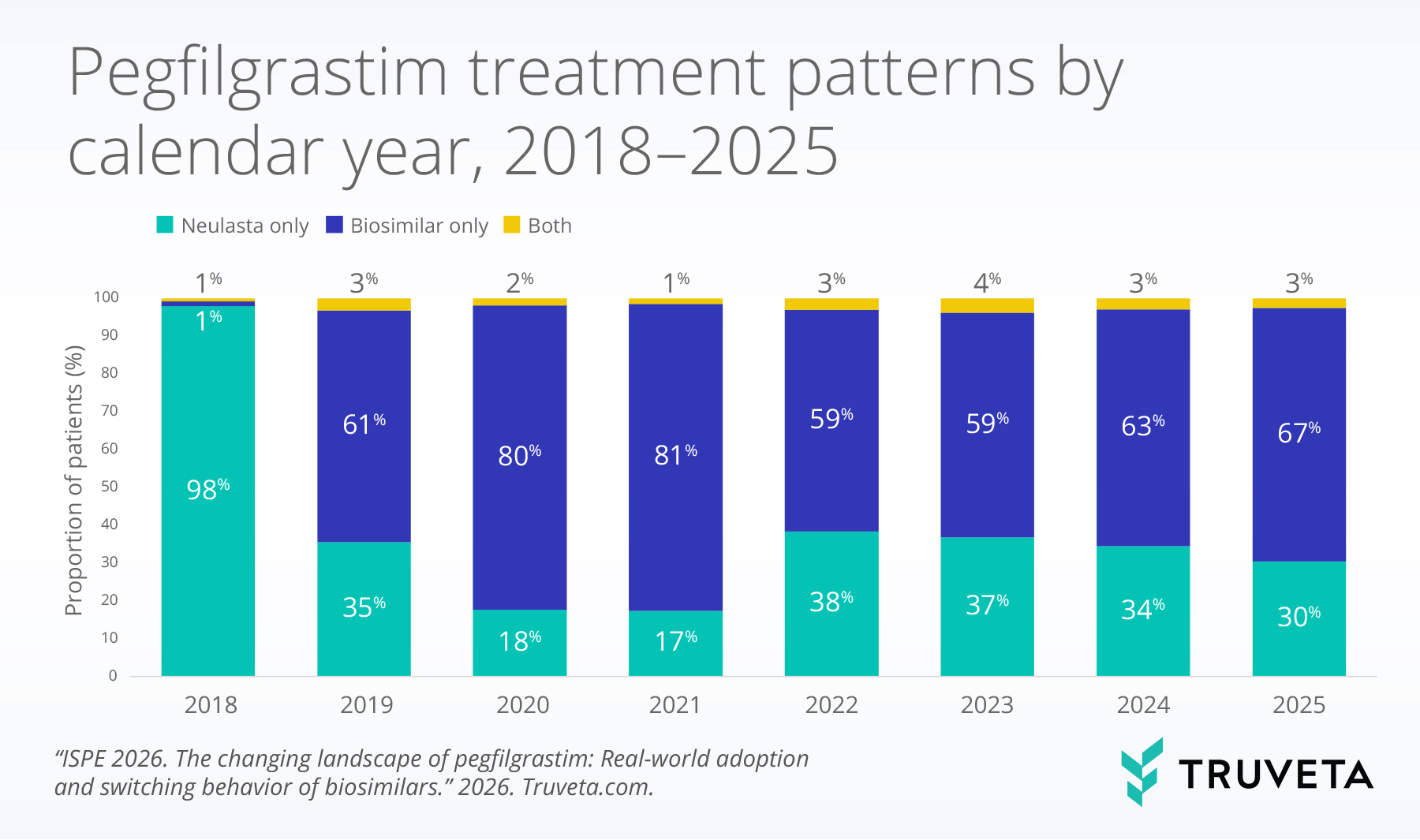
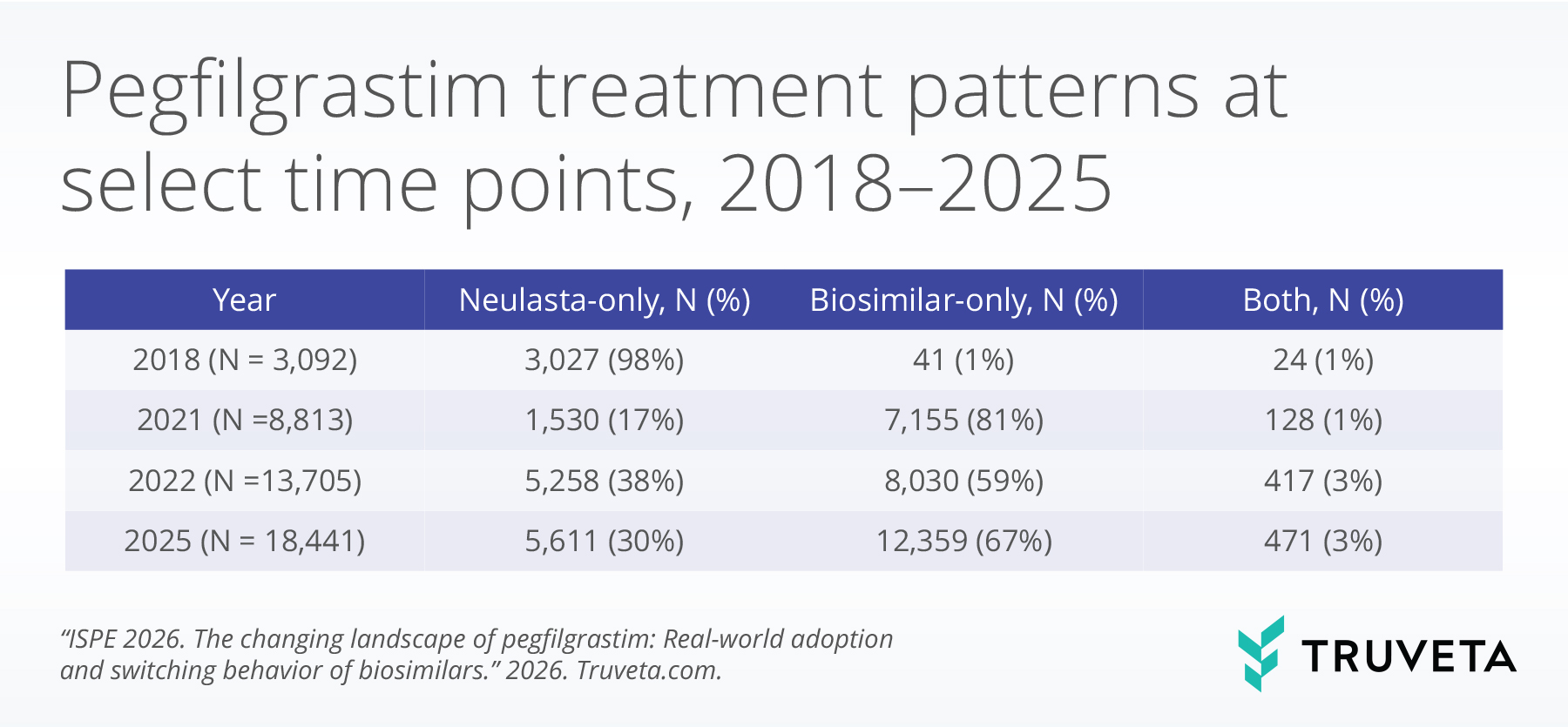
Biosimilar uptake was generally consistent across demographic groups, although geographic differences persisted. From 2022 to 2025, biosimilar-only use in the Midwest increased from 66% to 82%, a 16 percentage-point increase. In contrast, use remained at approximately 40% in the South.
Utilization shifted among individual biosimilars
The composition of the biosimilar market also changed as new products became available. Udenyca initially accounted for the largest share of biosimilar utilization after its 2018 entry, while Fulphila became the predominant biosimilar by 2024. Other biosimilars maintained smaller shares.
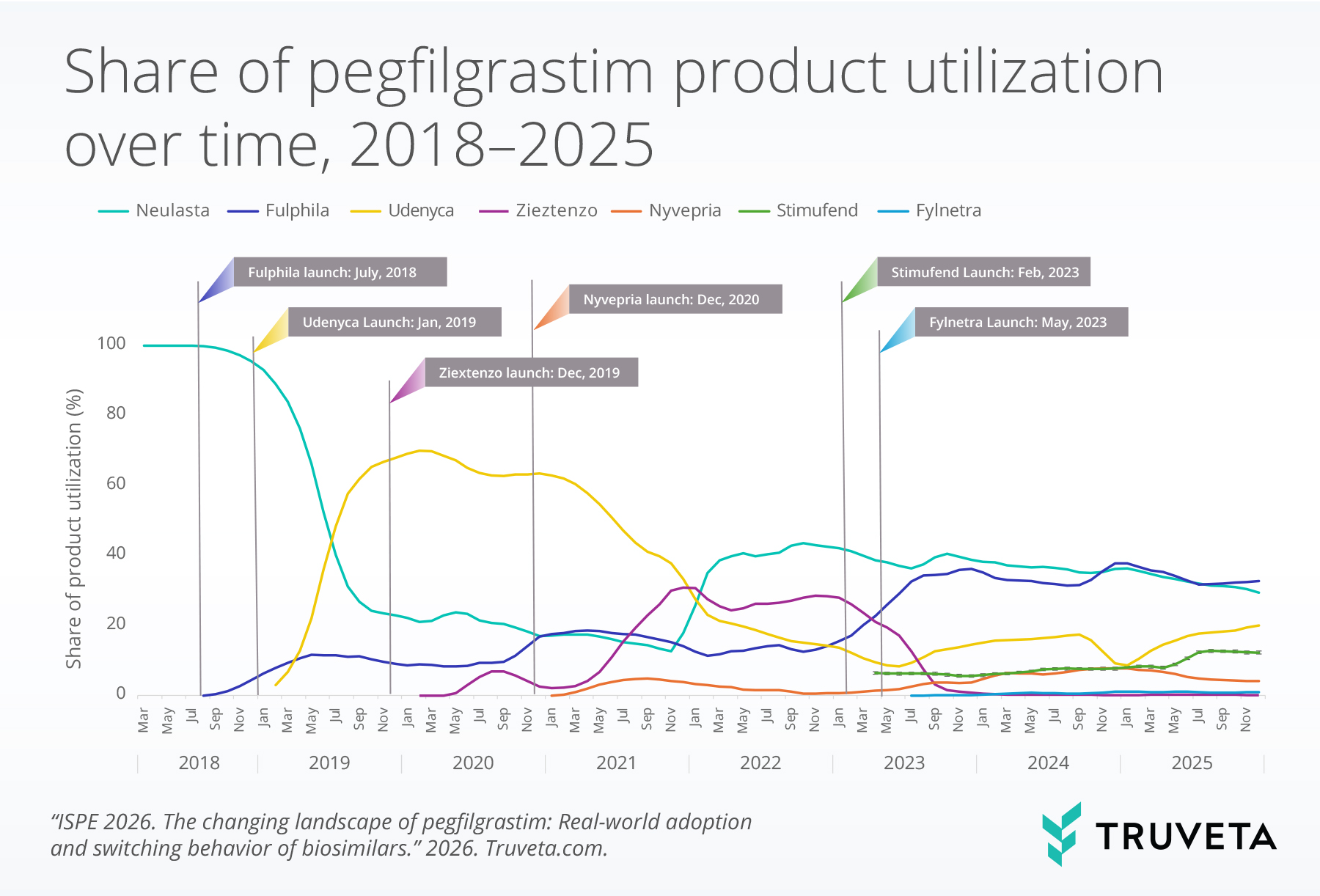
By 2025, utilization was distributed across Neulasta and several biosimilars, with no single product accounting for a majority of utilization. These trends suggest that growth in biosimilar use has been accompanied by redistribution within the biosimilar market as additional products became available.
Most patients did not switch between Neulasta and biosimilars
Despite substantial changes in market-level utilization, switching at the individual patient level was uncommon. Overall, 91% of patients never switched between Neulasta and a biosimilar during follow-up.
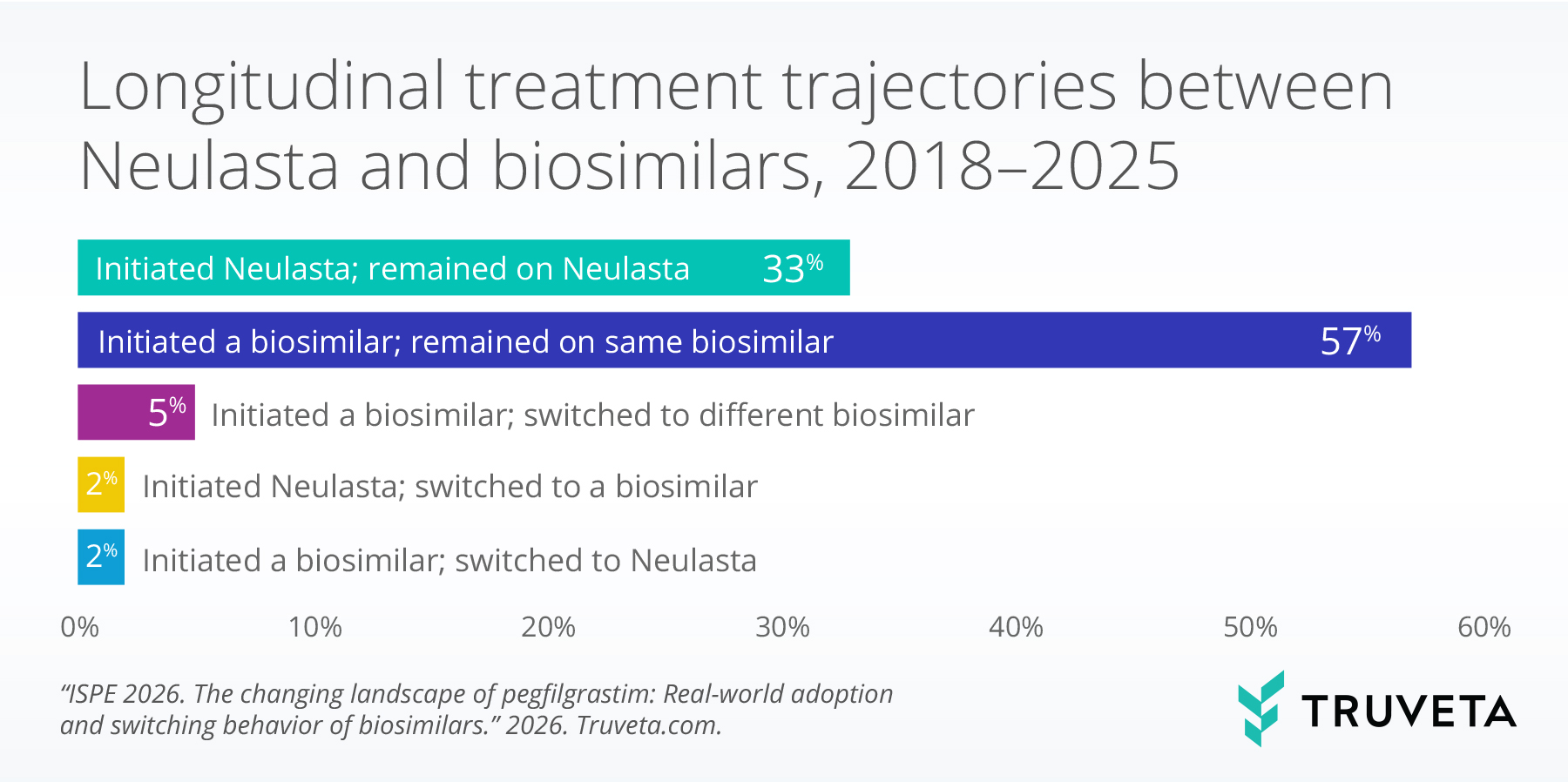
Thirty-three percent of patients initiated Neulasta and remained on Neulasta, while 57% initiated a biosimilar and remained on the same biosimilar. Switching between different biosimilars occurred in 5% of patients. Only 2% initiated Neulasta and subsequently switched to a biosimilar, and 2% initiated a biosimilar and switched to Neulasta.
Discussion
In this real-world study of more than 73,000 patients, pegfilgrastim biosimilars achieved broad uptake following their introduction in 2018. By 2025, 67% of patients received biosimilars only, compared with 30% who received Neulasta only. At the same time, utilization remained distributed across multiple biosimilar products, rather than consolidating around a single product.
The geographic differences were notable. Although biosimilar uptake was generally similar across demographic groups, use increased substantially in the Midwest from 2022 to 2025 while remaining relatively flat in the South. This analysis did not evaluate the reasons for these differences, but the patterns identify an opportunity for future research examining potential system-, payer-, or market-level factors associated with biosimilar adoption.
Patient-level treatment patterns also provide an important complement to market-level trends. Although the overall pegfilgrastim market changed considerably, 91% of patients did not switch between Neulasta and biosimilars during follow-up. Switching between individual biosimilars was more common than switching between Neulasta and biosimilars. Together, these findings suggest that changes in overall market share may reflect which products patients initiate as well as switching among patients already receiving treatment.
This analysis has several limitations. Treatment patterns reflect medication administrations observable in Truveta Data and may not capture treatment received outside participating health systems. Annual classifications also summarize treatment within calendar years and may not capture all of the clinical considerations underlying individual treatment decisions. Finally, this descriptive study did not evaluate the factors driving biosimilar selection or switching, and the observed geographic differences should not be interpreted as evidence of a particular causal mechanism.
Pegfilgrastim biosimilars now account for most utilization in this real-world population, while Neulasta continues to maintain substantial use. As the biosimilar market continues to mature, future research can examine the drivers of product adoption and switching and their implications for treatment access and health care costs.
Data are constantly changing and updating. These findings are consistent with data analyzed for the ISPE 2026 study.
Citations
- U.S. Food and Drug Administration, Review and Approval: Biosimilars.